Democratic Rep. Haley Stevens endorsed Republican Mike Rogers for Michigan’s open U.S. Senate seat on Sunday, Nov. 1, reversing her support for Abdul El-Sayed two days before an election that could help determine control of the chamber.
Stevens, who narrowly lost the Democratic primary to El-Sayed in August, appeared with Rogers at Detroit’s Perfecting Church before announcing her endorsement. The move followed a public dispute over Israel and an outside group’s advertisement, turning a planned demonstration of Democratic unity into a visible split.
The endorsement creates an immediate political problem for Democrats defending retiring Sen. Gary Peters’ seat. Its effect on votes remains unknown. A prominent endorsement can change a campaign’s closing message, but it does not establish how supporters will vote, particularly when voting is already underway.
A reversal on the final weekend
Stevens said she remained a Democrat while explaining that her Senate vote would go to Rogers. At a press conference after the church service, she described the choice as personal and said she had decided that morning to attend church with the candidate she would support. Rogers said he had received her call that morning and welcomed her endorsement, according to MLive’s reporting.
Her public appearance and subsequent endorsement were independently confirmed by Reuters. The development went beyond the criticism Stevens had previously directed at her party’s nominee: she was now publicly supporting his opponent. That distinction separates Sunday’s decision from the earlier disagreement over a campaign appearance.
Stevens had originally been expected to join El-Sayed at a Detroit church event. Instead, the candidates appeared at different services. The competing appearances gave both campaigns an opportunity to present their preferred message, while making the Democratic disagreement impossible to keep in the background.
Stevens’ description of the decision as one Senate vote also matters. Her endorsement should not be described as a formal change of party affiliation or an endorsement of every Republican candidate. She presented it as a choice between these two Senate candidates while continuing to identify herself as a Democrat. Rogers, for his part, publicly accepted that support rather than treating it as merely a criticism of El-Sayed.
The dispute behind the endorsement
The immediate conflict centered on an advertisement from an outside group that linked U.S. support for Israel to grocery prices. Stevens demanded that El-Sayed condemn it. El-Sayed said the advertisement was not produced by his campaign and said he disagreed with its contents. His response is material: criticism of the outside advertisement should not be presented as evidence that he created or approved it.
The Associated Press, whose journalists attended both church services, reported that Rep. Debbie Dingell said she had withdrawn Stevens’ invitation because the dispute had become distracting. El-Sayed campaigned with Dingell and other Democrats. Stevens’ longtime chief of staff resigned after the endorsement, underscoring that the decision also carried consequences within her own team.
There are therefore two separate issues: the disagreement over the advertisement and the decision to endorse a Republican. El-Sayed’s rejection of the advertisement did not produce a reconciliation. Stevens’ decision took the dispute into the general election, where voters are choosing between the parties’ nominees rather than revisiting the primary.
A Senate seat with national stakes
Michigan is a Democratic-held seat that Republicans are trying to capture. Democrats cannot treat defending it as interchangeable with winning a Republican-held seat elsewhere: losing Michigan would increase the number of gains they need to control the Senate.
That makes assumptions about the endorsement’s impact especially risky. A Yahoo analysis noted that the recent polls it reviewed were conducted before Stevens endorsed Rogers. Those surveys cannot measure a reaction to an event that had not happened. Nor does a former primary candidate’s support automatically transfer a bloc of voters to another party.
The timing limits the audience
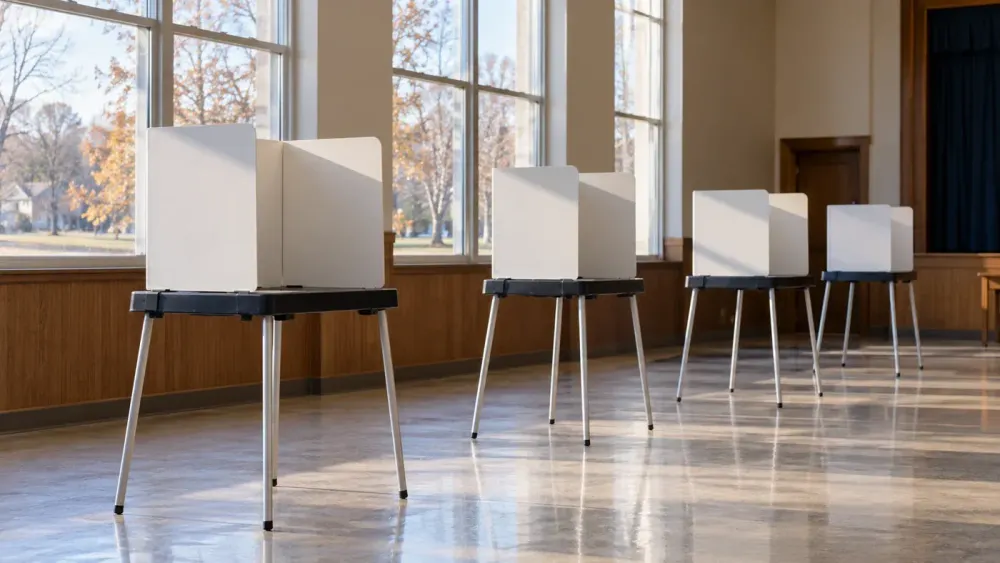
The endorsement arrived on the final day of Michigan’s constitutionally required early-voting period. The Department of State’s election calendar lists that period as Oct. 24 through Nov. 1, with the general election on Nov. 3. The calendar places Sunday’s announcement late in the voting process, rather than before voters began making binding choices.
The state’s voting guidance says a ballot cannot be changed once inserted into an early-voting tabulator. It also distinguishes those votes from returned absentee ballots, for which the deadline to request a replacement has already passed. Communities may offer Monday early voting beginning in 2026; voters should check their assigned location and hours.
This timing limits what an endorsement can accomplish. Some voters have already made a binding choice; others remain able to consider new information before voting. The announcement’s visibility is therefore different from its measurable electoral reach. Neither the public appearance nor the volume of reaction supplies a count of voters changing their minds.
Sunday’s endorsement is a consequential break in party support, but it is not an election result. The remaining test is whether either campaign can turn the attention into support among people who have yet to vote. Until ballots are counted, claims that the reversal has decided Michigan’s race exceed the available evidence.