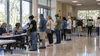
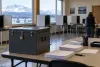
More than 51.3 million Americans had voted in person or returned mail ballots by midday Saturday, surpassing the 45.9 million ballots cast before Election Day in the 2022 midterms, according to University of Florida Election Lab figures reported by Scripps News. The milestone comes before Tuesday’s elections for control of Congress, with additional voting still ahead.
The increase is substantial, but it is not a result. Early-voting records describe participation and, in some states, the characteristics of people who have voted. They do not disclose which candidates those voters selected, and they cannot establish how many people will ultimately participate once Election Day ballots are included.
The political stakes are clear: all 435 House seats and 35 Senate seats are being contested, with Republicans defending a 53–47 Senate majority and a narrow House edge, as Reuters reported Saturday. The turnout figures offer evidence of a heavily engaged electorate while leaving the decisive question—who will control the next Congress—unanswered.
In-person voting drives the increase
The Saturday figures show that more than 28 million people had already voted early in person, compared with about 20.5 million in the entire early-voting period of the last midterms. That distinction matters because a larger advance vote can reflect a change in when people vote as well as a change in how many vote. A ballot cast in October may replace one that would otherwise have been cast on Election Day.
Comparisons also need to account for changes in access. An AP analysis found early voting running ahead of the same point in 2022 across several Senate battlegrounds. Michigan, for example, recorded a 32% increase in that comparison. But this is also Michigan’s first midterm with statewide early in-person voting, approved by voters in November 2022. Higher use of a newly available option cannot automatically be read as an equivalent increase in final turnout.
Party registration is an incomplete signal
The UF tracker, maintained by political scientist Michael McDonald, compiles information from state election officials and other credited sources. It warns that states update on different schedules and that some information is obtained directly from officials rather than through public websites. A national total is therefore an aggregation of records with different reporting times, not a simultaneous count taken everywhere.
Its party-registration breakdown has an additional limit: it covers only states that provide that information. Scripps reported Democrats at 43.2%, Republicans at 31.7% and independent or unaffiliated voters at 25.1% in the reporting states at its Saturday snapshot. Those shares describe registration, not candidate choices, and should not be applied to the entire country.
A registered Democrat can vote for a Republican, a registered Republican can cross party lines, and unaffiliated voters cannot be assigned to either side from registration alone. The remaining Election Day electorate is also absent from the early-vote figures. Treating a registration advantage as a projected victory would require assumptions that these administrative records do not establish.
Georgia shows why the denominator matters
Georgia’s official figures illustrate the difference between a record count and a turnout rate. The secretary’s office reported that 2,294,275 people had voted early in person by 1:35 p.m. Thursday, already above the 2022 total of 2,289,951 with one day remaining. Another 108,251 absentee ballots had been accepted at that time.
Yet the same release said overall participation, including mailed ballots, remained on pace with 2022 as a percentage of active voters. Both statements can be true. An absolute number measures ballots; a rate measures participation relative to the relevant voter population. Reporting only the record would obscure that distinction. Georgia’s release also marked the transition from advance voting to the remaining Election Day vote: early voting ended Friday, and Tuesday’s polling hours are 7 a.m. to 7 p.m. The Thursday figures were an interim report, not the state’s completed advance-voting total.
The remaining vote follows state rules
As early-voting windows close, voters still face different deadlines and procedures. North Carolina ended early in-person voting at 3 p.m. Saturday. Its election board says Election Day polling places will be open from 6:30 a.m. to 7:30 p.m. Tuesday, and voters in line at closing may vote. Voters must use their assigned Election Day precinct, rather than assume an early-voting location remains available.
The board also says absentee ballots must reach the county board by 7:30 p.m. November 3. It advises voters uncertain about delivery to use the county board’s drop-off option and explains alternatives for voting in person. The board says a voter whose name is missing from the list may request a provisional ballot. Its guidance also explains photo-ID exceptions and procedures for voters who arrive without an acceptable ID. These are North Carolina’s instructions; voters elsewhere need their own election office’s current rules.
Saturday’s milestone establishes that more ballots have arrived before Election Day than in the previous midterm cycle. It does not establish a winner, a final turnout record or the size of either party’s eventual coalition. Those conclusions must wait for the remaining votes and the state-by-state counting process.