President Donald Trump cast an early ballot in Palm Beach County on Saturday, turning a routine act of voting into a visible closing argument for Republicans as the November 3 midterm elections enter their final stretch. The appearance came after Trump had spent weeks urging supporters to vote before Election Day, a notable tactical emphasis for a politician who has often criticized early and mail voting.
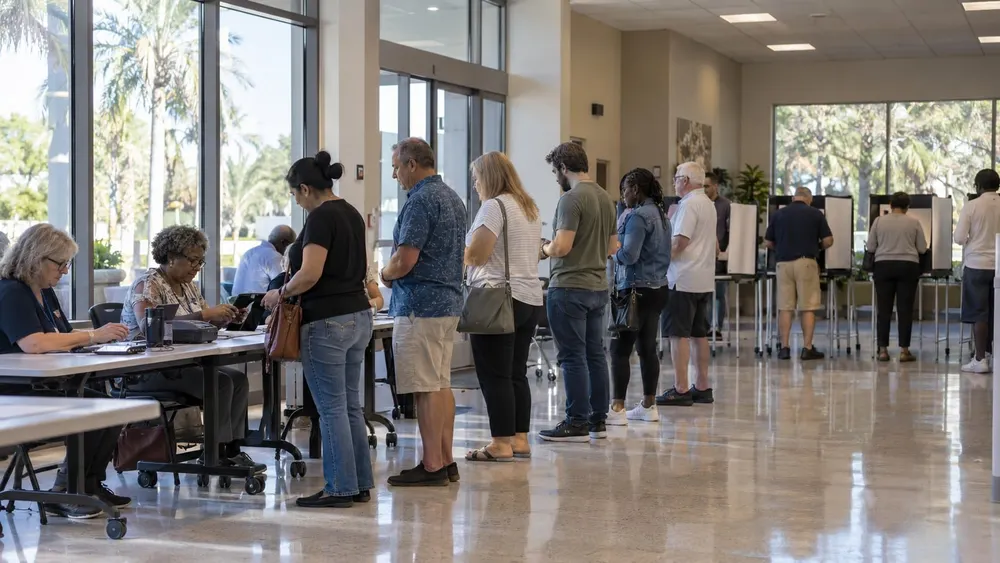
Trump and first lady Melania Trump voted at the Palm Beach County Supervisor of Elections office in West Palm Beach, according to Associated Press reporting. Their visit fell within the county's expanded early-voting period, which runs from October 19 through November 1, from 7 a.m. to 7 p.m. daily, according to the county elections office. Florida requires every county to provide an eight-day early-voting window from October 24 through October 31, while local supervisors may offer additional days.
A campaign adapts to how voters cast ballots
The president's vote illustrates a practical shift in Republican campaign strategy. Earlier this month, Trump told supporters to vote early, by mail or in person on Election Day, while still saying he preferred in-person voting, Reuters reported. That message reflects a simple electoral reality: campaigns benefit when reliable supporters bank their votes before the final day, reducing the number of people they must contact and transport during the closing hours.
The shift does not resolve Trump's longstanding attacks on mail voting or the tension between those claims and his campaign's current outreach. It does show that Republican organizers are treating early participation as part of their turnout operation rather than conceding it to Democrats. The Florida Division of Elections lists November 3 as Election Day and October 24 through October 31 as the mandatory statewide early-voting period. Palm Beach County chose a longer schedule, giving voters two weekends and 14 consecutive days.
Nationally, the University of Florida Election Lab's 2026 tracker was updated late Saturday and showed that voting was already well underway in battleground states. Those totals measure ballots reported by states; they are useful for tracking participation but cannot reveal how people voted. Registration-based comparisons can suggest which party's voters are returning ballots, yet they do not predict outcomes because unaffiliated voters and crossover voting remain unknown.
The presidency at the center of the midterms
After voting, Trump traveled to Georgia for another campaign rally, continuing an intense schedule aimed at protecting narrow Republican congressional majorities. A Reuters review of his recent rallies found that the president has made himself the central figure of the Republican appeal, using the events to defend his economic record, criticize opponents and press supporters to turn out. That strategy can mobilize loyal voters, while also giving Democrats a clear national opponent around whom to organize.
The early ballot came at a moment when both parties are deploying their most recognizable figures. Former President Barack Obama campaigned in Ohio and Michigan on Saturday, while former Vice President Kamala Harris has appeared with Democratic candidates in Nevada, Mississippi and New Hampshire. The competing tours underline how closely national leaders are being tied to contests for Congress, governorships and other offices that will determine the political balance during the final two years of Trump's term.
For voters, however, the mechanics remain local. County election officials determine locations and hours within state law, verify eligibility and process ballots. Palm Beach County's official guidance says voters may use any early-voting site during the scheduled period. The state's early-voting guidance explains that sites must use an electronic database so officials can confirm that a voter has not already cast a ballot elsewhere.
What the early numbers can and cannot show
High early participation changes campaign operations before it clarifies the result. Each completed ballot allows a campaign to remove a supporter from its contact list and focus on voters who have not yet participated. It also reduces exposure to Election Day problems such as bad weather, long lines or personal emergencies. That is why campaigns across the ideological spectrum increasingly urge supporters to use whatever legal method is most convenient.
Early-vote data should still be read cautiously. States report information on different schedules, voting rules vary widely, and party registration is not the same as a vote choice. A surge by one party may reflect a change in timing rather than a net increase in turnout. Final comparisons also require accounting for Election Day voting, rejected or cured mail ballots and provisional ballots.
Trump's appearance therefore matters less as a forecast than as a signal. The president used the same system his campaign is asking supporters to trust and joined millions of Americans who are making their choice before November 3. The political test will be whether that participation expands the Republican electorate or merely shifts familiar voters to an earlier date. The answer will come only after all valid ballots are counted.