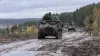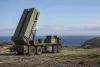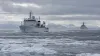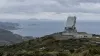
The United States secured access to two additional defense areas in Greenland on Tuesday under a trilateral agreement that expands the American military footprint across the Arctic while leaving sovereignty with Denmark and the Greenlandic people.
President Donald Trump, Danish Prime Minister Mette Frederiksen and Greenlandic Prime Minister Jens-Frederik Nielsen signed the pact at United Nations headquarters in New York. Denmark's official announcement said it will take effect only after the required parliamentary procedures in Denmark and Greenland are completed.
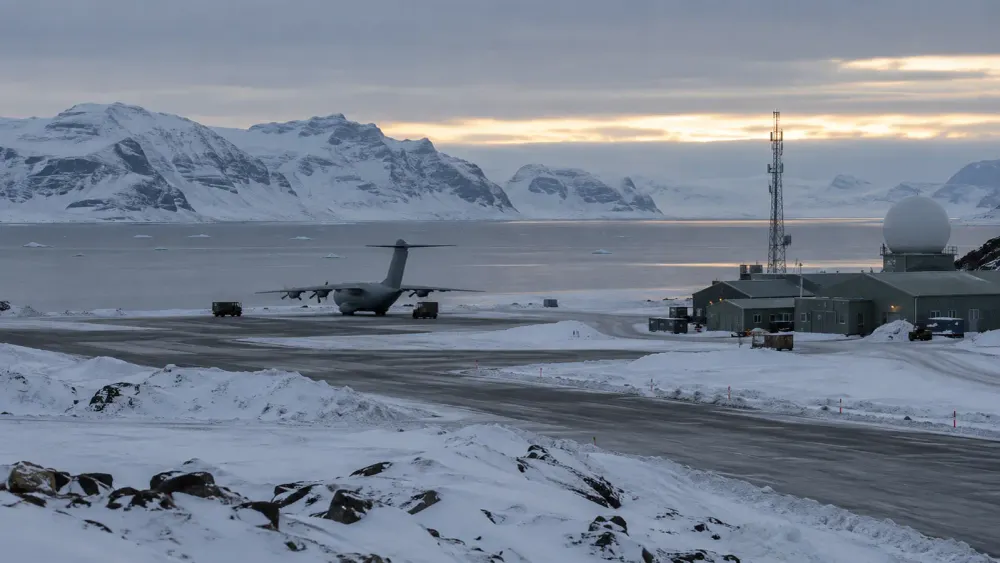
The agreement creates U.S. defense areas at Narsarsuaq in southern Greenland and Mestersvig on the east coast, while authorizing modernization and expansion at the existing Pituffik Space Base in the northwest. The legal text does not set troop levels, construction budgets or a timetable, leaving the scale of the buildup to later negotiations.
A broader Arctic operating map
The signed agreement text amends the 1951 U.S.-Danish defense accord rather than replacing it. It defines a defense area as a place where the United States establishes or operates a military base, and says detailed arrangements for Narsarsuaq and Mestersvig must be mutually agreed.
The two sites would give American forces access to widely separated parts of the world's largest island. Pituffik already supports missile warning, missile defense and space surveillance. Narsarsuaq offers a southern position near North Atlantic routes, while Mestersvig provides an eastern Arctic location closer to the Greenland Sea.
Beyond the three named locations, either side may propose another defense area. A proposal must describe its location, size, scope and planned activities, including measures to reduce environmental and social harm. If a permanent committee cannot agree within 90 days, the dispute moves first to deputy ministers and then to ministers.
The pact also grants U.S. military aircraft, ships, vehicles and personnel broad movement between defense areas. American aircraft may fly over and land throughout Greenland, and U.S. public vessels receive undersea access in Greenland's territorial waters, subject to terms jointly set by the parties. Associated Press reported that the present U.S. force has fallen to roughly 200 people at Pituffik from thousands spread among 17 installations during the Cold War.
Missile defense and NATO strategy
Greenland sits beneath potential flight paths between North America and Eurasia, making its sensors and geography important to early warning and continental defense. The pact explicitly identifies defense of Greenland, the NATO treaty area and the American continent as shared objectives. It also names Trump's proposed Golden Dome missile-defense system, though it does not specify what equipment would be placed on the island.
The parties commit to stronger NATO planning, exercises, presence and intelligence collection in the Arctic. They also bar a non-NATO state from establishing a manned or unmanned military installation, or maintaining a persistent military presence, unless all three governments agree. Restrictions on control or influence in sensitive infrastructure and resource projects are aimed at investors outside NATO, the European Union and NATO partner countries.
That framework reflects concern about Russia's expanding Arctic military network and China's interest in polar shipping, research and minerals. Yet the deal is not a blanket transfer of authority to Washington. New U.S. sites require mutual agreement, Greenland and Denmark retain territorial sovereignty, and the text recognizes Greenlanders as a people with a right to self-determination.
A strategic compromise after a rupture
The signing follows months of tension over Trump's earlier insistence that the United States needed control of Greenland, including statements that alarmed leaders in Nuuk and Copenhagen. The agreement gives Washington much of the military access it sought without changing ownership of the territory. Reuters described it as the largest increase in U.S. military infrastructure on the island since the Cold War.
Frederiksen framed the pact as an alliance agreement rooted in NATO and respect for territorial integrity. Nielsen emphasized that Greenland participated directly and that its self-determination is written into the document. Al Jazeera reported that NATO and European Union leaders welcomed the accord as a step toward repairing transatlantic relations.
The document tries to connect defense expansion with local economic benefits. U.S. contracts for construction, maintenance and services at defense areas are to go to Greenlandic suppliers to the greatest extent feasible. Military access must also respect hunting, fishing and other traditional activities, while existing environmental agreements remain in force.
Key decisions remain unsettled
The agreement's strategic direction is clear, but its operational consequences are not. The parties have not disclosed how many troops will rotate through the new areas, whether the sites will be continuously staffed, what infrastructure will be built or who will bear the costs. Environmental reviews and consultations with affected communities could also shape the construction schedule.
The pact has no expiration date and can be changed only by mutual consent. If Greenland becomes independent, the text says it would remain in NATO and assume Denmark's rights and obligations under the arrangement. A separate Reuters analysis noted that parliamentary approval is still required and that no deployment timeline has been announced.
For the Pentagon, the immediate gain is legal and geographic: more room to operate across a vast Arctic territory at a time when missile warning, space surveillance and polar access are rising priorities. For Denmark and Greenland, the bargain is a stronger security guarantee paired with formal limits on unilateral action. Whether those safeguards rebuild public trust will depend on the still-unwritten plans for the two new defense areas.