
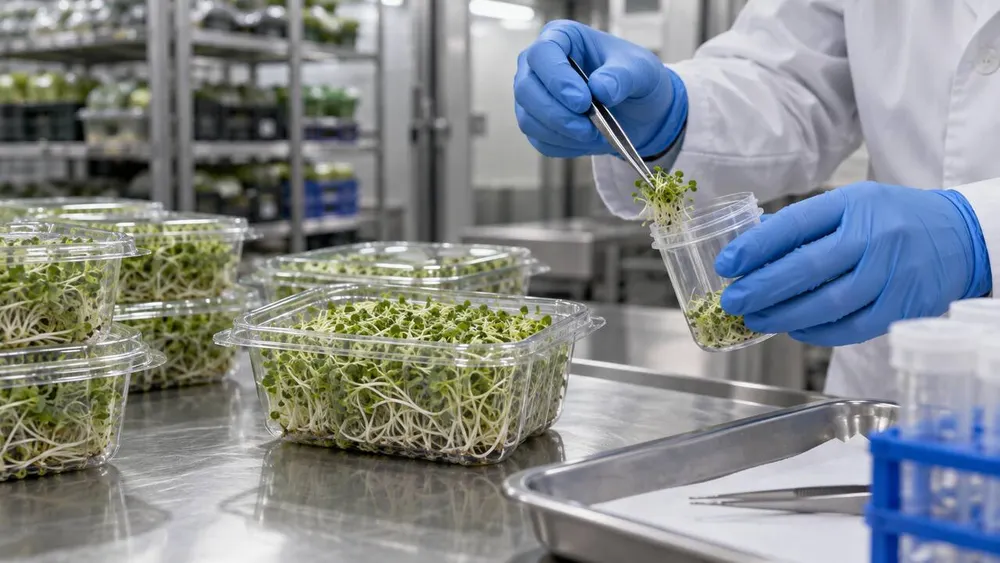
A Salmonella outbreak linked to recalled broccoli sprouts has grown to 32 confirmed illnesses across six states, up from 22 cases in four states earlier this month. The Centers for Disease Control and Prevention’s Sept. 24 update reports three hospitalizations and no deaths, while federal and state investigators continue tracing how the sprouts became contaminated and whether additional products are affected.
Cases expanded across six states
The confirmed patients live in Idaho, Minnesota, Montana, Oregon, Utah and Washington. Illnesses began between July 7 and Sept. 3, and patients range from 2 to 87 years old, with a median age of 52. The CDC cautions that the official count is likely an undercount because many people recover without medical care or testing, and linking a recent illness to an outbreak can take three to four weeks.
Ten cases and one hospitalization were added between the CDC’s Sept. 9 and Sept. 24 reports. Of 27 patients interviewed about food exposure, 26 said they had eaten sprouts or microgreens in the week before becoming ill. Twenty-two specifically recalled broccoli sprouts, and another reported eating a mix containing broccoli microgreens. The agency compared that exposure rate with a national survey in which 8.7% of respondents reported eating any kind of sprouts, strengthening the epidemiological link.
The outbreak is caused by Salmonella Bovismorbificans. Whole-genome sequencing showed that bacteria from patients were closely related, indicating a common food source. Montana officials tested an unopened package collected from a patient’s home, while Washington investigators sampled sprouts from a food cooperative and another patient’s home. The food samples carried the same outbreak strain found in sick people.
The recall covers 215 cases of sprouts
Evergreen Fresh Sprouts LLC of Moyie Springs, Idaho, recalled 215 cases of four-ounce broccoli-sprout packages. The Food and Drug Administration’s recall notice says each shipping case contained six bags. The affected product carried use-by dates of Sept. 3, Sept. 4, Sept. 10, Sept. 15 and Sept. 16, 2026.
The sprouts were distributed to grocery stores, restaurants and food-service customers in Idaho, Montana and Washington, with possible distribution beyond those states. The company began a recall Sept. 4 after a Montana sample tested positive, then expanded the action after a third-party laboratory found Salmonella in sprouts with the Sept. 16 use-by date. The FDA’s outbreak investigation page says the recalled product should no longer be available for sale, but consumers may still have packages in refrigerators.
People should not eat, serve or sell any recalled sprouts. The CDC advises throwing them away or returning them to the place of purchase. Refrigerators, containers and surfaces that touched the product should be cleaned because Salmonella can spread from contaminated food to hands and kitchen surfaces.
Why raw sprouts carry a persistent risk
Sprout production creates unusually favorable conditions for bacteria. Seeds are held in warm, humid environments so they germinate—the same conditions that allow Salmonella and certain strains of E. coli to multiply. If a seed carries a small amount of contamination, the finished product can contain far more bacteria even when a facility follows ordinary sanitation practices.
The FDA’s produce-safety guidance says raw or lightly cooked sprouts may contain disease-causing bacteria and notes that washing does not reliably eliminate the hazard. Cooking sprouts thoroughly reduces risk. Children, older adults, pregnant people and anyone with a weakened immune system should be particularly cautious because they face a greater chance of severe infection.
This broccoli-sprout investigation is separate from another 2026 outbreak involving alfalfa sprouts and mixed sprout products. Food Safety News reported that the separate outbreak involved multiple E. coli strains and Salmonella and had sickened 55 people. The similar product names and overlapping timing make it important for consumers and retailers to check the producer, product and lot information rather than assuming every sprout recall is the same.
Symptoms and when to seek care
Salmonella infection commonly causes diarrhea, fever and abdominal cramps. Symptoms usually begin within six hours to six days after exposure and often last four to seven days. Most patients recover without antibiotics, but dehydration or invasive infection can require hospitalization. Infants, adults 65 and older and people with weakened immune systems face the highest risk of serious complications.
The CDC’s sequencing analysis predicted no antimicrobial resistance in bacteria from 30 patients and two food samples. Two patient samples were predicted to resist streptomycin, sulfisoxazole and tetracycline, but the agency said that pattern was unlikely to affect the antibiotics most commonly selected when treatment is necessary.
Anyone who ate the recalled sprouts and develops severe symptoms should contact a healthcare professional and mention the possible exposure. Warning signs include bloody diarrhea, persistent vomiting, fever above 102 degrees Fahrenheit, or dehydration marked by reduced urination, dizziness or a dry mouth. Health departments rely on clinical testing and patient interviews to identify additional cases and determine whether the outbreak is still expanding.
The investigation remains open
The laboratory match establishes a strong link between the recalled sprouts and the outbreak strain, but it does not yet explain where contamination began. FDA investigators are examining the supply chain and whether seeds, water, equipment or handling played a role. They are also assessing whether products beyond the recalled broccoli sprouts may be affected.
The immediate public-health task is practical: remove recalled packages, clean contact surfaces and report suspected illness. The longer-term test is whether traceback can identify the contamination point and prevent another cycle. Until that work is complete, the case count, geographic reach and product scope may change as delayed reports are added.