

Thirteen American naval officers and sailors died on September 4, 1804, when the explosives-laden Intrepid detonated prematurely inside Tripoli harbor; 222 years later, five graves officially recognized by the United States as belonging to members of that crew remain in Libya, their individual identities unknown and their burial site now inaccessible to an American clinician who visited it during an August 2026 humanitarian mission. The Navy record confirms that Lieutenant Richard Somers and a dozen volunteer officers and men died in the mission, while a 1950 Naval Institute account established that five sets of remains were formally reinterred and recognized in Tripoli without determining which five crewmen they were.
During a medical mission providing free cardiac surgery to Libyan infants and children with congenital heart disease, Rob Sparks, DHA walked from his Tripoli hotel to the old burial ground overlooking the harbor. His photographs show a weathered perimeter, a padlocked gate and a sign from the Tripoli General Services Company stating in English, “Entry is prohibited, please contact the administrator.” The photographs establish the condition visible from outside and the restriction on entry at the time of Sparks’ visit; they do not, by themselves, establish the present condition of the graves behind the wall or who currently has legal responsibility for maintaining them.
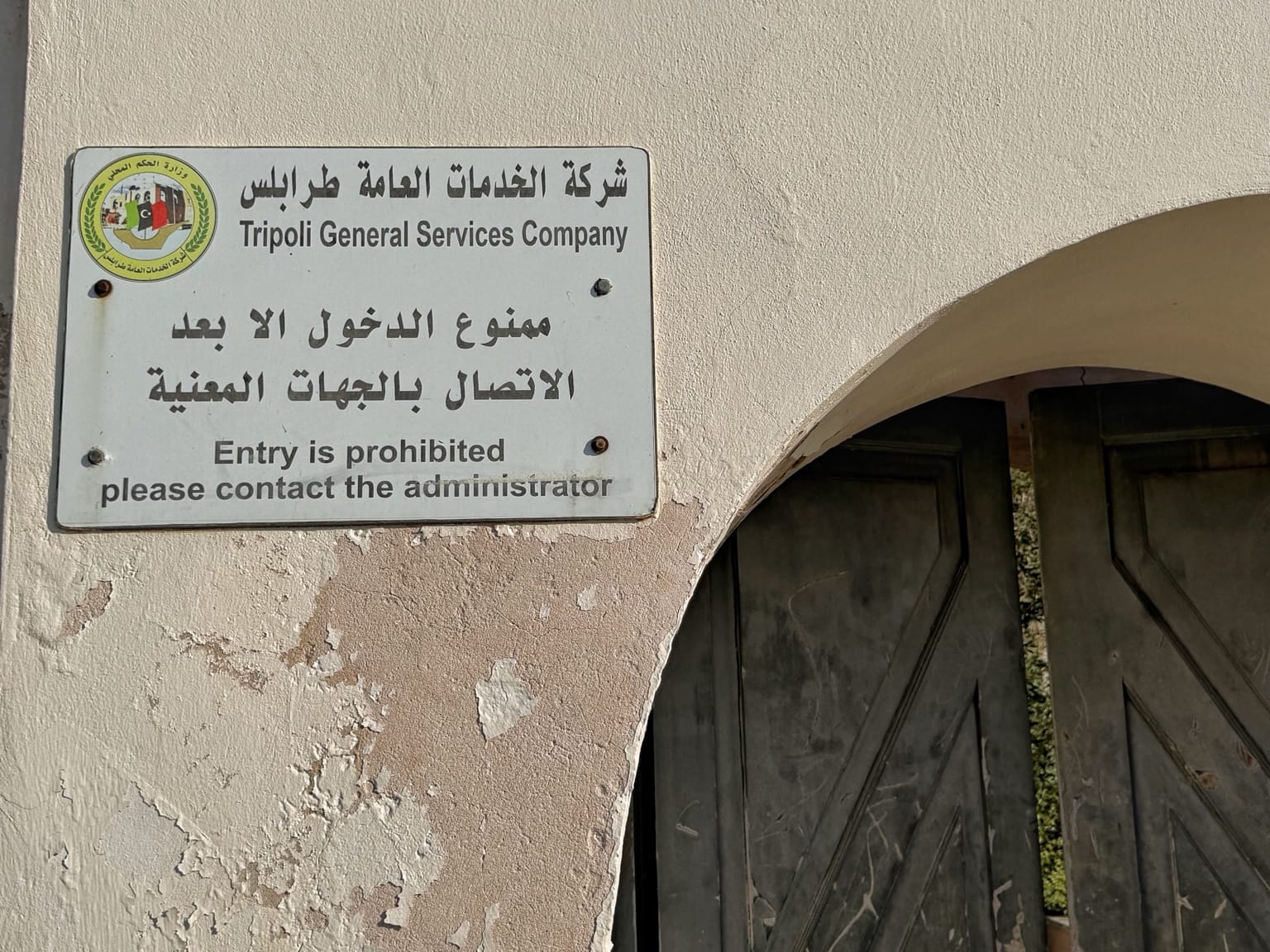
The entrance to the historic Old Protestant Cemetery in Tripoli during an August 2026 visit. The posted sign states that entry is prohibited without contacting the administrator. Photo courtesy of Rob Sparks, DHA.
The deaths are well documented; exactly where all 13 men lie is not
The Intrepid had already played an extraordinary role in the First Barbary War before Somers took command. Originally a Tripolitan vessel captured by the United States, it was the same small ketch Stephen Decatur used in February 1804 to enter Tripoli harbor and destroy the captured American frigate Philadelphia. Seven months later, Commodore Edward Preble converted the vessel into what the Navy's historical account describes as a floating explosive weapon, intending to sail it among Tripolitan vessels, ignite its charge and have the volunteer crew escape by small boats.
The campaign was part of the same First Barbary War that would later become embedded in Marine Corps identity. In April 1805, U.S. Marines participated in the capture of Derna, an action memorialized in the famous opening words of the Marines’ Hymn: “From the Halls of Montezuma to the shores of Tripoli.” The Intrepid crew had died seven months earlier in the waters off Tripoli during that same conflict.
The connection between the Intrepid story and the familiar Marine Corps Hymn was brought to The American Quorum’s attention during reporting for this story by Paul Mostoller, retired U.S. Navy Senior Chief.
Somers led the September mission with Henry Wadsworth, Joseph Israel and 10 enlisted sailors. Shortly after the vessel entered the harbor on the night of September 4, it exploded before reaching its intended position. No one survived, and more than two centuries later historians still cannot say with certainty whether enemy fire accidentally detonated the explosives, the charge ignited prematurely, or Somers deliberately destroyed the vessel when capture appeared imminent. The Naval Institute described that central question as unknowable even after reconstructing accounts from American witnesses.
William Bainbridge, then an American prisoner in Tripoli, recorded that all 13 bodies were recovered: two from the wreck, one from an escape boat, four from the harbor and six from the beach southeast of the city. He reported that the bodies were badly mutilated by the explosion and that six were buried on the bluff near where they were found, with Bainbridge conducting what honors circumstances allowed.
Later accounts describe the bodies being dragged through Tripoli and, in some versions, attacked by dogs. Those allegations became part of the argument for bringing the crew home, and were repeated in American reporting during the modern repatriation campaign. But the surviving historical evidence is not equally strong for every element of that story. The most defensible conclusion is that the crew's bodies were recovered under enemy control, were severely damaged by the explosion, and were buried in Tripoli; some of the more graphic details should be described as reported accounts rather than settled historical fact.
Five graves became an official resting place without anyone knowing whose graves they were
The graves effectively disappeared from American institutional memory until President Franklin D. Roosevelt asked the Navy in 1938 to use “reasonable means” to locate the crew. A Libyan port official, Mustapha Burchis, spent months tracing local records and oral histories and eventually concluded that five old Christian graves inside Tripoli's Protestant cemetery corresponded to men recovered from the Intrepid. After World War II interrupted the effort, Burchis presented his findings to the newly opened U.S. Consulate in 1949.
On April 2, 1949, the United States formally recognized the five graves. The remains were reinterred at the site, and sailors from the cruiser USS Spokane participated in the ceremony. Yet the 1950 account was explicit about the evidentiary limit: the United States did not know which five of the 13 men were buried there. The conclusion rested substantially on geography, burial history and accumulated circumstantial evidence, not modern forensic identification.
That distinction matters today. It cannot simply be stated as fact that Somers himself lies beneath a particular Tripoli grave, nor does the Protestant cemetery account with certainty for every member of the crew. What the United States recognized was a collective historical resting place associated with the Intrepid dead.
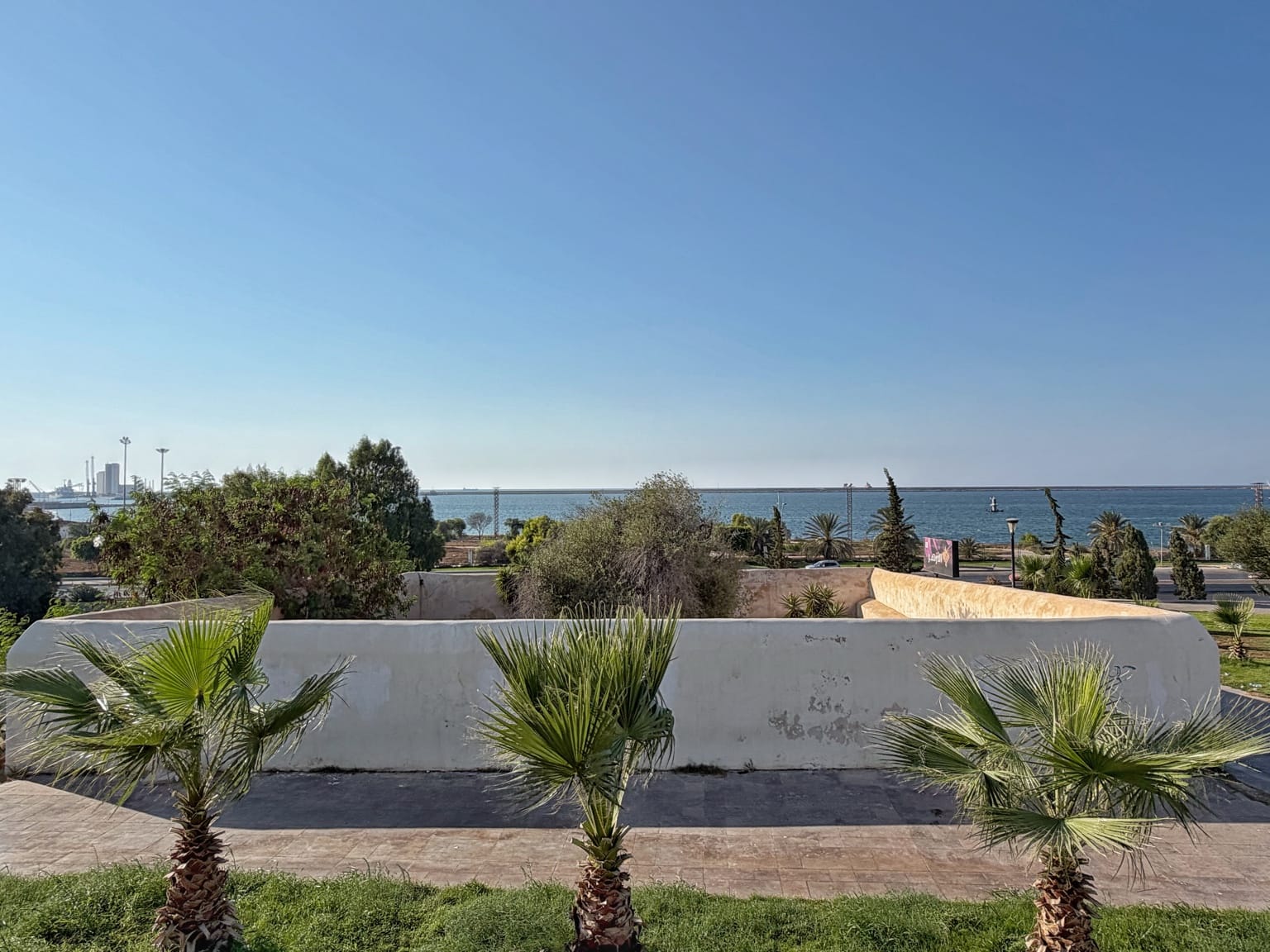
Tripoli harbor as seen from the vicinity of the historic cemetery where five members of the Intrepid crew are believed to have been buried. Photo courtesy of Rob Sparks, DHA.
“Bring them home” is a powerful military principle—but it has never been a universal burial rule
The strongest argument for repatriation is immediately recognizable within the military community: a country that asks people to die in its service assumes a continuing obligation to account for them. The Defense POW/MIA Accounting Agency today defines its mission as providing the “fullest possible” accounting for missing American personnel, and approximately 81,000 Defense Department personnel from designated past conflicts remain unaccounted for. In 2026 alone, American teams continue searching and excavating sites in countries including Vietnam and Laos.
But “never leave anyone behind” does not translate into a federal rule requiring every American war dead to be returned to the United States. The American Battle Monuments Commission says approximately 124,000 American war dead remain permanently buried in overseas U.S. cemeteries, including nearly 31,000 from World War I and almost 93,000 from World War II. In those conflicts, families were often offered a choice between repatriation and permanent overseas burial.
Nor does the Navy invariably disturb a military resting place merely because recovery might theoretically be possible. More than 900 sailors and Marines remain entombed aboard USS Arizona at Pearl Harbor, which the National Park Service describes as a sacred final resting place. The policy distinction is therefore not simply between “bringing Americans home” and “abandoning them overseas.” American practice has long recognized both repatriation andpermanent battlefield or shipboard burial as honorable outcomes.
The Intrepid case is unusual because it fits neither model comfortably. These are not identified Americans buried in a meticulously maintained U.S. military cemetery at Normandy, and they are not men entombed within an undisturbed warship memorial. At least five are believed to lie in an old civilian cemetery on foreign sovereign territory, their individual identities unknown and, according to Sparks' August photographs, behind a gate currently closed to an American visitor.
Congress ordered the question studied in 2011 but stopped short of ordering the sailors home
Repatriation advocates—including descendants, veterans organizations and elected officials—have periodically pressed Washington to recover the crew. In 2010, however, then-Chief of Naval Operations Adm. Gary Roughead wrote that because the remains were associated with the loss of Intrepid, the Protestant cemetery had been officially recognized by the Navy as the crew's final resting place. The Navy also cited the precedent of leaving service members at established battle or ship-loss sites.
Congress revisited that position during the upheaval surrounding the fall of Muammar Gaddafi. A House proposal initially sought repatriation, but the final 2012 National Defense Authorization Act did something more cautious. Section 598 required the Defense and Navy secretaries to evaluate the feasibility of recovering the remains, the possibility of scientifically identifying them within two years, the costs and precedential consequences, and the diplomatic issues involved in exhuming remains from sovereign Libyan territory. Congress then required a recommendation on whether the remains should be exhumed, identified and relocated. The federal law therefore recognized the repatriation question without itself ordering repatriation.
Defense Secretary Leon Panetta visited the cemetery that December and laid a wreath at the graves—the first U.S. defense secretary to visit Libya. A Defense photo preserves a striking contrast with Sparks' photographs 15 years later: senior American officials were then able to stand inside the cemetery and publicly honor the dead.
The argument for recovery also has an American naval precedent. John Paul Jones died in Paris in 1792 and was eventually rediscovered and repatriated to the United States in 1905, where he was later entombed at the U.S. Naval Academy. That does not dictate the outcome for the Intrepid crew, but it demonstrates that foreign burial has not always been treated as irrevocable when later generations concluded that national commemoration favored bringing a naval figure home.
Modern forensic science makes recovery more plausible—but not necessarily more certain
DNA technology has transformed military identification since Congress last debated the Tripoli case. In April 2026, DPAA announced that sufficient family-reference DNA had been gathered to proceed toward disinterring 88 unidentified USS Arizona casualties buried in Hawaii—an effort that would have been scientifically unrealistic generations earlier.
But technology does not eliminate the central problem in Tripoli. Investigators would first have to establish which remains are actually associated with Intrepid, obtain Libyan authorization to excavate them, determine whether usable genetic material survives after more than two centuries, locate genetically informative descendants and then distinguish individual sailors if the remains are mixed or incomplete. The very fact that Congress specifically required an assessment of whether positive identification could be completed demonstrates that exhumation and identification are separate questions.
There is also a preservation argument on the other side. A grave can itself become a historical artifact. Removing the dead could sever a physical connection between the modern United States and one of its earliest overseas military campaigns, while improving and protecting the Tripoli cemetery could preserve that history in the place where it occurred. The United States maintains 26 permanent military cemeteries and 31 federal memorials, monuments and markers in 17 foreign countries, demonstrating that remembrance abroad can itself be an instrument of national memory.
The photographs turn a 222-year-old dispute into a current policy question
What Sparks encountered in Tripoli does not resolve the argument. It sharpens it.
If the cemetery were permanently protected, regularly maintained, accessible to Americans and treated as a recognized military memorial, the Navy's historic-resting-place argument would have considerable practical force. If instead the identifiable resting place of American war dead can become inaccessible, deteriorate or depend indefinitely on uncertain local custodianship, then the premise underlying that policy becomes harder to separate from the conditions on the ground.
Repatriation is also not the only alternative. The United States and Libya could formally protect and restore the cemetery while leaving the remains undisturbed. The government could seek permission for a modern archaeological and forensic assessment before deciding whether removal is warranted. Identifiable remains could theoretically be returned while unidentified remains remain collectively memorialized. Or the United States could reaffirm the Navy's longstanding position that the soil overlooking Tripoli harbor is itself part of the sailors' story and ensure that their grave site receives the protection that designation implies.
None of those choices is value-neutral. Bringing the men home emphasizes the obligation of the nation to the individual service member and surviving family. Leaving them in Tripoli emphasizes the integrity of a historic battlefield resting place and the principle that honorable military burial does not require burial on American soil.
Two hundred twenty-two years after the Intrepid exploded, the larger question is therefore not whether the United States remembers Richard Somers and his crew. It is what remembrance should require.
Should national policy presume that identifiable American service members buried under circumstances like these should be recovered and returned when recovery becomes reasonably possible? Should historically recognized overseas graves remain undisturbed but be guaranteed permanent American-supported protection and access? Or should the wishes of descendants, the feasibility of identification, the condition of the burial site and the historical significance of the grave each be weighed case by case?
For a country that promises to account for those who serve, what should “leave no one behind” mean when the fallen have already been lying on foreign soil for 222 years?
Reporting note: Reporting note: The August 2026 observations and contemporary photographs from Tripoli were provided by Rob Sparks, DHA, a clinical perfusionist, while participating in a humanitarian pediatric cardiac surgery mission. All photographs are credited: “Photo courtesy of Rob Sparks, DHA.” Historical and policy claims were independently checked against U.S. Navy, Department of Defense, federal statutory, DPAA, ABMC and Naval Institute records. The connection to the Marines’ Hymn was suggested by Paul Mostoller, retired U.S. Navy Senior Chief.