
Yemen’s internationally recognized government announced a nationwide offensive Sunday to retake territory held by the Houthi movement, opening a new phase in a war that had remained comparatively quiet for four years. Presidential Leadership Council Chairman Rashad al-Alimi said government forces were beginning operations across multiple fronts, according to Reuters, after weeks of Houthi advances toward the southern port city of Aden and along the Red Sea coast.
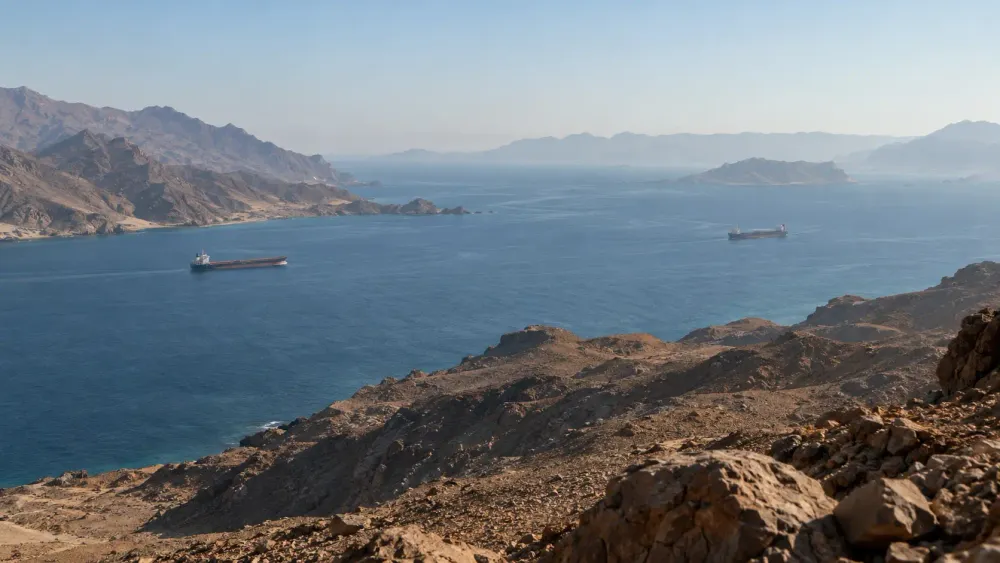
The announcement matters beyond Yemen because the fighting is concentrated around Taiz and the approaches to Bab el-Mandeb, the narrow passage linking the Red Sea with the Gulf of Aden. Houthi forces have recently taken Mokha and strategic islands near the strait, according to Al Jazeera. The government’s decision creates a risk of prolonged ground fighting around civilian population centers while bringing another armed contest close to a route used by commercial shipping between Europe and Asia.
A truce gives way to open war
Yemen’s formal United Nations-mediated truce expired in 2022, but its main front lines remained largely stable until this summer. That relative calm began to break down as Houthi attacks resumed in several provinces and against Saudi territory, while the government and a Saudi-led coalition answered with airstrikes. The expanding exchanges have now displaced the framework that had contained most large-scale ground combat without producing a political settlement.
Al-Alimi’s statement turns those exchanges into an explicit campaign to change territorial control. He ordered armed and security forces to execute what he called an approved plan and declared a full state of alert. Government officials have issued large counts for air operations and Houthi casualties, but those figures could not be independently verified. The Houthis, formally known as Ansar Allah, had not publicly provided a detailed response to the new offensive by early Sunday.
Taiz is the immediate test
Taiz is likely to determine whether the government can translate air power into lasting territorial gains. The mountainous province sits along the main road between Houthi-controlled northern Yemen and the government’s temporary capital in Aden. Government forces said they conducted 20 strikes in three hours there on Friday, while roads were closed or designated as military zones, Reuters reported.
The United Nations has warned that the consequences are already reaching civilians. In an Oct. 1 statement, U.N. Special Envoy Hans Grundberg said fighting had intensified significantly, causing reported casualties, infrastructure damage and road closures that restricted people’s ability to leave. He said Taiz, Yemen’s third-largest city, was hosting most of the people newly displaced by recent fighting elsewhere in the country.
That warning complicates any effort to encircle Houthi forces. Closing roads may have a military purpose, but it can also cut families off from food, fuel, medical care and safe routes out. Aid access was already constrained after more than a decade of war fragmented public institutions and weakened the economy. A government advance that stalls around Taiz could therefore deepen displacement without quickly changing control of the city or the surrounding highlands.
The Red Sea raises the stakes
The other central theater is Yemen’s western coastline. In a Sept. 10 briefing, Grundberg told the U.N. Security Council that the Houthis had seized Mokha, roughly 75 kilometers from Bab el-Mandeb, giving the group a direct presence on the approaches to the strait. He said more than 11,400 households had been reported newly displaced nationwide since Sept. 3, most of them in Taiz and southern Hodeidah.
Control of coastal positions does not by itself give the Houthis command of international shipping, but it can widen the area from which vessels may be threatened. The movement has previously attacked commercial ships in the Red Sea and Gulf of Aden, while framing those operations as part of broader regional conflicts. A Security Council meeting last week showed broad concern about attacks on Saudi civilian and energy infrastructure, fighting around Taiz and Hodeidah, and threats to navigation through Bab el-Mandeb.
For the Saudi-backed government, retaking the coast would improve access between Aden, Taiz and Red Sea ports while pushing Houthi forces farther from the shipping lane. For Riyadh, it could also reduce the threat to southern Saudi territory. Yet the scope of direct Saudi involvement remains uncertain. Coalition aircraft have supported government operations, but neither the duration of that support nor the size of the ground force committed to the offensive has been independently established.
What will show whether the offensive can hold
The first measure of the campaign will be whether government forces can reopen and secure roads around Taiz rather than merely strike Houthi positions. The second will be whether they can contest Mokha and nearby islands without expanding attacks on commercial shipping. A third is humanitarian access: sustained closures, mass displacement or interruption of aid deliveries would indicate that military pressure is imposing costs on civilians faster than it is producing a stable front line.
Battlefield reporting from Yemen is difficult to verify, and both sides have incentives to inflate their gains and minimize losses. What is established is that the government has moved from localized retaliation to a declared national offensive, while the Houthis hold newly captured ground near Taiz and the Red Sea. The next several days will show whether that declaration produces a coordinated ground advance, or instead accelerates a regional confrontation that the 2022 truce had only contained rather than resolved.