
Nearly 130,000 people have been displaced inside Yemen as Houthi forces press toward strategic high ground overlooking routes between the Red Sea coast and the government-held south. The offensive has opened a new military test around the Bab al-Mandeb strait just as President Donald Trump declined to promise direct U.S. military support to Yemen's internationally recognized government.
Yemeni President Rashad al-Alimi asked Trump for American help during a Sunday telephone call, four people familiar with the conversation told Reuters. Two sources said Trump made no pledge of military assistance. The White House and Yemen's information minister had not publicly confirmed the account by Monday afternoon, making the absence of a commitment clearer than any final U.S. decision about future intervention.
The highlands could lock in coastal gains
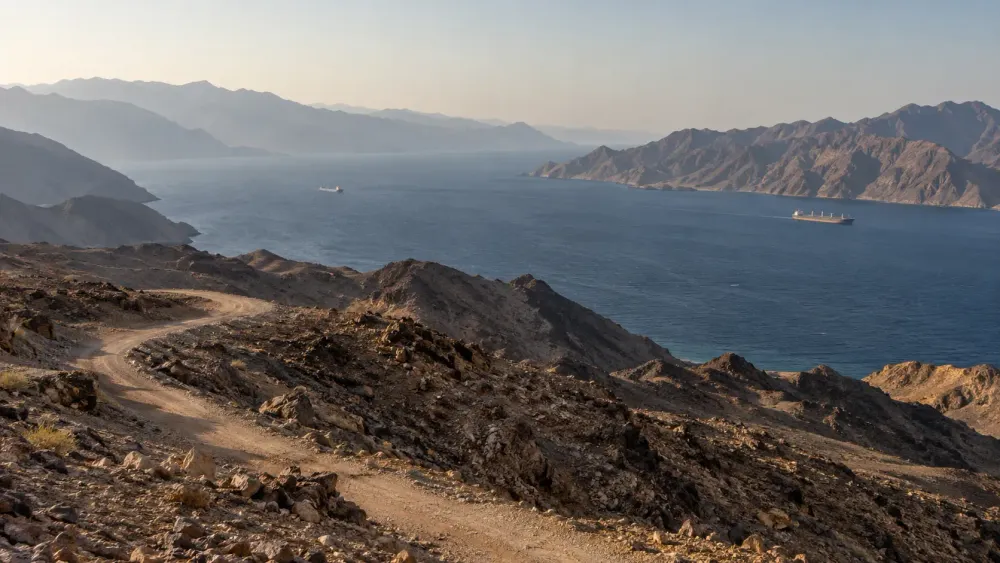
Five Yemeni military sources said Houthi units were seeking control of the Kahboub Mountains in Taiz and Lahij provinces. The terrain separates the coast recently captured by the Iran-aligned movement from areas held by Saudi-backed forces farther south. According to a second Reuters report, fighting has centered on the Al-Wazi'iyah district and Ras al-Ara along the Indian Ocean coast.
Holding those elevations would help the Houthis defend their new coastal positions, monitor approaches and complicate any government counteroffensive. Saudi Arabia has conducted extensive airstrikes against Houthi positions in the highlands, but the fighters have continued advancing, according to the same reporting. The outcome therefore depends not only on control of ports and roads, but also on whether the Houthis can secure terrain from which those gains can be protected.
Washington is preserving room to stay out
The New York Times reported that U.S. forces had prepared strikes before Trump canceled them as weapons were being loaded onto aircraft. Reuters could not independently verify that account, and U.S. Central Command referred questions to the White House. The reported cancellation should therefore be treated as an unconfirmed description of internal planning, not an announced military operation or formal change in policy.
Trump has said the United States is communicating with the Houthis and that the movement does not want to target American shipping. A senior Houthi official told the Associated Press that indirect contacts were taking place through Oman and that U.S. vessels would not be attacked so long as Washington stayed out of the Saudi campaign. That assurance is a statement from an interested combatant, not an independently enforceable guarantee.
Bab al-Mandeb raises the stakes
The Houthis' coastal advance has brought them closer to a waterway through which about 12% of global trade normally passes, according to the AP. Their official said the group did not intend to close Bab al-Mandeb to all traffic, but he also confirmed a blockade against Saudi-linked shipping. The distinction leaves non-Saudi vessels formally outside the declared target set while still exposing crews and insurers to the risk of misidentification, escalation or attacks near the corridor.
The campaign also affects Saudi Arabia's ability to route oil away from the Strait of Hormuz, where wartime risk has already constrained tanker movements. Control over Yemen's western coast gives the Houthis more capacity to observe maritime traffic and threaten infrastructure connected to the Red Sea. It does not by itself give the group uncontested control of the strait, where naval forces, air power and commercial routing decisions all shape actual access.
The human cost is accelerating
The military gains have been accompanied by rapid civilian displacement. The International Organization for Migration said 129,438 people, representing 21,573 households, had fled across seven governorates. The figure measures registered displacement rather than the full number of people affected, and continuing movement means it is likely to change.
Nearly 700 people have been killed and thousands injured in the renewed fighting, according to United Nations figures cited by Reuters. More than 3,000 people have also crossed the Red Sea by boat toward Africa. The Red Cross has released 1 million Swiss francs in emergency funding to support medical services, relief supplies and assistance for displaced families through the Yemen Red Crescent Society.
A ceasefire is narrowing rather than ending the war
The United States and the Houthis reached a ceasefire in 2025 that ended a U.S. bombing campaign in exchange for an end to attacks on American vessels. The arrangement did not resolve Yemen's civil war, disarm the Houthis or protect Saudi targets. Fighting resumed after the latest regional escalation, and the Houthis have since launched missiles and drones at Saudi Arabia while Saudi forces have carried out airstrikes in Yemen.
Houthi leaders say they remain open to negotiations but will continue attacking Saudi targets until Riyadh ends restrictions on rebel-held areas. An AP account of Monday's regional developments said the movement's leader again criticized Saudi actions as casualties and displacement mounted. Saudi officials and the Yemeni government, meanwhile, view the advance as a threat to the recognized government and critical shipping routes.
Trump's refusal to promise support leaves Saudi Arabia and its Yemeni partners facing the immediate campaign without a declared American combat commitment. The next military indicator is whether Saudi air power can stop the push through the highlands or whether the Houthis consolidate a continuous coastal position. The next diplomatic indicator is whether indirect U.S.-Houthi contacts can protect American shipping without allowing the conflict around Bab al-Mandeb to widen.