
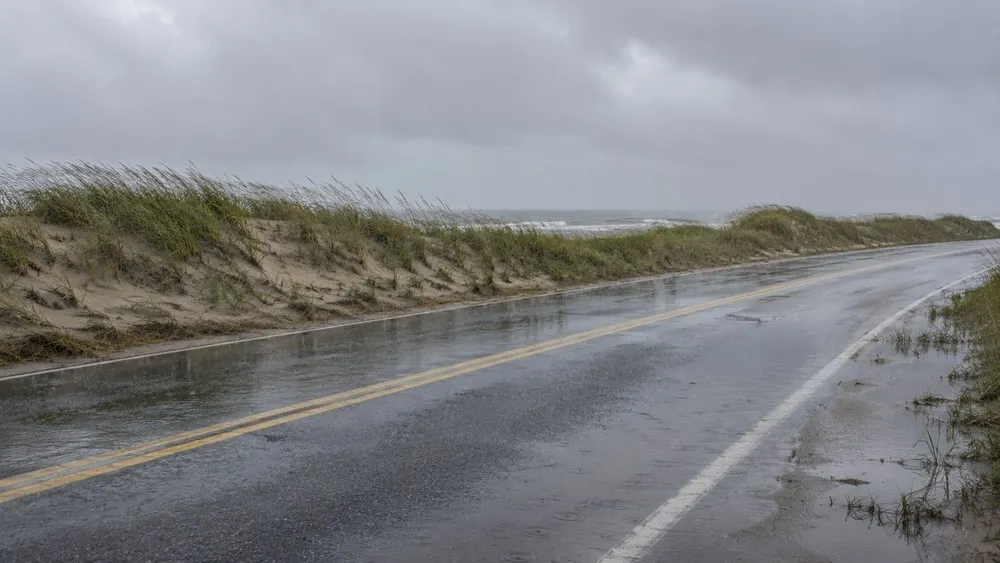
More than 900,000 U.S. electricity customers were without power late on Thanksgiving as a powerful coastal storm flooded communities and disrupted holiday travel, leaving parts of the East Coast facing further tidal flooding into Friday, November 27. Reuters, citing PowerOutage.us, reported more than 908,000 customers offline at 9:56 p.m. Eastern on Thursday, down from 961,000 at 7:30 p.m.
Those were nationwide outage totals, not a count attributable solely to the East Coast storm. They nevertheless captured the scale of a holiday marked by damaged power lines, flooded roads and interruptions extending beyond household electricity. In Maryland, a public water utility asked 1.9 million customers to conserve supplies after storm-related power disruptions at its filtration plants.
The strongest winds were expected to ease overnight in parts of the Mid-Atlantic, but weather officials warned that coastal flooding and difficult conditions would persist beyond the heaviest rain. The immediate issue for affected communities was whether essential services and transportation could recover while additional high tides approached.
Power disruptions reach the water system
The electricity failures had consequences for drinking-water operations in Montgomery and Prince George’s counties, Maryland. In its 9:30 p.m. Thursday update, WSSC Water maintained an essential-use-only request first issued at 2:30 p.m. The utility attributed the precaution to intermittent storm-related power disruptions at the Potomac and Patuxent water filtration plants.
Both plants had electricity and were producing enough drinking water to meet demand at the time of that update. WSSC said the water remained safe and did not require boiling before essential use. Its concern was the possibility of further interruptions affecting consistent production, rather than a finding that the water supply had become contaminated.
The utility urged shorter showers, prompt shutoff of faucets and limited use of washing machines and dishwashers to preserve storage and water available for firefighting. It also said crews would isolate broken mains to reduce losses, potentially leaving affected customers without water until repairs. The conservation request illustrates how an electricity disturbance can affect another essential service even when treatment facilities are operating.
Coastal flooding outlasts the strongest winds
New Jersey’s emergency declaration covered all 21 counties and took effect Wednesday evening ahead of the storm. The governor’s office warned that coastal and bayside communities faced the greatest danger from repeated tidal flooding, heavy rainfall and damaging wind. The order authorized coordinated emergency operations, road closures or rerouting, shelters and National Guard activation as needed; those authorizations do not establish that every measure was used.
By Thursday afternoon, the National Weather Service’s Mount Holly office was warning that additional high tides could again make roads impassable and isolate some locations. Its storm briefing forecast widespread minor to moderate tidal flooding that evening, with additional minor flooding possible Friday morning. It also cautioned that saturated soil could worsen wind impacts and autumn leaves blocking drains could aggravate road flooding.
Rain and coastal flooding pose overlapping hazards. The briefing identified both additional rainfall and successive high tides, so an improvement in one measure would not establish that all roads were safe. The office expected Friday gusts generally around 30 to 40 mph, potentially reaching 45 mph along the coast, even after the strongest winds subsided.
Travel disruption extends beyond canceled flights
FlightAware figures reported by Reuters showed 454 U.S.-related cancellations and 2,411 delays Thursday, with Washington- and New York-area airports among those hardest hit. Those counts describe a changing national flight picture rather than a final accounting of disruption caused by a single weather system. They also do not measure the number of passengers affected.
On the ground, the Associated Press reported rescues from flooded vehicles and temporary highway and bridge closures. In Virginia, high winds closed the Chesapeake Bay Bridge-Tunnel for several hours Thursday morning. North Carolina’s NC 12 closed after seawater breached dunes and covered the roadway linking Hatteras Island with the mainland.
New York’s Macy’s Thanksgiving Day Parade was postponed until Saturday because of the storm threat, another visible consequence of conditions that also affected ordinary travel. The AP and Reuters reported the postponement, while the broader disruption underscored the importance of checking the status of a specific route or service rather than assuming that an improving regional forecast meant an immediate return to normal.
Recovery depends on local conditions
The weather service’s Sterling office described the Mid-Atlantic threat as a combination of strong winds, heavy rain and coastal flooding, with drier and calmer conditions anticipated Saturday. That forecast offered a path toward improvement, but it was not a timetable for individual utility repairs, road reopening or restoration of normal water use.
The verified picture early Friday was therefore uneven: the national outage count had fallen from its Thursday-evening level, WSSC’s plants were producing water while conservation remained requested, and coastal communities still faced further tidal flooding. Subsequent utility notices, local road announcements and weather warnings would determine when those remaining restrictions could safely end.