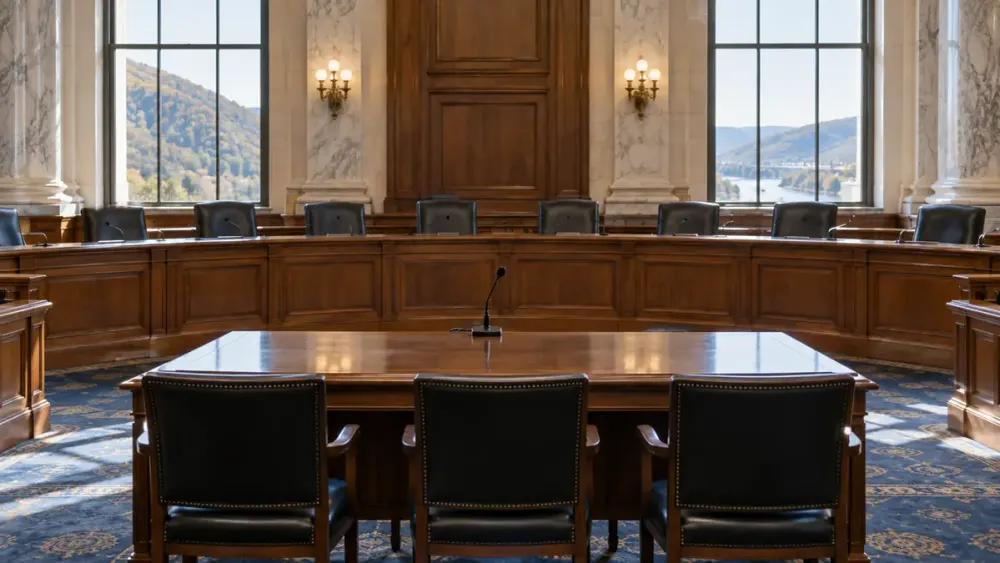
The Supreme Court of Appeals of West Virginia is considering who lawfully controls the state House seat for the 91st District after hearing arguments Tuesday, September 22, in a dispute that tests the Legislature’s power to declare a vacancy and the rules for choosing a replacement.
The case grew out of the election of Joseph de Soto, who won the district as a Republican in November 2024 and changed his registration to Democratic the following month. Before the new Legislature convened, de Soto was arrested on allegations that he had made threats against other lawmakers. The House adopted a resolution on January 8, 2025, declaring the seat vacant, and Republican Gov. Patrick Morrisey later appointed Republican Ian Masters.
The criminal allegations are separate from the vacancy case and have not been adjudicated in this proceeding. The court is instead reviewing whether the House’s action created a valid vacancy and, if so, which political party had the right to submit replacement candidates.
In their mandamus petition, the West Virginia Democratic Party and other petitioners argue that de Soto remained the elected member and that the House lacked authority to remove him through a vacancy resolution before he took office. Alternatively, they contend that his Democratic affiliation at the time of the claimed vacancy should have governed the replacement process.
The petition relies in part on state law directing that nominees to fill a legislative vacancy come from the same party as the officeholder “at the time the vacancy occurred.” The dispute therefore turns not only on de Soto’s party switch but also on when — or whether — a vacancy legally arose.
House Speaker Roger Hanshaw and the governor defend the appointment. Their joint brief argues that the House has constitutional authority to judge the qualifications of its members and that procedural and timing defects prevent the petitioners from obtaining extraordinary relief. The respondents also maintain that Republican voters elected de Soto and that Masters was appointed through the process triggered by the House resolution.
During Tuesday’s hearing, justices questioned lawyers about the separation of powers, the House’s authority over membership and the statutory party rule, according to WV Watch and Legal Newsline. The court did not announce a decision from the bench.
The litigation has been pending since 2025. WVPB reported when the petition was filed that Democrats were seeking an order compelling state officials to recognize their replacement process. Associated Press coverage documented Morrisey’s appointment of Masters and the unusual sequence of de Soto’s election, party change and arrest.
The decision could clarify how West Virginia handles future legislative vacancies when an elected candidate changes parties before taking office. It may also define the boundary between the House’s constitutional control over its membership and judicial enforcement of the state’s vacancy statute. Until the justices issue an opinion, Masters remains the sitting delegate and the legality of his appointment remains contested.