Pennsylvania will distribute more than $7.3 million in federal grants to 249 schools across 29 counties so they can offer free fresh-fruit and vegetable snacks during the school day, the state Department of Education announced Friday.
The Sept. 25 award announcement places the money through the federal Fresh Fruit and Vegetable Program, or FFVP. The program is designed to expose children to a wider variety of produce and increase fruit and vegetable consumption. Pennsylvania first joined the program in 2004; it expanded nationwide in 2008.
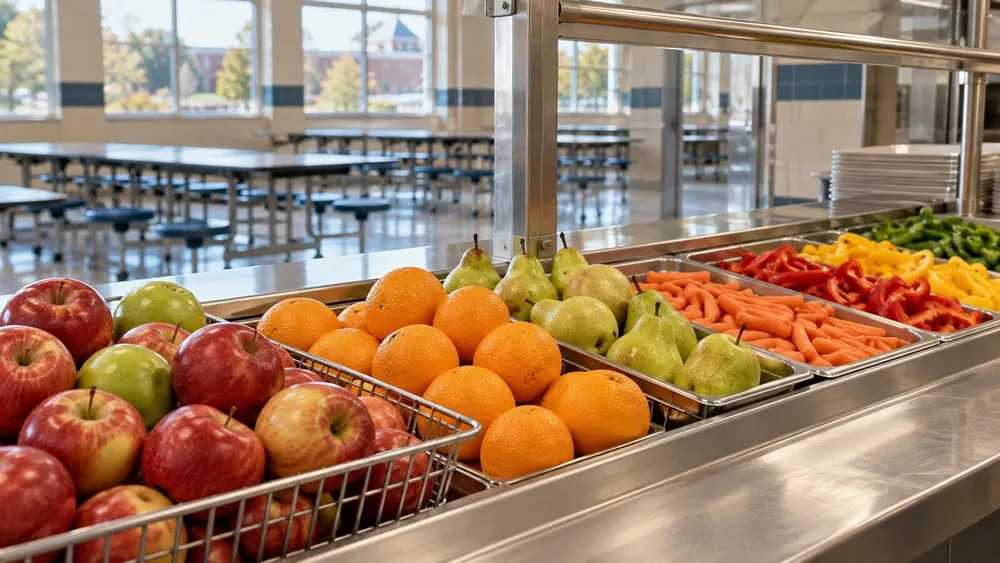
The grants are separate from ordinary breakfast and lunch reimbursements. Participating schools use the money to provide produce at other points in the school day, giving students an additional snack without charging families. The U.S. Department of Agriculture's program description limits awards to eligible elementary schools and emphasizes free access for all enrolled children at a selected school.
Funding follows economic need
Eligibility is tied to the National School Lunch Program. Pennsylvania's FFVP guidance and award list says applicants must have at least 50 percent of students eligible for free or reduced-price meals. Among qualifying applicants, schools with the highest eligibility rates receive priority. That structure directs the limited federal pool toward buildings serving larger shares of lower-income students.
The statewide list includes district, charter, intermediate-unit and nonpublic school sponsors. Individual grants vary with enrollment and program needs: listed awards range from several thousand dollars for small sites to tens of thousands for larger buildings. Dividing the announced total by 249 schools yields an average of roughly $29,000 per school, although actual awards differ substantially.
Federal law requires participating schools to make free fresh fruits and vegetables available during the school day. The program's governing statute also establishes a minimum state allocation and distributes the remaining national funding largely by population. USDA's fiscal 2027 allocation guidance supplies the annual funding framework that state agencies use for school-year awards.
What schools can buy
Federal rules allow recipients to purchase produce through wholesalers, brokers, grocery stores and other retailers. Schools may also buy from farmers markets, orchards or growers in their communities. State Agriculture Secretary Russell Redding said local purchasing can keep more of the spending near participating schools while reducing shipping distance.
Local sourcing is an option, not a condition of the grants. The immediate obligation is to provide qualifying students with fresh produce safely and consistently. Schools must manage procurement, storage, preparation and service while following program rules and food-safety requirements.
The award therefore has two practical effects. It expands food access in schools with high rates of meal assistance, and it gives those schools a dedicated budget for produce that does not have to compete with their regular meal accounts. Families do not need to submit a separate application for the snack program once their child's school is selected.
For Pennsylvania, the consequential measure will be implementation: how often each school serves produce, what varieties students encounter and how much of the federal allocation is spent during the grant period. The state's public award list gives families and local officials a school-by-school benchmark for tracking that work.