Ohio Attorney General Andy Wilson is asking state lawmakers to make misuse of automatic license plate readers a crime, setting a concrete policy marker in a debate that has already prompted some Ohio communities to pause or abandon Flock Safety cameras.
In a statement issued September 16, Wilson defended the systems as valuable investigative tools but said breaches should carry serious consequences. He urged the General Assembly to criminalize unauthorized Flock searches, using Ohio's treatment of improper access to the Ohio Law Enforcement Gateway, or OHLEG, as a baseline.
The proposal does not itself change Ohio law. Legislators would still have to introduce and pass a bill defining prohibited conduct, available defenses and penalties. But Wilson's intervention gives the emerging debate a statewide frame: keep the technology available to police while establishing a specific criminal sanction for officers or other authorized users who search it for improper purposes.
That position arrives after allegations of misuse intensified local scrutiny. WKYC reported that one Ohio city discontinued the cameras after trust and misuse concerns, while other agencies have reviewed their policies. Separate legislation was already being drafted: Statehouse News Bureau reported in August that Republican lawmakers were preparing House and Senate proposals to set rules for the systems.
What the cameras collect
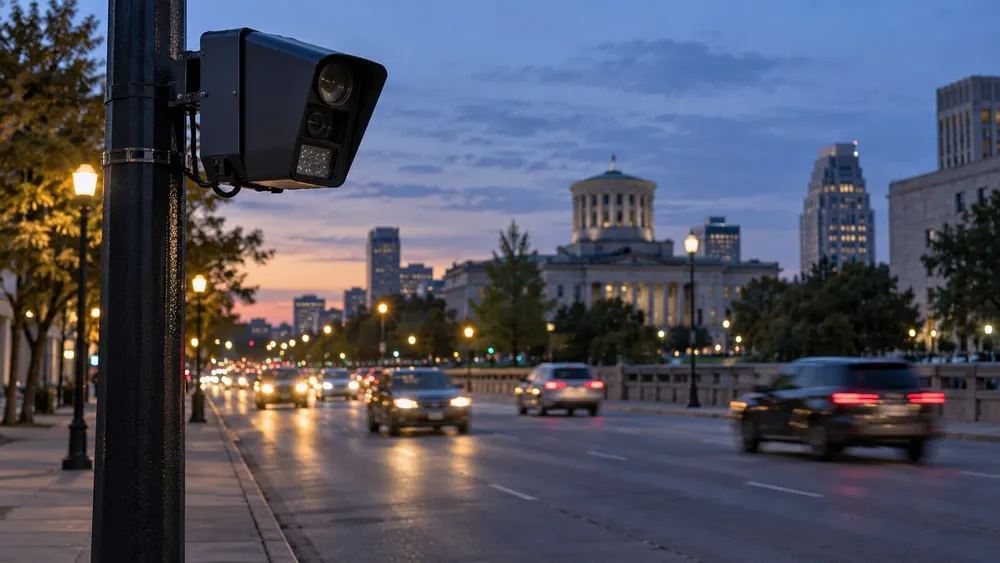
Flock says its license plate readers record a vehicle's plate, identifying characteristics, and the time and location it passed a camera. The company's current public description says searches require a documented reason and are logged for review, customers control access and sharing, and records are deleted after seven days by default unless a different period is required or data is preserved for an authorized investigation. Flock also says the readers do not use facial recognition.
Those controls matter because a license plate search can reveal where a vehicle was seen and can be shared across participating agencies. The practical policy question is therefore broader than whether a camera takes a photograph: it is who may search the resulting database, for what purpose, how long records remain available and how agencies audit access.
Wilson's proposed enforcement model
Wilson pointed lawmakers to OHLEG, the attorney general's secure criminal-justice information network. An Ohio administrative rule states that unauthorized access or misuse of OHLEG violates state law and constitutes a fifth-degree felony. The attorney general said that consequence, including loss of an officer's badge following conviction, should be the minimum starting point for legislation covering license plate-reader misuse.
For Ohio residents, no immediate camera policy changes follow from the statement. Local agencies retain their current contracts and policies unless they act separately, and any statewide criminal standard must move through the legislature. The next consequential details will be the bill language: whether it covers only law-enforcement users, how it defines an authorized investigation, what audit requirements it imposes and whether it regulates data retention or interstate sharing in addition to individual misuse.