
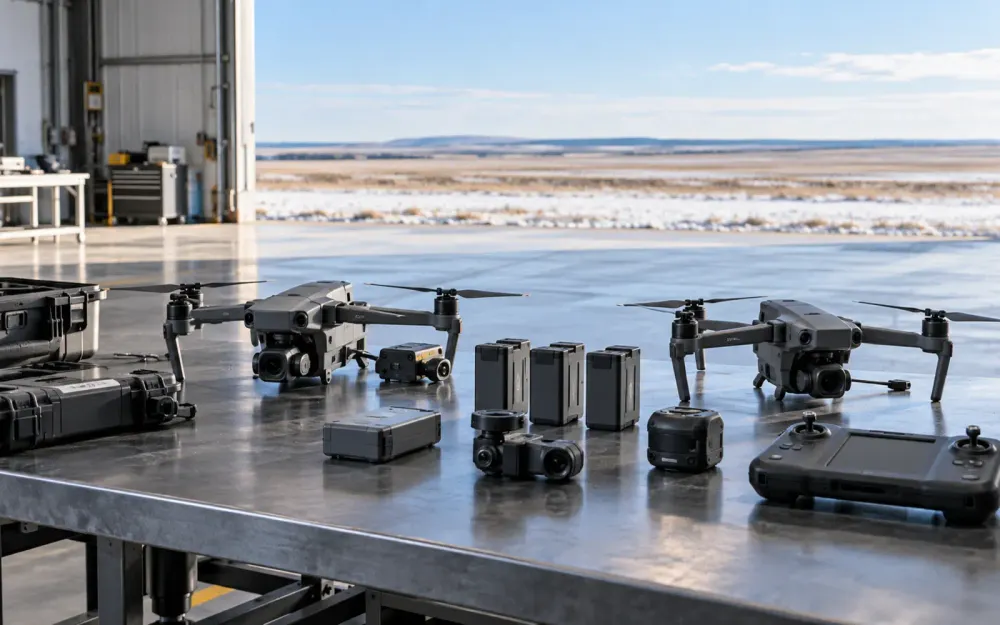
North Dakota is nearing final vendor selections for a $9 million program to replace noncompliant drones used by state agencies and public universities. The state announced Tuesday that technical and cost evaluations are complete and officials are finalizing aircraft platforms, sensors, pricing and agency allocations before purchases begin.
The program is designed to move public-sector fleets onto systems that comply with federal security and procurement requirements while preserving operational capabilities. Senate Bill 2018 authorized the replacement initiative and directed the Department of Commerce to work with the state’s uncrewed aircraft systems test site and participating agencies. A legislative budget summary identifies $9 million in one-time funding from the Strategic Investment and Improvements Fund.
Agencies have already reviewed recommended aircraft and sensor packages based on their missions and supplied feedback for the final choices. The state says the assessment covered current inventories, operational needs and available replacement platforms. The remaining procurement work will determine which vendors win contracts, what each participating agency receives and how far the appropriation stretches across the eligible fleet.
Program guidance from the Northern Plains UAS Test Site says participation is voluntary and limited to state agencies and university-system entities. Eligible drones generally must have been purchased before Jan. 1, 2025, fail applicable federal compliance standards and be surrendered for replacement. Counties, cities and local law-enforcement agencies are not currently eligible.
The initiative is mission-based rather than a guaranteed one-for-one exchange. Replacement packages can include batteries, charging equipment, essential sensors and initial operator training, but participating agencies will be responsible for ongoing subscriptions, maintenance, upgrades and future replacements. Agencies can state vendor preferences, although the Office of Management and Budget will make awards through the competitive procurement process.
State law also directs program managers to prioritize agencies willing to share aircraft instead of buying duplicative systems and to maintain a centralized inventory of replacements. That structure gives procurement officials a way to stretch the appropriation, but it also means final allocations may reduce the number of aircraft even when agencies receive stronger sensors or broader mission capability.
Federal-funding eligibility is a primary reason for the transition. Program guidance says federally supported projects can no longer use restricted platforms, and compliant systems must avoid parts from covered foreign entities and rely on trusted assembly and component sources. The state also plans to connect agencies with Vantis, its statewide infrastructure for supported flights beyond the pilot’s visual line of sight, where appropriate.
The next accountability milestone will come when North Dakota discloses the winning vendors, unit prices and agency allocations. Those details will show whether the centralized purchase delivers equivalent or improved capabilities within the $9 million ceiling. The program also requires legacy aircraft to be decommissioned, sold or disposed of under applicable rules, with sale proceeds returned to the state.
Until contracts are finalized, participating agencies do not yet have a public delivery schedule. The state says additional information will go directly to agencies as selections and allocations are completed. That leaves the procurement outcome—not the announcement of final-stage review—as the point when taxpayers can compare costs, coverage and operational gains.