
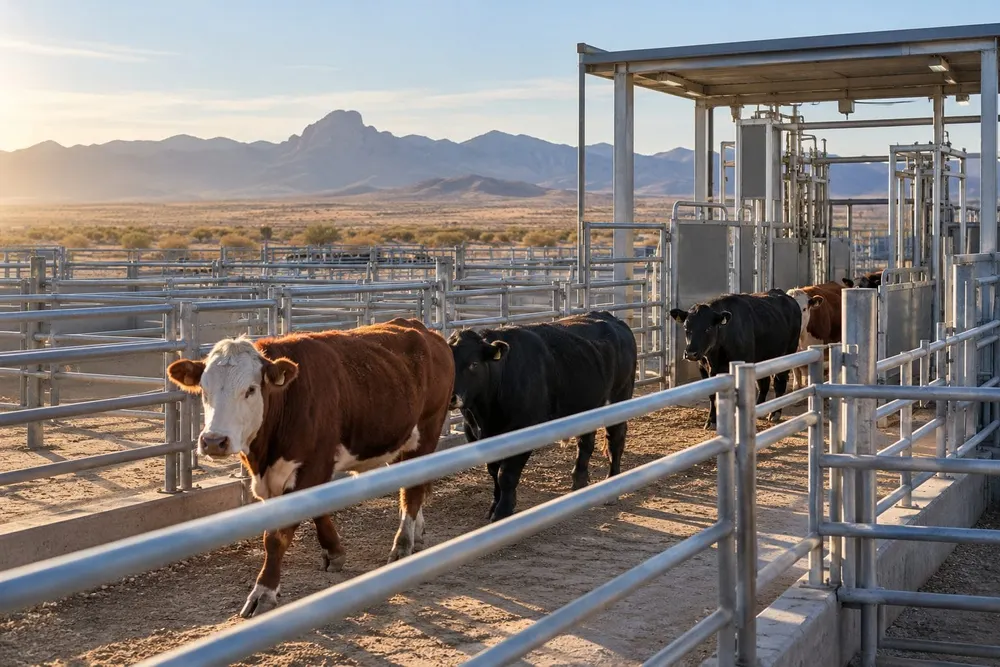
The Santa Teresa port of entry began accepting cattle from Mexico again on Sept. 24, restoring a major livestock route into New Mexico under tightened animal-health controls. The reopening date appears on the U.S. Department of Agriculture’s current import guidance, which was updated Sept. 25, and follows USDA’s public commitment earlier this month to resume traffic at the border facility.
The action is consequential for New Mexico because Santa Teresa is one of only three southern crossings named in USDA’s phased plan. Douglas, Arizona, reopened Aug. 24; Santa Teresa followed a month later; and no date has been set for Columbus, New Mexico. APHIS says all other southern border ports remain closed to livestock imports, concentrating legal cattle flows through a small number of inspected facilities.
The reopening does not return trade to its old operating rules. USDA’s July reopening framework says every animal presented at the selected ports must receive a full inspection for signs of New World screwworm. The agency’s live-animal import page separately lists an APHIS-SENASICA inspection and treatment protocol, export certificates and approved treatments for cattle coming from Mexico.
The federal guidance distinguishes among feeder animals, breeding cattle and cattle intended for immediate slaughter, each governed by health certificates or import protocols. It also says bovine embryos and semen from Mexico remain barred. That means the Sept. 24 change is a controlled reopening for live animals, not a blanket restoration of every livestock-related import channel.
Those safeguards remain central because screwworm larvae infest the wounds of warm-blooded animals. USDA’s interagency response site describes the parasite as a serious threat to livestock and wildlife, while saying the present risk to animals and people in the United States is very low and the food supply is safe. The Centers for Disease Control and Prevention likewise says the current public and animal risk is very low and reports no locally acquired U.S. human infestations.
The policy balance is unusually visible in New Mexico. USDA confirmed a second state case in a Grant County horse shortly before the planned reopening, according to Reuters’ account of the federal and state response. At the same time, the agency maintained the Santa Teresa schedule, signaling that controlled imports could resume while surveillance continued. USDA says the phased plan remains contingent on Mexico following the countries’ joint action plan.
For ranchers, importers and border businesses, the practical change is immediate but limited: cattle may again move through Santa Teresa, yet volumes remain subject to inspections, documentation and federal disease controls. For New Mexico officials, the next test is whether the port can operate without adding transmission risk while state and federal teams investigate detections and maintain surveillance. Columbus remains the unresolved part of the state’s border-trade picture, with its reopening still listed as “to be determined.”