
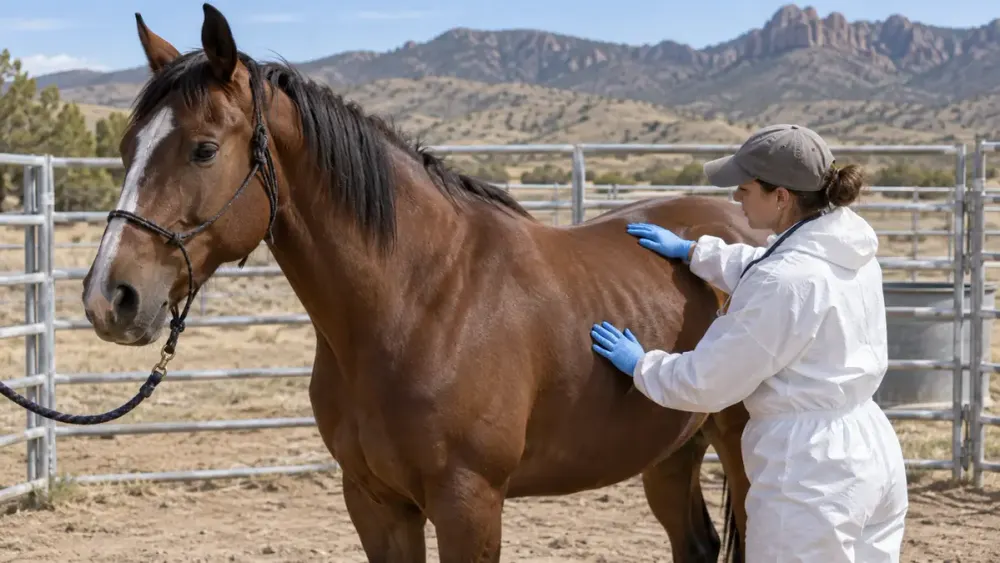
New Mexico animal-health officials have established a 12.4-mile infested zone in Grant County after confirming the state’s second New World screwworm case, this time in a horse near Mimbres.
The case was identified Sept. 17, less than three weeks after federal officials released the zone created around New Mexico’s first case. State and federal teams are now expanding animal surveillance and fly trapping around the new location to determine whether the parasite has spread beyond the affected horse, according to KRWG, which reported the New Mexico Department of Agriculture’s response.
Animals within the infested zone must be inspected and treated when necessary before they move within or leave the area. A larger surveillance zone extends beyond it. Routine trips to auctions, fairs, veterinary appointments and recreation are generally allowed, but inspectors may delay or modify movement when an animal has a wound or another condition that increases the risk of spreading the parasite.
New World screwworm is a parasitic fly whose larvae feed on living tissue in warm-blooded animals. The AVMA says infestations can affect livestock, pets, wildlife and, rarely, people. Warning signs include worsening wounds, maggots, foul-smelling drainage and unusual licking or irritation around an injury. New Mexico officials are telling owners to avoid moving a suspected animal and contact the Livestock Board immediately.
The new detection reverses a recent milestone. On Aug. 30, the U.S. Department of Agriculture’s Animal and Plant Health Inspection Service released the state’s earlier infested zone after no additional cases were found following a June infection in a dog. That response included animal inspections, wildlife and fly surveillance, movement requirements and releases of sterile flies.
The Grant County case also arrived as USDA prepared to reopen the Santa Teresa port to livestock imports from Mexico on Sept. 24. Reuters reported that the horse’s infection had not yet been confirmed when Agriculture Secretary Brooke Rollins announced the reopening plan and that officials were still investigating how the animal became infested.
The trade implications remain unresolved. Federal authorities previously restricted Mexican livestock imports to reduce the risk of screwworm entering the United States, while the interruption added pressure to already tight cattle supplies. Whether the second New Mexico case changes the Santa Teresa schedule will depend on federal risk assessments and the results of surveillance around Mimbres.
The response also includes wildlife. The Department of Wildlife is monitoring hunting activity and the movement of dogs and horses near the affected area, reflecting the parasite’s ability to infest multiple warm-blooded species rather than livestock alone.
For New Mexico producers and animal owners, the immediate requirements are local: inspect wounds frequently, keep them clean and covered, coordinate treatment with a veterinarian and follow movement instructions inside the designated zone. The decisive next indicator will be whether trapping and inspections find additional cases.