Colorado air-quality regulators have adopted a final set of oil-and-gas methane controls that require closer monitoring and maintenance of pollution-capture equipment, completing the state’s three-stage response to federal standards issued in 2024.
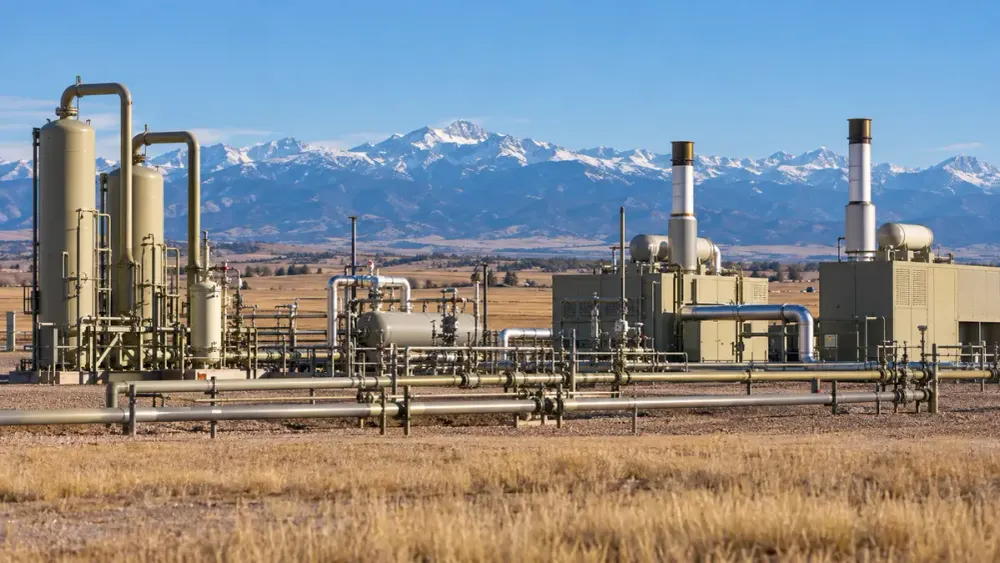
The Air Quality Control Commission’s action makes Colorado the first state to fully adopt the federal framework and adds requirements beyond the federal minimum, according to Colorado Public Radio. The latest rules focus on enclosed combustion devices, which burn pollutants inside a chamber, and closed-vent systems designed to keep gases from escaping.
Operators must continuously monitor whether enclosed combustion devices are functioning and repair them when emissions are detected. The commission’s earlier rulemaking stages, begun in February 2025, addressed equipment that intentionally releases natural gas and expanded leak detection. Together, the measures build on Colorado’s existing Regulation No. 7, the state rule governing oil-and-gas emissions.
The federal policy being implemented has two parts. The Environmental Protection Agency’s 2024 rule sets standards for new, modified and reconstructed sources, while separate emissions guidelines direct states to write plans for existing facilities. Methane is the principal target, but the controls also reduce volatile organic compounds and hazardous air pollutants that can accompany oil-and-gas production.
State officials must now translate the commission’s votes into an implementation plan and submit it to EPA by January. That filing will show how Colorado intends to meet the federal guidelines across existing sites. The state also maintains an oil-and-gas emissions inventory and reporting program, which provides regulators with facility and equipment data used to track compliance and emissions trends.
The Environmental Defense Fund estimated that applying the federal minimum in Colorado would prevent about 30,000 metric tons of methane emissions through 2038. Industry representatives participated in a joint working group and said operators remain committed to reducing emissions, while environmental advocates argued the stronger state rules are particularly important if federal protections change.
That estimate covers the federal baseline, so it should not be read as a precise forecast of the additional reductions from Colorado’s stricter provisions. Outcomes will depend on equipment performance, operator compliance and enforcement. Continuous monitoring is meant to shorten the time between a control failure and a repair.
The rules also have a Front Range air-quality dimension. Oil-and-gas emissions include compounds that contribute to ground-level ozone, a persistent regional problem with health consequences during high-ozone periods. The commission’s action does not resolve that broader problem on its own, and the latest stage is expected to produce fewer direct reductions than the first two stages. Its practical purpose is narrower: ensuring that equipment installed to capture or destroy pollution is actually operating as designed.
Compliance dates, inspections and measured emission trends will determine the effect. For now, the adoption locks the 2024 federal methane framework into Colorado policy and establishes state requirements that would remain relevant even if Washington later weakens the national rules.