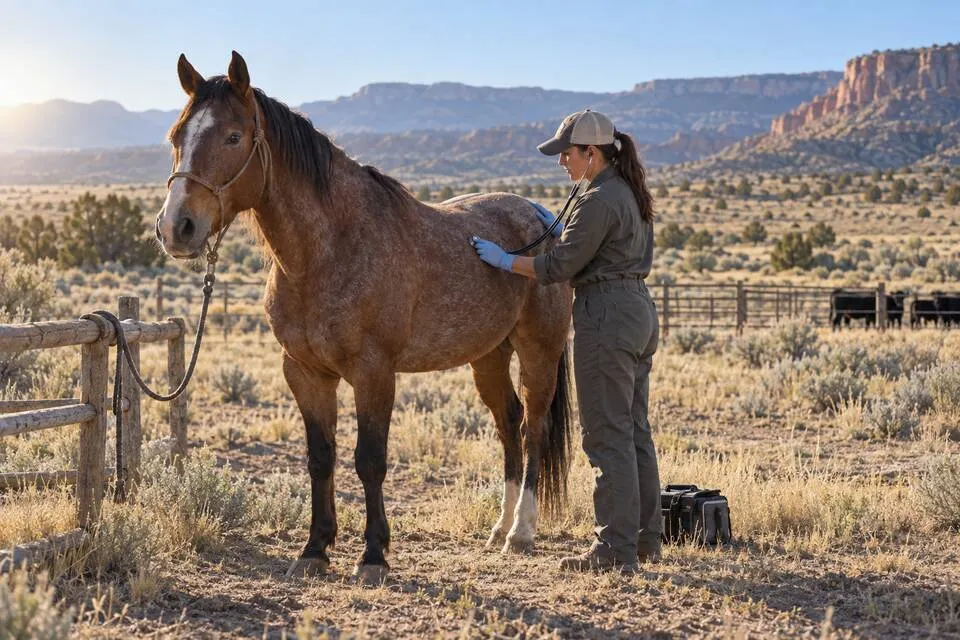
New Mexico animal-health officials have established a new control zone in Grant County after confirming the state’s second New World screwworm case, an infestation found in a horse on Sept. 17. The response includes wider animal inspections, fly trapping and surveillance intended to determine whether the flesh-eating parasite has spread beyond the affected animal, according to the state’s announcement.
The infested zone extends at least 12.4 miles around the affected location. Animals moving within or out of the zone generally must be inspected and, when necessary, treated. Routine trips to auctions, fairs, veterinary appointments and recreational events are not automatically barred, but officials may delay movement when an animal’s health or wound condition creates a higher risk. The state’s guidance says inspections normally must occur within five days of movement and animals must be free of visible wounds or signs of infestation. Such zones generally remain in effect for at least three months after the last detection, although surveillance results, weather and habitat conditions can change the timeline.
The case adds uncertainty to plans for restoring livestock trade through New Mexico. Agriculture Secretary Brooke Rollins said last week that the federal government was preparing to reopen a New Mexico port after months of restrictions tied to the parasite. The planned reopening followed a limited resumption of cross-border livestock trade through Douglas, Arizona, in late August, Reuters reported. Federal officials have said they can close a port again if conditions worsen. The earlier import halt tightened cattle supplies and contributed to record beef prices, making the disease response consequential for ranchers, border commerce and consumers well beyond the control zone.
The infected horse was in southwestern New Mexico near the Mexican border. Federal data cited by Reuters identified it as the state’s second confirmed case since screwworm re-entered the United States from Mexico in June. Officials were still investigating how the horse became infected. The parasite’s larvae feed on living tissue in warm-blooded animals and can turn small wounds into severe, potentially fatal infestations.
The practical consequences reach beyond commercial cattle operations. New Mexico’s response involves the departments of Agriculture, Wildlife and Health, the Livestock Board, federal animal-health officials and New Mexico State University’s extension network. The coordinated resource site directs livestock owners, veterinarians, hunters and pet owners to inspect animals regularly, keep wounds clean and report suspected cases immediately.
State officials say warning signs include wounds that do not heal, visible maggots, foul odor or drainage, persistent licking or biting and unusual discomfort. Anyone who suspects an infestation should avoid moving the animal and contact a veterinarian or the New Mexico Livestock Board. The expanded zone does not establish that the parasite is widespread, but it is designed to answer that question quickly while reducing the chance that animal movement carries it elsewhere.