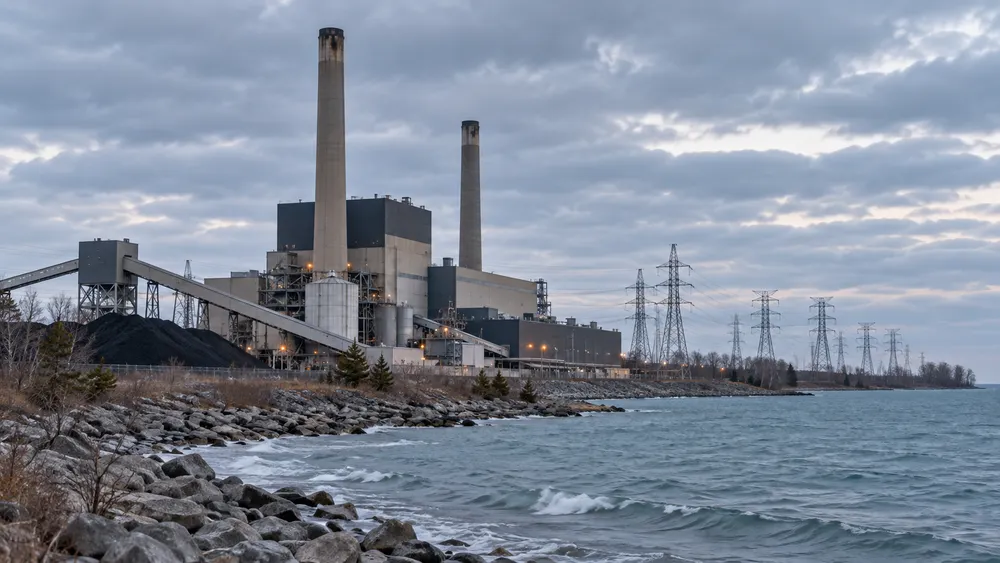
A federal appeals court has vacated the first U.S. Energy Department order that forced Michigan’s J.H. Campbell coal plant to remain open past its planned retirement, ruling that the agency exceeded its emergency authority. The unanimous D.C. Circuit decision limits how the federal government may override state-approved utility plans, but it does not immediately end every dispute over the plant.
The court held that Section 202(c) of the Federal Power Act is a narrow, last-resort power for acute electricity emergencies requiring immediate federal action. It cannot be used simply because federal officials disagree with a utility’s planned closure or with state and regional resource planning, according to the court opinion.
Consumers Energy had planned to retire the West Olive plant on May 31, 2025. The Michigan Public Service Commission had approved that plan after reviewing replacement resources. Federal officials instead directed the utility to keep the 1960s-era facility operating, citing reliability risks across the Midcontinent Independent System Operator region. The retirement plan was projected to save customers nearly $600 million through 2040, Michigan Public reported.
The financial consequences are now central to the case. Consumers Energy reported $295 million in costs associated with operating Campbell from May 2025 through June 30, 2026, Michigan Attorney General Dana Nessel’s office said in a state release. The utility is seeking to recover those costs from customers across the regional grid, not solely from Michigan ratepayers.
The ruling addressed the original May 2025 order. It did not automatically erase a series of later extensions. The attorney general said the Energy Department had extended its direction five times and that a sixth order requires Campbell to operate until Nov. 14, 2026. Michigan has filed separate challenges to the renewals, leaving the plant’s near-term status and the ultimate cost allocation unsettled.
An independent report from Reuters said the three-judge panel found the department had stretched a rarely used emergency provision beyond its statutory limits. The federal government argued that rising electricity demand, including growth tied to data centers, justified preserving generation. Michigan countered that the regional planning process had already accounted for reliability needs.
The Campbell dispute has broader implications because the Energy Department used similar emergency orders to delay retirements at other power plants. An AP account reported that the decision could shape challenges to those orders, although each plant’s facts and procedural posture differ.
For Michigan customers, the next questions are practical: whether later federal orders survive, when Campbell can retire, and who pays the additional operating bill. The appeals court resolved the legality of the first intervention but left later extensions and cost recovery for separate proceedings. Until those disputes conclude, the ruling is a major state victory without yet providing a final closure date or a settled price for ratepayers.