Massachusetts Gov. Maura Healey is asking lawmakers for $2 million to expand free, voluntary nurse visits to families with newborns, pairing the proposal with broader postpartum mental-health screening after a high-profile criminal case renewed attention to gaps in care.
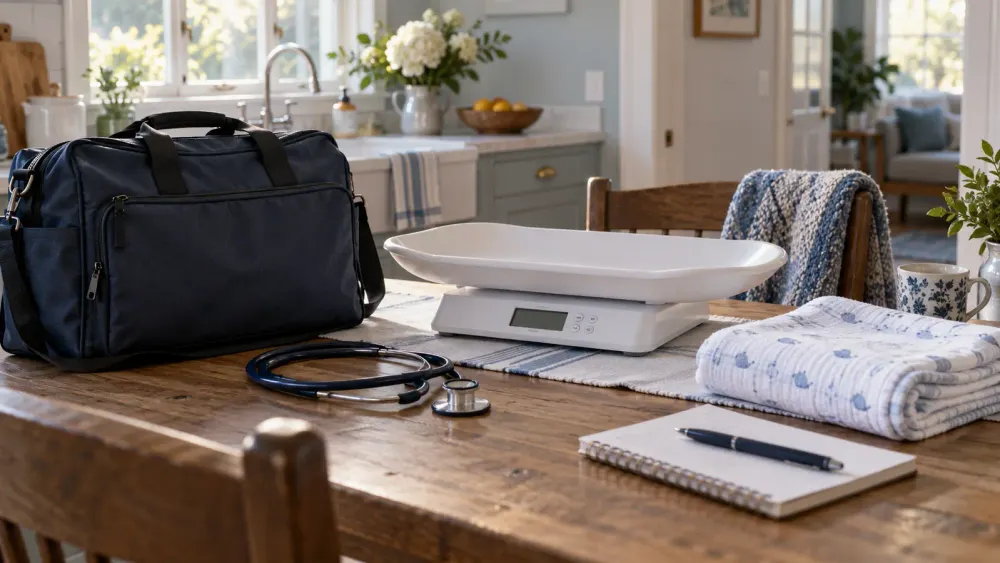
The proposed funding would widen the state’s Welcome Family program, which sends a nurse to a family’s home to answer questions about feeding, sleep, infant development and recovery after childbirth. Healey said the goal is to make the service available to families welcoming roughly 68,000 babies each year, regardless of income or insurance. Participation would remain optional.
The governor also proposed $250,000 for the Massachusetts Child Psychiatry Access Program for Moms and directed the Department of Public Health to update regulations so perinatal screening covers a wider range of mood and anxiety disorders, not only postpartum depression. The Associated Press reported that the package followed the mistrial of Lindsay Clancy, whose defense argued that she experienced postpartum psychosis when she killed her three children. A mistrial is not a finding on the merits, and the policy proposal extends beyond that case.
Healey’s request still needs legislative approval. That distinction matters: the announcement establishes an executive priority but does not itself appropriate money or guarantee universal coverage. Axios Boston reported that the administration intends to use the funding to broaden access to an existing program rather than build a separate system.
The state’s own maternal-health reviews provide the policy context. Massachusetts’ review program examines deaths during pregnancy and the year after it, with mental-health conditions and substance use among the leading contributors identified in recent reviews. Many pregnancy-related deaths were deemed preventable, underscoring why officials are focusing on earlier contact and referral.
For families, a home visit would not replace obstetric, pediatric or emergency care. Its practical value is that a nurse can identify concerns, reinforce safe infant-care practices and connect a parent with clinicians or community services before a problem escalates. The proposed screening changes similarly aim to improve detection; they do not create a diagnosis by themselves.
Massachusetts expanded coverage for doulas, midwives, birth centers and postpartum-depression screening in its 2024 maternal-health law. The new proposal would add a population-level home-visiting component and more explicit attention to the full spectrum of perinatal mental illness. Lawmakers will decide whether the requested money enters the budget and, if so, how quickly the Department of Public Health can scale staffing and referrals statewide.
Implementation will require more than hiring nurses. The state would need consistent consent procedures, language access, geographic coverage, referral capacity and a way to measure whether families actually receive follow-up care. Those details will determine whether a nominally universal offer reaches rural communities and families who face transportation, insurance or scheduling barriers.