
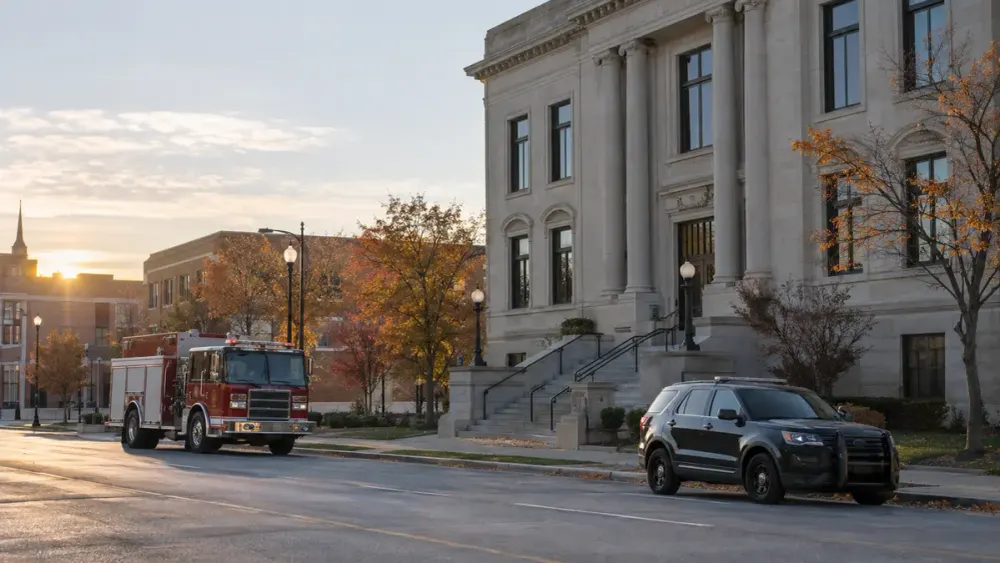
Iowa’s new property-tax law is beginning to reshape city services more than nine months before its central revenue limit takes effect. The Des Moines City Council approved $11.5 million in savings this week, including police and fire reductions, as the state prepares to cap most city and county general-levy revenue growth at 2% beginning July 1, 2027.
The approved changes include about $566,000 from the police budget, largely by reassigning three neighborhood officers and reducing the next academy by three positions. Fire reductions total about $425,000 through two vacant positions and changes to recruit hiring, according to Axios reporting on the council action. Police and fire together account for about 58% of the city’s nearly $256 million general fund, limiting how much the council can protect public safety while closing the broader gap.
The cuts are an early consequence of Senate File 2472, the property-tax package approved by lawmakers this spring. The law limits annual growth in specified local-government property-tax revenue to 2%, with narrow exceptions and a mechanism for voters to authorize additional revenue. It also expands the homestead exemption, changes tax-increment financing rules and shifts some school-funding responsibility to the state.
Gov. Kim Reynolds presented the measure as a six-year, $4.2 billion property-tax reduction. Her legislative-session summary said the cap would impose predictability and discipline while protecting homeowners. Supporters argue that fast-rising assessments have allowed local tax collections to grow too quickly and that a firm ceiling forces governments to prioritize spending.
Local officials counter that essential-service costs are rising faster than the limit. An Iowa League of Cities survey reported that average police-officer costs rose about 4% annually between 2020 and 2026, firefighter costs rose 6%, ambulances 8% and insurance 20%. The association said those increases are two to four times the proposed cap and will affect small and rural communities as well as large cities.
Des Moines’ reductions are not confined to public safety. Earlier proposals included library, parks, neighborhood-services, development and technology cuts. City officials have said the fiscal-year 2028 shortfall is about $12 million, with another roughly $5 million gap expected the following year. The September package addresses the first round; a harder second round is expected in January. For residents, the practical effects may include fewer neighborhood officers, slower service reviews and reduced maintenance or programming.
The policy question now shifts back toward the Legislature. Des Moines Councilmember Josh Mandelbaum has urged the city to seek a separate public-safety levy, while Sen. Dan Dawson, the Senate Ways and Means chair who managed the bill, told Axios that moving major expenses outside the ceiling would defeat the law’s purpose. Iowa’s 2027 session begins January 11, giving cities one formal route to seek changes before the cap takes effect.