Idaho has completed its 2026 copper-based treatment of the Snake River’s known quagga mussel infestation, ending temporary access precautions while keeping the state’s eradication campaign in a monitoring phase.
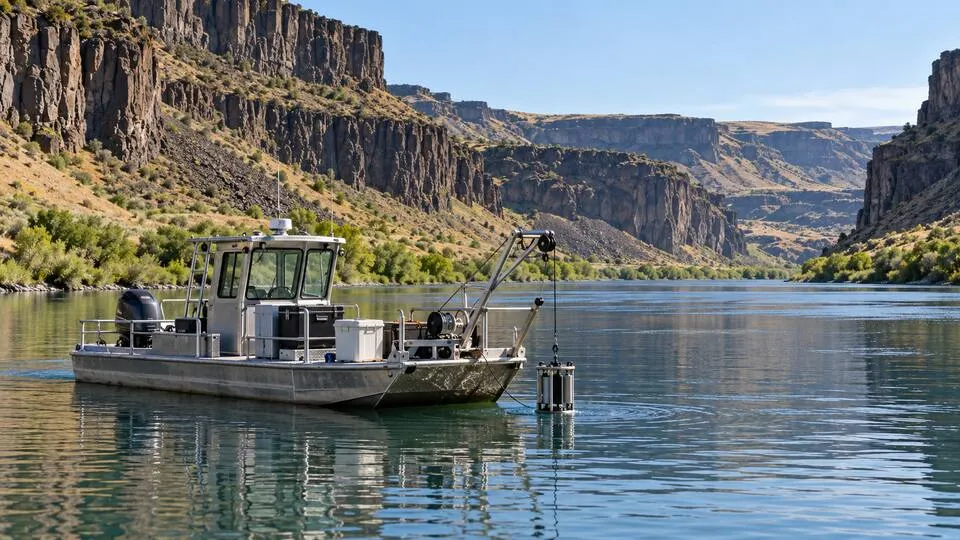
The Idaho State Department of Agriculture said the multi-stage application ran from Aug. 27 through Sept. 16 at two target locations near Twin Falls. Its completion notice said crews used three EPA-labeled products—Natrix, EarthTec QZ and Cutrine Plus Granular—and added deep-hole injection equipment and product-filled mesh bags to reach fissures and other potential refuges. All river closures and the state’s precautionary keep-out recommendation ended Sept. 18.
The state reported minimal mortality among fish, aquatic plants and algae from Sage View downstream to the Highway 46 Bridge. It said application concentrations were below the human drinking-water standard, no public drinking-water intakes were near the treatment zone, and copper levels were monitored by agriculture and environmental-quality officials. Those treatment-impact findings are the state’s preliminary account; longer-term sampling will determine whether the campaign has eliminated the remaining mussels.
Idaho entered this season with a smaller detected population. An Aug. 18 sampling update said larval detections were 77% below 2025 levels after more than 420 samples in the infested reach and more than 3,000 statewide. That decline led the department to use a smaller surface treatment area while intensifying targeted work in deep holes. It is evidence of progress, but a lower detection count is not the same as confirmed eradication.
The economic stakes extend beyond recreation. The state says more than 1,700 water users depend on the Snake River from Twin Falls to Lewiston and estimates that, if mussels became established, annual chemical treatment for downstream irrigation, hydropower and water systems could cost $69 million for product alone. Federal data underscore Idaho’s exposure: the U.S. Department of Agriculture’s 2026 irrigation overview ranks Idaho among the nation’s five largest states by irrigated acreage.
Quagga mussels reproduce rapidly, attach to hard surfaces and can clog water-delivery equipment. A California wildlife fact sheet describes the broader infrastructure and ecological risks from quagga and zebra mussels, including damage to water systems and changes to aquatic food webs. Idaho’s response has therefore focused on eliminating a localized population before those recurring costs become permanent.
The 2026 work also refined an approach used since the first Snake River detection in 2023. Earlier reporting by Boise State Public Radio documented the challenge posed by 60- to 90-foot holes in the treated reach and the state’s move toward long-tube copper delivery in hard-to-reach areas. This year’s barges and deep-hole injection system built on that strategy.
The immediate public consequence is straightforward: the river is open again. The longer-term result remains unsettled. Idaho will need repeated sampling across seasons to distinguish a suppressed population from eradication, and officials have not declared the Snake River mussel-free.