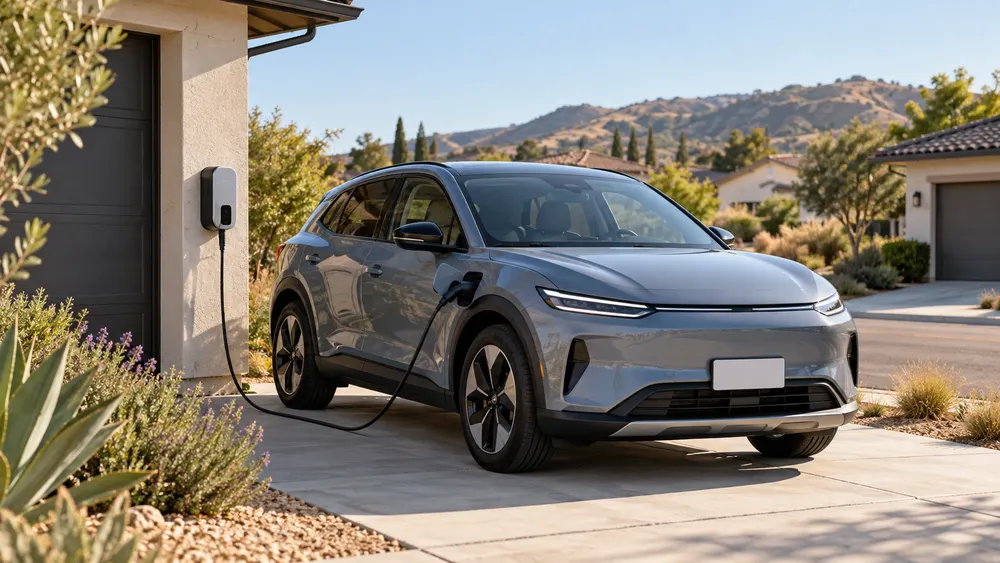
California says nearly 12,000 residents have bought their first electric vehicle through MyFirstEV since the rebate program launched in August. Governor Gavin Newsom’s October 16 update, also reported by Reuters, marks an early uptake milestone for a program designed to lower the price at the dealership rather than reimburse buyers later.
The reported participation does not mean every eligible vehicle still carries a rebate. California Climate Investments says availability varies by automaker and dealership, with incentives offered first-come, first-served while funds last. Reuters reported that Tesla’s allocation was exhausted, even as funding remained available through other manufacturers. A statewide funding balance is therefore not a guarantee that a buyer’s chosen brand qualifies.
What the discount covers
The California Air Resources Board’s launch notice sets out a $3,500 discount for eligible new vehicles with a manufacturer’s suggested retail price no higher than $50,000, and $1,750 for eligible used vehicles priced at $25,000 or less. The governor’s current update specifies that used purchases run through manufacturers’ pre-owned vehicle programs. Residents must be first-time ZEV buyers; purchases and leases are covered where program requirements are met.
The benefit is built into the transaction. CARB says vehicles ordered or purchased before the relevant manufacturer launched its incentive are not eligible for a later award. The state program summary dates the overall launch to August 3 but warns that manufacturer start dates differ. That makes checking the model, trim, transaction date and remaining allocation important before signing an agreement.
Participating companies also publish operational details. For example, Subaru’s program page says customers must complete a self-attestation at the retailer and confirm availability when buying or leasing. It excludes plug-in hybrids and identifies qualifying battery-electric and hydrogen-fuel-cell vehicles. This is a program example, not a recommendation of a manufacturer or a promise that every listed model remains funded.
Uptake and market share measure different things
The governor’s update puts ZEVs at 19.1% of new California vehicle sales in the third quarter. The California Energy Commission’s data documentation shows an October 16 update covering registrations through September 30. Its broader ZEV category includes battery-electric vehicles, plug-in hybrids and hydrogen fuel-cell vehicles, so that market measure should not be read as the rebate program’s eligibility list.
The commission also cautions that new sales are inferred from DMV registrations and that processing can lag by several weeks. The figures describe market activity; by themselves they do not establish how many purchases happened because of MyFirstEV. The rebate total measures participation in a specific incentive, while the registration series measures a wider vehicle market.
For consumers considering a purchase, the practical next step is to confirm the incentive in the dealer’s written pricing and check any combined offers separately. The state guidance allows stacking with other qualifying assistance, but manufacturer terms make clear that combinations and availability require verification at the transaction.