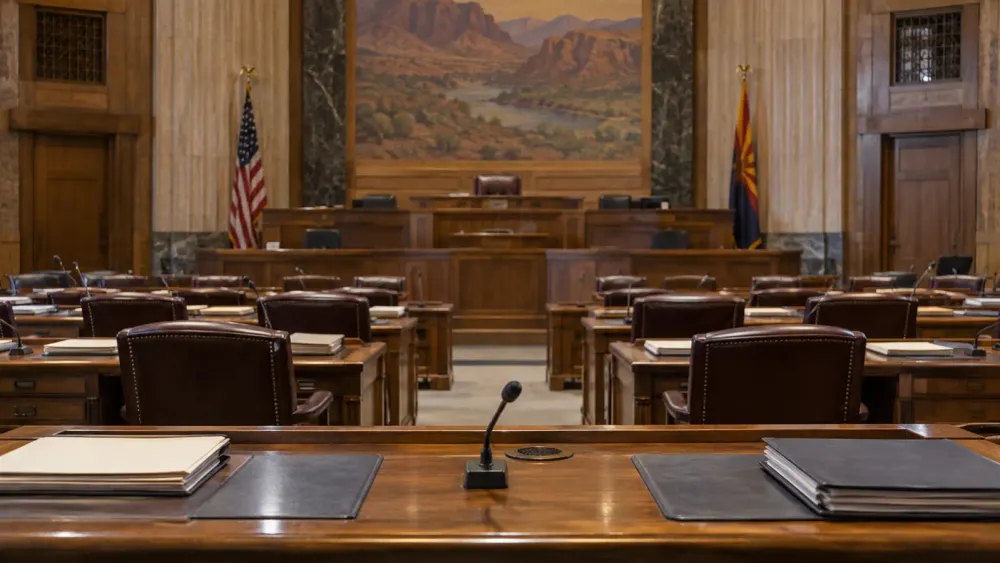
An Arizona Senate committee chairman has issued subpoenas directing Gov. Katie Hobbs, Attorney General Kris Mayes and other officials to testify September 29 about state payments to a major foster-care provider and the handling of a concluded bribery investigation.
Sen. Jake Hoffman, the Republican chair of the Senate Government Committee, also sought investigative files from the attorney general’s office, according to Axios Phoenix’s report on the subpoenas. The requests extend legislative scrutiny of rate increases awarded by the Department of Child Safety to Sunshine Residential Homes after the company made political contributions connected to Hobbs and the Arizona Democratic Party.
The subpoenas do not establish wrongdoing or reopen a criminal case. In August, the Arizona Attorney General’s Office said its two-year investigation reviewed more than 100,000 documents and over one terabyte of campaign-finance, procurement, banking and government communications. Mayes said investigators found no evidence of the quid pro quo required to support a bribery charge and declined prosecution.
The attorney general nevertheless called for lawmakers and the governor to pursue greater transparency for political donations by state contractors. The office’s published legal analysis separates the appearance concerns created by the sequence of donations and rate decisions from the evidence needed to prove a criminal agreement.
The Associated Press reported that Sunshine was Arizona’s largest provider of foster-care beds and had warned it could reduce capacity unless its rates increased. The company received increases after contributing to Hobbs-related political entities, circumstances that prompted the original allegations. Hobbs has denied directing the rate decisions.
Hoffman argues that the attorney general’s inquiry left important questions unanswered and wants testimony from administration officials, Department of Child Safety personnel and Sunshine representatives. The governor’s campaign characterized the subpoenas as election-season political theater. Mayes’s office defended its investigation as thorough and said it would review the demands before commenting on compliance.
The timing adds a political dimension that should be kept distinct from the evidentiary record. The hearing is scheduled shortly before early voting, while Hobbs and Mayes are both running for reelection. Axios also reported that a company owned by Hoffman has received nearly $1.2 million to assist Hobbs’s Republican opponent, Andy Biggs. That financial connection does not determine whether the subpoenas are valid, but it is relevant context for evaluating competing claims about motive.
Arizona law gives legislative committees subpoena authority, and state statute makes refusal to obey a legislative subpoena a class 2 misdemeanor. Compliance questions may still involve scheduling, legal objections, privileges and negotiations over documents or testimony.
Separate reviews by the Arizona Auditor General and Maricopa County authorities have also been reported as pending. The September 29 hearing could produce new testimony or records, but the central verified legal fact remains unchanged: the attorney general’s criminal investigation found insufficient evidence for bribery charges. Any new allegation arising from the committee process will require independent corroboration rather than inference from the subpoenas themselves.