Alabama dog owners and local animal-control agencies have one week to prepare for a new statewide standard governing dogs kept outdoors. The law, commonly called Beau’s Law, takes effect Oct. 1 and establishes specific rules for tethering, enclosures, food, water and shelter.
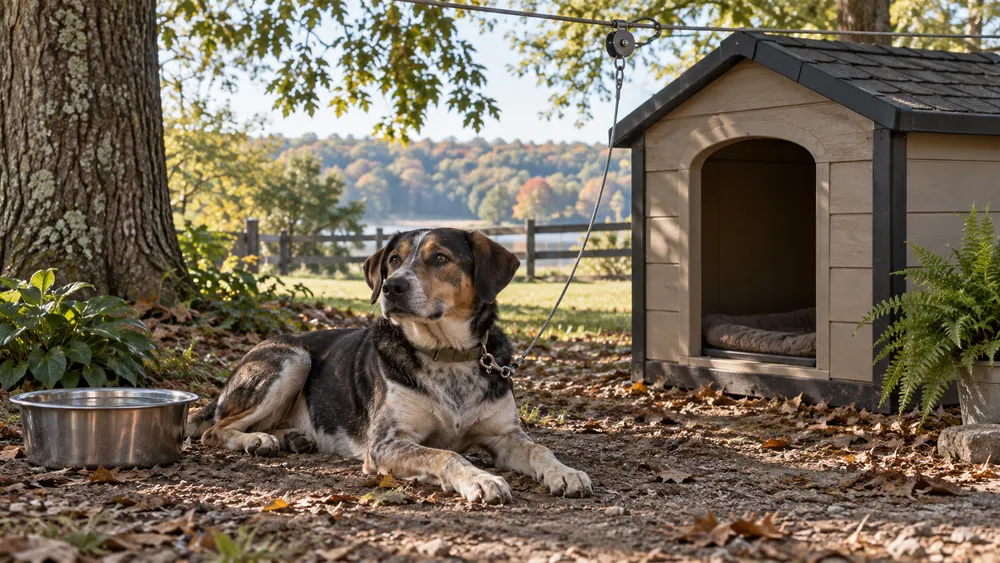
The central change is that a dog generally may not be tied directly to a tree, pole, stake or structure. Under the enrolled version of Senate Bill 361, a tethered dog must use a trolley system with a properly fitted collar or harness, swivels at both ends and a line that is not unreasonably heavy. The setup must keep the animal on the owner’s property, prevent entanglement and provide continuous access to adequate food, water and shelter. Logging chains, choke collars and pinch collars may not be used as tethers.
The law also regulates outdoor enclosures. They must be secure and fully fenced, give the dog enough room to move freely and provide continuous access to necessities. Shelter must keep the animal dry and protected from weather, include shade and cold-weather bedding when needed, have a solid floor and enough room for the dog to stand, turn, lie down and extend its limbs. The Legislature has already incorporated the rules into the Code of Alabama, where the effective date is displayed as Oct. 1, 2026.
There are important exceptions. The restrictions do not apply in the same way to veterinary practices, boarding kennels, shelters, licensed groomers, service dogs, certain dog competitions and lawful hunting or obedience training. Working dogs used for herding, agriculture, hunting or retrieving are also exempt. Temporary tethering at homes, campsites, recreation areas or businesses remains allowed when the duration and conditions are reasonable for the weather.
Enforcement will be local. Counties and municipalities may appoint animal-control officers to investigate alleged violations. Certified law-enforcement officers may remove a dog when they have probable cause to believe its life is in danger or order the owner to provide care at the owner’s expense. Violations escalate from a Class C misdemeanor for a first offense to Class B for a second and Class A for a third or later offense; owners can also be charged for boarding and veterinary care.
The measure cleared the House 69-23 after debate over its effect in rural communities, according to Alabama Reflector’s account of final passage. Supporters said the bill targeted mistreatment of companion dogs, while opponents questioned the practicality of statewide rules. A WTVY report during the legislative debate documented concerns about enforcement and the penalty structure.
For owners, the practical question is whether an outdoor setup meets the statute’s detailed standards before Oct. 1. For local governments, the law creates a choice about appointing investigators but leaves certified officers with the authority to act when an animal faces immediate danger.