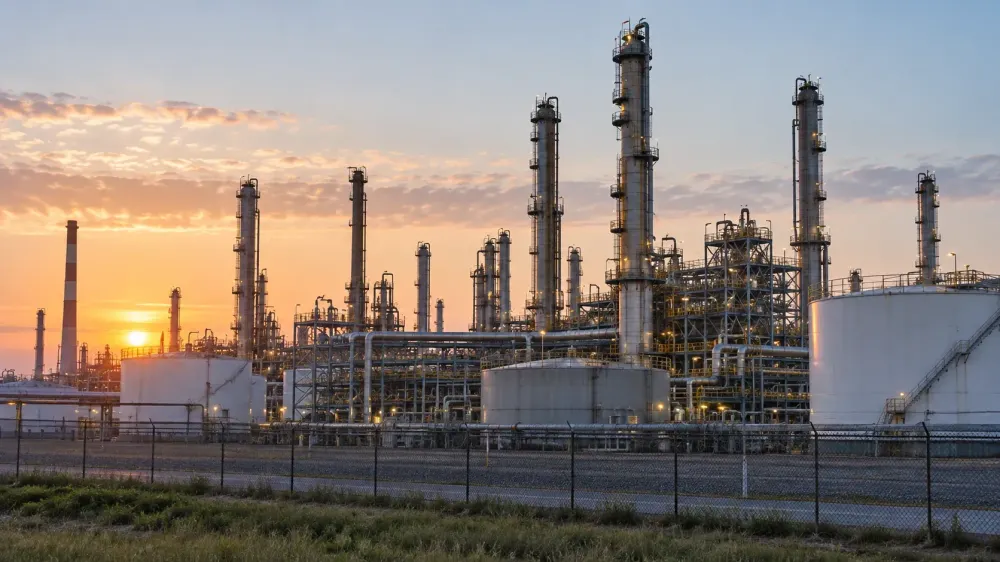
ExxonMobil reported $15.4 billion in third-quarter earnings and Chevron reported $9.9 billion on Friday, as unusually profitable fuel refining helped both companies beat Wall Street expectations. The results show how disruptions to global fuel supplies have strengthened U.S. oil-company earnings even while higher energy costs strain households and businesses.
Exxon’s results put adjusted earnings at $17.5 billion, or $4.23 a share. Chevron reported adjusted earnings of $10.4 billion, or $5.28 a share, compared with reported earnings of $5.06 a share. Adjusted figures exclude specified accounting items and should be distinguished from profits calculated under generally accepted accounting principles.
The most consequential shift was inside the companies: fuel-making businesses became unusually large contributors to earnings. That reflects both strong refinery operations and scarcity in international product markets. It does not establish that the current profit level can persist once disrupted facilities return or supply routes become more reliable.
Fuel margins reshape the earnings mix
Exxon’s Energy Products segment earned about $7.2 billion on a reported basis, slightly more than the $7.1 billion earned by its upstream oil-and-gas production business. Energy Products earnings rose from roughly $5.5 billion in the second quarter. The company attributed the improvement to higher margins and strong operations, including full crude-unit utilization at its U.S. Gulf Coast refineries.
Chevron’s release also highlighted record crude throughput at its U.S. refineries and utilization of 98%. Its reported earnings included a $160 million legal reserve, a $110 million impairment and $24 million in pension settlement costs; foreign-exchange effects reduced earnings by $143 million. Those disclosures help explain why the company presents both reported and adjusted results rather than a single profit measure.
Independent Reuters reporting linked the refining surge to disrupted shipping through the Strait of Hormuz and attacks on refineries in Saudi Arabia and Russia. It reported that Exxon’s refining earnings exceeded upstream earnings for the first time in at least six years, while Chevron’s downstream earnings reached their highest level over that period.
Why refineries benefit from tight supply
The mechanism is the gap between crude-oil costs and the selling price of finished fuels. The Energy Information Administration’s third-quarter market review found that the average gasoline crack spread more than doubled from a year earlier, while diesel and jet-fuel spreads almost tripled. These spreads measure product prices relative to crude and indicate market conditions for refining, rather than a company’s final net profit.
The EIA said disrupted refining activity in Russia, China and the Middle East constrained supplies of fuels those markets normally provide. U.S. exports to markets facing shortages helped tighten domestic distillate supplies as well. At the end of the week of Sept. 25, distillate inventories were 13% below the 2021–2025 average, while gasoline stocks were 7% below their corresponding average.
High utilization leaves limited room
American refineries have already responded by processing more crude. In a separate Oct. 22 operating assessment, the EIA said utilization averaged more than 95% from May through September, the highest for those months since 1998. The comparable seasonal average since 1991 was 92%.
High utilization does not mean the system has more capacity than in the past. The agency said total output was only the highest since 2019 because refining capacity had fallen 4% since then. That distinction matters for interpreting the response to high prices: running existing plants harder can raise supply, but it cannot replace capacity that no longer exists.
The seasonal balance also complicates the picture. Refineries typically increase gasoline production during summer, building distillate stocks before maintenance and stronger fall and winter demand. This year, the EIA said global demand for U.S. distillate exports helped drive the exceptionally high operating rates. Utilization eased during the first three weeks of October but remained above its five-year seasonal average.
Cash gains meet a volatile market
Exxon said operating cash flow reached $25.7 billion, with free cash flow of $19.1 billion. It distributed $9.4 billion to shareholders through dividends and repurchases and announced $20 billion in planned share repurchases for 2027, subject to reasonable market conditions. Its release also reported nearly $11 billion in year-to-date net-debt reduction.
The Associated Press corroborated the earnings beats and strong refinery operation, while describing the consumer pressure created by expensive diesel and gasoline. Corporate profitability and consumer affordability are different measures of the same supply-constrained market: a wider refining margin benefits the producer while increasing costs for fuel buyers.
What could change the outlook
The current quarter demonstrates strong earnings under unusually favorable refining conditions, rather than a guaranteed new baseline. Executives told Reuters that margins should eventually normalize as conflicts end and damaged refineries recover, though they expected that process to take time. That outlook remains a forecast, dependent on events outside either company’s control.
The next tests are whether fuel inventories rebuild, refinery availability improves and margins narrow without a further supply disruption. Friday’s results establish that U.S. oil majors captured substantial gains while operating their refining assets intensively. They leave open how much of that performance reflects durable operating improvements and how much depends on shortages that consumers and policymakers are trying to ease.