Three major news organizations are asking a federal court to reverse an unprecedented White House access ban, turning President Donald Trump’s escalating conflict with the press into a fresh constitutional test over whether the government may exclude journalists because it objects to their coverage.
CNN, MS NOW and Politico filed suit Monday in U.S. District Court in Washington after their reporters’ White House credentials were disabled over the weekend. The organizations say the administration acted without notice or a chance to respond and punished them for protected reporting. They also asked for a temporary restraining order that would restore access while the case proceeds, according to accounts from the Associated Press and Reuters.
The dispute reaches beyond three newsrooms. After the White House prevented CNN from carrying out its scheduled turn in the television pool, the five networks that normally share video coverage of the president suspended pool operations. That left no network camera traveling with Trump on Monday as he went to New York for the United Nations General Assembly. The networks — ABC, CBS, CNN, Fox and NBC — said the public has a vital interest in independent information about the government, a response documented by the Guardian and AP.
A dispute about access and viewpoint
Trump announced the ban Friday, saying the outlets had published what he called false reporting. His own Truth Social post provided the stated basis for excluding them. The White House later argued that the First Amendment protects publication but does not guarantee a hard pass, a briefing-room seat or pool membership. Vice President JD Vance described the organizations’ work as partisan advocacy, while maintaining that they remained free to report from outside the complex.
The plaintiffs frame the issue differently. Their filing alleges viewpoint discrimination — government retaliation based on the substance or perspective of protected speech — as well as a Fifth Amendment due-process violation. They argue that the administration withdrew established credentials without warning, standards or a meaningful opportunity to contest the decision. CBS News reported that the suit names Trump, Chief of Staff Susie Wiles, communications director Steven Cheung and Secret Service Director Sean Curran.
The case was assigned to U.S. District Judge Timothy Kelly, a Trump appointee who in 2018 ordered the restoration of then-CNN correspondent Jim Acosta’s pass because the White House had not provided adequate process. That history does not predetermine the new case, but it gives the court a familiar framework: access rules may account for genuine security and space constraints, yet the government generally cannot use open press facilities to reward favorable coverage and punish unfavorable coverage.
Why the current ban is broader
A recent appellate fight involving the Associated Press helps define the boundary. In June 2025, the U.S. Court of Appeals for the District of Columbia Circuit allowed the White House to retain broad discretion over invitations into highly restricted presidential spaces such as the Oval Office and Air Force One. But the same court order reaffirmed that spaces generally opened to credentialed journalists, including the White House press area, cannot be restricted on the basis of viewpoint.
That distinction could be central here. The AP case concerned selective access to small, restricted venues and pool events. CNN, MS NOW and Politico say they were barred from the White House grounds altogether, including areas normally available to hard-pass holders. CBS and Reuters both noted that this makes the new dispute materially broader than the AP litigation.
The controlling legal tradition predates the current administration. In 1977, the D.C. Circuit held in Sherrill v. Knight that once White House press facilities are made generally available to bona fide journalists, access cannot be denied arbitrarily. The decision required notice, an opportunity to respond and a written explanation when a pass is denied for security reasons. A later Justice Department memorandum concluded that revoking existing passes raises similar legal concerns.
Immediate consequences for public information
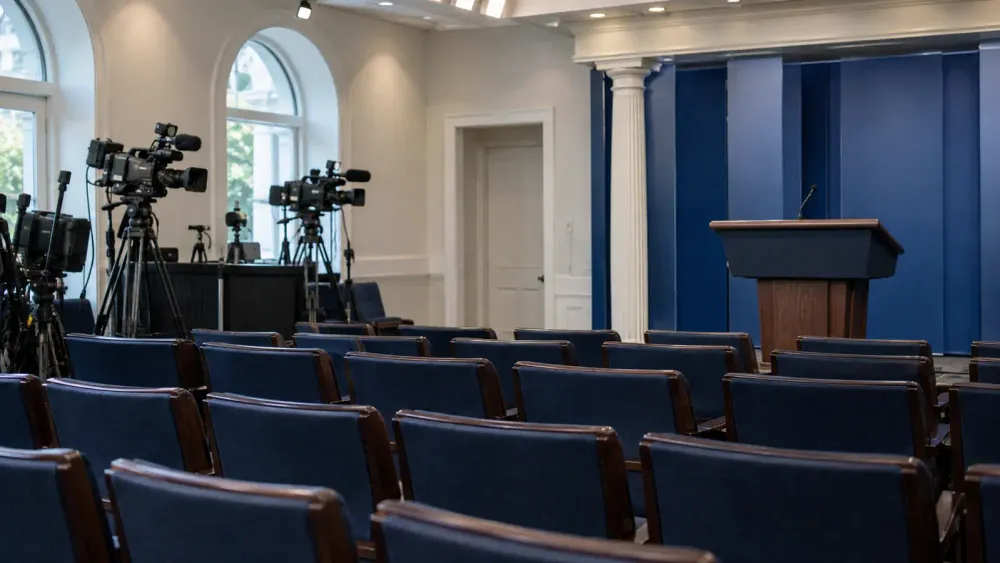
The pool system exists because many presidential spaces cannot accommodate the full press corps. A rotating group gathers video, images and written reports for distribution to other outlets, allowing a broad audience to see events that would otherwise be covered only by government cameras. When the networks stopped participating Monday, the practical result was less independent visual documentation of the president’s public activity.
That collective response also changes the politics of the confrontation. The dispute is no longer only between Trump and organizations he regularly attacks. Fox News joined the other television networks in the pool suspension, while the AP, The New York Times and The Washington Post withheld photographs from some presidential events in solidarity, according to AP. The alignment suggests that outlets with sharply different editorial identities view exclusion based on coverage as a threat to the shared newsgathering system.
The administration is likely to emphasize presidential control over White House property and the absence of an unlimited right to personal access. The plaintiffs will stress that they are not demanding interviews or special invitations; they are seeking restoration of the general credentials they held before the president objected to their journalism. The recent AP ruling leaves room for executive discretion in private presidential spaces but draws a clearer constitutional line around press areas opened broadly to credentialed reporters.
The court’s first task is narrow: whether to restore access temporarily while the case is litigated. Its answer, however, could quickly establish whether a president may convert criticism of reporting into a categorical ban from the nation’s most important political workplace. The outcome will affect not only the three plaintiffs but also the rules governing how future administrations deal with hostile, skeptical or disfavored coverage.