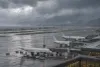
Travelers booked through Riyadh face a second day of severe disruption after another projectile struck King Khalid International Airport on Sunday, extending a closure that has already erased hundreds of flights and prompting governments to tighten their warnings.
The immediate issue is no longer a routine delay. Saudi aviation authorities said the latest attack hit the airport on October 11, while the Saudi-led coalition said an unidentified projectile struck Terminal 4 and caused a fire. Reuters reported one person was killed and 11 were wounded Sunday, after Saturday’s attack killed 13 and wounded more than 300.
Closure extends into Monday
King Khalid International remained closed to flights through at least 5 p.m. Eastern time Monday, according to a new Reuters report on the Federal Aviation Administration’s warning. That makes any published schedule provisional until the airport and individual carriers confirm operations.
The impact has spread well beyond Saudi carriers. The National counted 655 canceled Riyadh arrivals and departures on Sunday using Flightradar24 data. Etihad listed cancellations between Abu Dhabi and Riyadh into Tuesday, while Emirates, flydubai and Air Arabia also canceled Saudi services. Some later flights remained on schedules, but their operation depended on airport conditions.
Travelers should not interpret one operating flight as evidence that the network has normalized. Aircraft and crews displaced by a closure can cause rolling cancellations after an airport reopens. A disrupted first segment can also invalidate a connection or leave checked bags on a different itinerary.
The closure also raises questions for trips booked later in October. Reopening an airport does not instantly restore a timetable: aircraft may be out of position, crew-duty limits may be reached, and airlines may need additional safety reviews before dispatch. Passengers should watch the operating carrier’s alerts instead of relying on older announcements or third-party timetables, especially when a trip involves separate tickets.
Aviation risk now reaches beyond the terminal
The FAA told U.S. airlines and U.S.-registered operators to exercise caution when flying to or over Saudi Arabia because of military activity and possible interference with navigation systems. The notice runs through December 10 and warns that risks may affect overflight, arrival and departure phases at all altitudes, Reuters reported.
Saudi authorities also confirmed an attack at King Fahd International Airport in Dammam, Reuters reported, with safety inspections and damage assessments underway. That broader pattern matters for passengers considering a simple domestic or Gulf-region airport swap: moving a booking away from Riyadh does not by itself remove the operational or security risk.
For U.S. travelers, the Department of State raised Saudi Arabia to Level 3, “Reconsider Travel,” on October 10. It says U.S. government employees need special authorization to use King Khalid International and advises private citizens to take similar precautions.
Other governments issue sharper airport warnings
Britain’s Foreign, Commonwealth and Development Office now advises against all but essential travel to every Saudi airport except Medina International. Its guidance, updated October 11, also says travelers should avoid King Khalid International until it is secure and warns that traveling against official advice can invalidate insurance.
Australia’s Smartraveller service goes further for Riyadh, advising travelers not to use King Khalid International because recent security incidents are disrupting operations. It recommends reconsidering travel to other Saudi airports, minimizing time inside terminals and confirming flights before leaving for the airport.
Those warnings do not amount to a universal ban, and official advice varies by nationality. They do, however, show that disruption is now being treated as a continuing security condition rather than a short-lived operational problem.
What affected passengers should do now
Passengers with Riyadh or Dammam in their itinerary should confirm every segment directly with the operating airline, not just the company that sold the ticket. They should also verify whether bags will be retagged, whether a transit visa would be required after rerouting, and whether a missed connection is protected on the same ticket.
Do not travel to the airport solely because an app still shows “scheduled.” Government guidance and airport notices consistently tell passengers to wait for direct airline confirmation. If a flight is canceled, use the carrier’s official rebooking or refund channel; customers who booked through an agency may need the agency to change the ticket.
Travel insurance coverage should be checked before accepting a self-arranged land route or replacement flight. Some policies exclude travel undertaken against government advice, and a voluntarily abandoned itinerary may be treated differently from an airline cancellation. Travelers already in Saudi Arabia should keep passports, medication and essential supplies accessible while monitoring embassy, airport and carrier updates.
Keep offline copies of tickets, receipts and carrier messages in case connectivity becomes unreliable or a later claim requires documentation.
There is no reliable reopening timetable beyond the latest limited notices. The safest working assumption is that schedules can change with little warning until Saudi authorities complete inspections and airlines independently approve their operations.