American Airlines will add seven daily international routes in 2027, including six links to Europe, as it uses smaller long-range aircraft to reach cities that have often depended on connecting itineraries. The carrier’s announcement adds or restores three destinations from Philadelphia—Porto, Reykjavik and Vienna—while expanding its international schedules from New York, Charlotte and Chicago. Tickets are scheduled to go on sale Aug. 31.
The route plan is more than a seasonal timetable update. Four of the new services will use the Airbus A321XLR, a single-aisle aircraft designed to make long, comparatively narrow routes economical. That lets American test or restore destinations without committing the seats of a widebody jet, while still selling lie-flat business-class and premium-economy cabins. For travelers, the immediate result is a wider menu of nonstop options; for the airline, it is a calculated effort to convert recent international demand into durable network growth.
Philadelphia gains three distinct gateways
Philadelphia is the center of the expansion. Daily service to Porto begins March 28, Vienna starts May 6 and Reykjavik follows May 27. Porto and Vienna will be new to American’s network, while Reykjavik returns for the first time since 2019. The airline says it will be the only U.S. carrier serving Vienna when flights begin, giving the route a clear point of distinction even though passengers already have connecting options through other European hubs.
The three destinations address different travel patterns. Porto has become a prominent leisure gateway to northern Portugal and the Douro Valley. Vienna combines year-round business and cultural demand, and American plans to operate the route through early January 2028 rather than ending it with the summer peak. Reykjavik is a familiar seasonal market whose appeal is strongest during long northern days and cooler temperatures. That mix reduces reliance on a single kind of traveler, but it does not eliminate seasonality: two of the three services remain explicitly summer-oriented.
Philadelphia also gives American a large domestic feed network behind the new flights. Connecting passengers can reach the routes from cities that would not support their own transatlantic service, while local travelers gain nonstop access. The strategy extends expansion begun in 2026, when American added Budapest and Prague from Philadelphia. Its latest results describe those launches as part of a broader push into premium transatlantic markets.
A smaller aircraft changes the route math
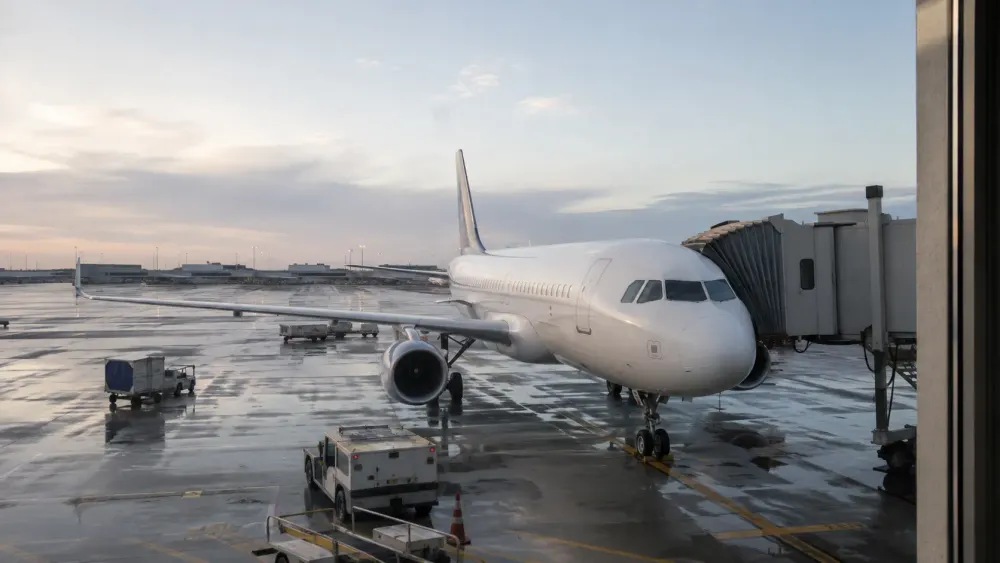
The A321XLR is central to the schedule. American will assign it to Philadelphia–Porto, Philadelphia–Vienna, New York–Amsterdam and New York–Nice. According to Airbus, the aircraft can fly up to 4,700 nautical miles, remain airborne for as long as 11 hours and typically seat 180 to 220 passengers in a two-class layout. American’s version is less dense: its published configuration has 20 lie-flat Flagship Suite seats, 12 premium-economy seats and 123 main-cabin seats.
That 155-seat layout matters because it pairs long-range capability with fewer seats to fill than a Boeing 787 or 777. The economics can support a daily schedule in markets where frequency is valuable but demand may not justify a widebody every day. Airbus describes the XLR as a “route opener” for exactly this purpose—linking primary and secondary cities or serving routes with pronounced seasonal variation. American had five XLRs in its fleet in February and 35 more on order through 2032, according to a company fleet update.
The tradeoff is that a single aisle must handle boarding, meal service and passenger movement on flights lasting much of a day. The aircraft also offers less cargo capacity than a widebody. Those constraints do not necessarily diminish the passenger proposition, but they change it: the XLR is a premium-equipped narrowbody, not a small version of a 787. Travelers comparing fares should examine seat maps, connection times and aircraft substitutions rather than assuming that every transatlantic experience is identical.
New York, Charlotte and Chicago broaden the plan
American will start daily A321XLR flights from New York Kennedy to Amsterdam on March 28 and to Nice on May 6. Amsterdam supplements the carrier’s year-round Philadelphia service and seasonal Dallas–Fort Worth route, while Nice creates a direct link to the French Riviera. From Kennedy, American will also restore a fourth daily London Heathrow frequency on March 28 using a Boeing 787-9. Together with British Airways, the joint network will offer as many as 14 daily New York–London flights, a schedule aimed at customers who value departure-time flexibility as much as price.
Charlotte gains a daily Boeing 777-200ER flight to Barcelona on May 27. The new route makes Barcelona the ninth European destination served from the hub and brings Charlotte to 11 daily Europe flights in the summer schedule, according to Axios. For travelers across the Southeast, the service can replace a domestic connection through another gateway. For American, it adds another long-haul destination to a hub where the carrier controls a dense connecting network.
The seventh route is a daily Chicago O’Hare–Tokyo Narita flight beginning March 19 on a 787-9. American is timing the launch for Japan’s spring travel season and will sell onward connections with Japan Airlines. Narita is farther from central Tokyo than Haneda, but it remains a substantial international gateway with connecting reach across Asia. The route also balances an expansion otherwise concentrated on the Atlantic.
Demand is strong, but execution carries risk
American is expanding from a stronger revenue base. It reported record second-quarter revenue of $16.7 billion, up 16.3% from a year earlier. Atlantic passenger unit revenue rose 8.9%, Pacific unit revenue increased 15.1% and managed corporate revenue advanced 26%. Those figures support the case for additional international capacity, although they do not guarantee that every new city pair will be profitable once initial interest, promotions and novelty fade.
The competitive backdrop is intensifying. United announced 10 additional international destinations for 2027 two days before American’s plan, describing it as the largest expansion in its history. United’s second-quarter filing said premium revenue rose 16% and contracted business revenue grew 27%. Both carriers are therefore pursuing travelers who will pay for premium cabins, while also adding economy seats that must be sold across the season. Competition can improve route choice, but it can also produce schedule changes if multiple airlines add capacity faster than demand develops.
Aircraft availability is another constraint. Four routes depend on an expanding XLR fleet, and aviation reporting indicates delivery delays have limited how aggressively American can deploy the type. Philadelphia–Reykjavik is planned with a standard A321neo rather than an XLR. Even after tickets are sold, airlines may change equipment for operational reasons. A substitution could alter the number of premium seats or the onboard product without changing the flight number.
What travelers should watch before booking
The sale date is only the beginning of the decision. Travelers should compare introductory fares with one-stop alternatives, especially where a connection produces better timing or a lower total price. They should also confirm operating dates: several flights are seasonal, and Vienna’s extended run is the exception rather than the rule. Award-seat availability, upgrade inventory and partner-airline benefits can change independently of cash fares.
Broader travel conditions remain supportive but uneven. The U.S. Travel Association’s latest forecast projects inflation-adjusted travel spending of $1.37 trillion in 2026 and $1.42 trillion in 2027, while international inbound spending remains below its 2019 level in real terms. That suggests solid demand without a simple return to old patterns. Currency movements, fuel prices, geopolitical events and passport-processing conditions could all reshape bookings before these flights begin.
For now, American’s plan gives travelers three new or restored destinations, more nonstop choices to established cities and a clearer view of how long-range narrowbody aircraft are redrawing airline networks. The most consequential change is not any single route. It is the ability to match a smaller aircraft with a daily international schedule, creating services that might previously have required a connection—or might not have existed at all.