
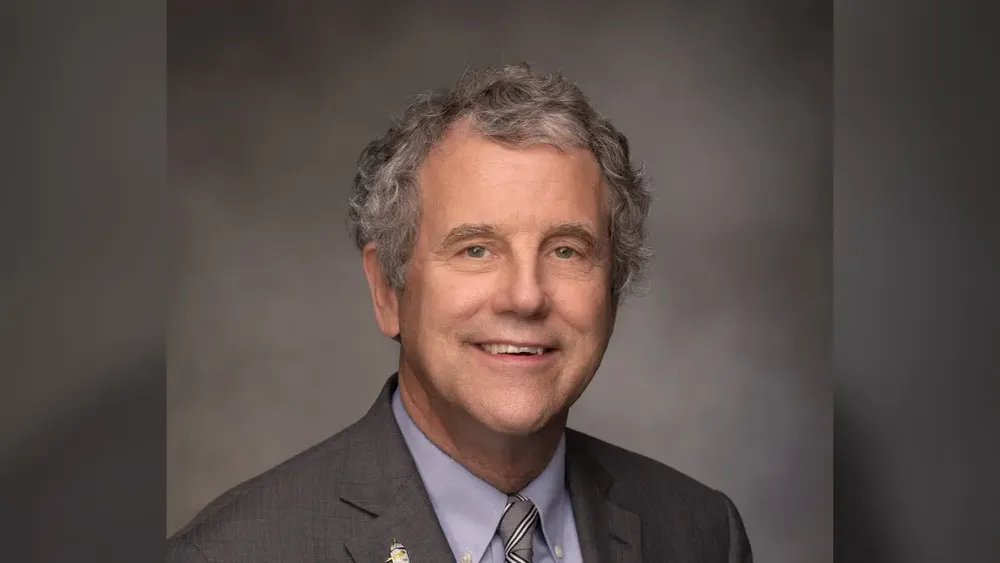
Democrat Sherrod Brown has won Ohio’s special election for the U.S. Senate, defeating Republican Sen. Jon Husted and returning to the chamber two years after voters ended Brown’s previous Senate tenure.
The Associated Press declared Brown the winner Tuesday night. AP’s race report identified Husted as the defeated Republican incumbent and described the result as a Democratic pickup in a contest central to the battle for Senate control.
Election-night vote totals were still changing as county returns arrived. An election-results feed reviewed at 9:56 p.m. Eastern showed Brown with 1,567,192 votes, or 48.7%, and Husted with 1,502,407, or 46.6%, with 66.3% reporting. Those numbers were partial and unofficial; they should not be treated as the final certified margin.
A special election for the remainder of Vance’s term
This was not the regular election for Ohio’s other Senate seat. An official Ohio election directive established a Nov. 3, 2026, special election to fill the vacancy created after JD Vance left the Senate to become vice president.
Gov. Mike DeWine appointed Husted to the vacancy in January 2025. The special-election winner serves the remainder of the six-year term Vance won in 2022, which runs through January 2029.
The Federal Election Commission lists Brown as the Democratic candidate for the Ohio Senate race. It separately identifies Husted as the Republican candidate. Those records confirm the candidates and office independently of the media race call.
Brown completes a rapid comeback
Brown represented Ohio in the Senate for 18 years before Republican Bernie Moreno defeated him in 2024. His decision to contest the special election offered an unusually quick path back to Washington and gave Democrats a candidate with long statewide experience.
Before his earlier Senate service, Brown served as Ohio secretary of state and represented the state in the U.S. House. His campaign again emphasized what he calls the “dignity of work,” pairing an economically populist message with attacks on corporate power and the cost of living.
Husted entered the race with his own long record in Ohio government. He previously served as lieutenant governor, secretary of state, state House speaker and a state senator before his appointment to the U.S. Senate.
A costly race with national consequences
The Ohio contest attracted enormous outside spending because Democrats viewed it as one of their clearest opportunities to flip a Republican-held seat. AP reported that the campaigns and allied groups spent more than $500 million.
Brown focused heavily on Husted’s support for artificial-intelligence data centers, the Republican’s testimony connected to the FirstEnergy statehouse bribery investigation and campaign contributions linked to billionaire Les Wexner. Husted argued that Brown had spent too long in public office and was too liberal for a state that has shifted toward Republicans in recent presidential elections.
President Donald Trump and Vice President Vance campaigned for Husted. Brown sought to separate the race from Ohio’s recent presidential voting pattern by emphasizing wages, trade and economic pressures that had previously helped him win support from some Republican-leaning voters.
Brown’s victory became one of a series of Democratic gains that ultimately gave the party Senate control, according to AP’s national election report. It also demonstrated that Democrats could still win a statewide federal contest in Ohio after years of Republican advances.
What the call means—and what remains
AP’s call establishes Brown as the winner because its decision team concluded that Husted no longer had a path to overtake him based on the vote counted and ballots remaining. The call does not replace Ohio’s canvass and certification process.
Additional county reports, provisional ballots and other valid late-counted ballots can continue changing the totals and the final margin. TAQ will treat certified state results as the authoritative final count when they are available.
The key election-night result is settled: Sherrod Brown defeated Jon Husted in Ohio’s 2026 special U.S. Senate election and will serve the balance of the term that began with Vance’s 2022 victory.
Feature photo: Official U.S. Senate portrait of Sherrod Brown by U.S. Senate Photographic Services and Rebecca Hammel, via Wikimedia Commons. Public domain as a work of the U.S. federal government. Reformatted to a 16:9 landscape frame with blurred side fill; the portrait itself was not stretched.



