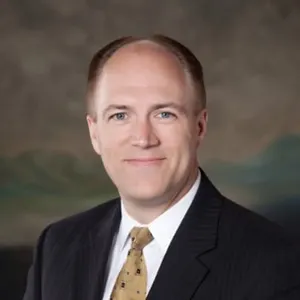
Elon Musk escalated his involvement with Twitter from large shareholder to would-be buyer this week, offering $54.20 in cash for every share he does not already own and valuing the social-media company at roughly $43 billion. Twitter’s board responded a day later by adopting a one-year shareholder-rights plan designed to make an unsolicited accumulation of control far more expensive.
Musk disclosed the offer Thursday in an amended Schedule 13D filing with the Securities and Exchange Commission. He described $54.20 per share as his “best and final” offer and said Twitter needed to be transformed as a private company to realize what he sees as its potential as a platform for free expression. The proposed price represented a 54% premium to the day before Musk began investing in Twitter and a 38% premium to the day before his stake became public, according to the filing.
The move came less than two weeks after Musk disclosed ownership of about 9.2% of Twitter. An agreement that would have put him on the board was abandoned over the weekend, removing a 14.9% ownership cap that had been tied to his service as a director. By Thursday, Musk was no longer positioning himself as an inside adviser. He was seeking the entire company.
A cash offer converts criticism into a takeover proposal
Musk’s proposal is nonbinding and subject to financing and definitive documentation. It does not compel Twitter’s board to sell the company, nor does it guarantee that Musk can close a transaction on the stated terms. But the offer creates a concrete decision for directors who must evaluate the price, execution risk, alternatives and their fiduciary obligations to shareholders.
TechCrunch calculated the proposal at about $43 billion and noted that Musk was offering a substantial premium to Twitter’s trading level before his investment became known. In a Washington Post report, analysts and governance experts described an unusual takeover attempt driven as much by Musk’s public arguments about speech and platform design as by conventional financial logic.
Musk reinforced that framing during a TED interview Thursday. He said the bid was not primarily an economic project and argued for making Twitter’s algorithm more transparent and reducing what he views as overly restrictive moderation. He also acknowledged that acquiring the company would require a large financial commitment and said he had sufficient assets to pursue the deal.
Twitter deploys a 15% shareholder-rights threshold
On Friday, Twitter announced that its board had unanimously adopted a limited-duration shareholder-rights plan, commonly called a poison pill. The company’s formal announcement said the plan would become exercisable if a person or group acquired beneficial ownership of 15% or more of Twitter’s outstanding common stock without board approval.
The mechanism is designed to dilute an acquirer who crosses the threshold. Other shareholders would receive rights allowing them to purchase additional stock at a discount, making it dramatically more expensive for the triggering shareholder to build control through open-market purchases. Musk is currently below the threshold, so the plan does not itself force a sale of his existing stake or prevent him from remaining a major shareholder.
The board said the rights plan does not prevent it from accepting an acquisition proposal that directors determine is in the best interests of Twitter and its shareholders. That point is central: a poison pill is a negotiating and defensive device, not a permanent prohibition on a transaction. It can give directors time to assess financing, solicit alternatives or negotiate a higher price without facing the immediate risk that an acquirer will simply buy enough shares to take control.
The $54.20 price becomes the center of the argument
Whether Musk’s offer is attractive depends on what investors believe Twitter is worth as a standalone public company and what strategic improvements might be possible under different ownership. Twitter has struggled at times to turn cultural influence into the growth and profitability achieved by larger digital-advertising rivals. At the same time, its global role in politics, journalism, business and entertainment gives the platform significance beyond traditional financial measures.
The Guardian noted that Musk’s bid came after years of public criticism of Twitter’s speech policies and only days after his short-lived board arrangement collapsed. The offer therefore combines a financial premium with a strategic claim: Musk argues that the company’s present governance and public-company structure are preventing it from reaching its potential.
Twitter’s directors must evaluate that assertion through a shareholder lens. They can reject the bid, negotiate with Musk, seek alternative buyers or consider other strategic options. The poison pill improves their negotiating position by reducing the pressure created by a potential rapid accumulation of shares.
Financing and governance remain unresolved
Musk is one of the world’s wealthiest people, but much of his wealth is tied to equity in Tesla and other businesses rather than cash. A transaction above $40 billion would therefore require a financing structure that could include personal funds, borrowing against assets, outside investors or some combination. The SEC filing identifies the offer but does not yet present a fully committed financing package.
That uncertainty matters because a board evaluating an acquisition proposal must consider certainty of closing, not just headline price. A higher offer with weak financing can be less attractive than a lower but fully committed transaction. Musk’s public statements convey confidence, but the next stage will require more formal evidence if Twitter decides to engage.
Forbes reported that the poison pill gives the board a defensive structure while it evaluates the proposal. The measure expires in one year unless shareholders approve an extension, limiting its duration while preserving the board’s immediate ability to resist an unwanted change of control.
A platform fight becomes a corporate-control fight
For years, debate over Twitter centered on content moderation, misinformation, political speech and platform design. Musk’s bid turns those arguments into questions of ownership and governance. If he acquires the company, decisions about algorithms, moderation and product priorities could shift under private control. If the board rejects him, Twitter will still face pressure from a major shareholder with an enormous public audience.
The next step is not predetermined. Musk can improve his offer, withdraw it, seek partners, appeal directly to shareholders or continue accumulating shares while respecting the 15% rights-plan threshold. Twitter can negotiate, resist or explore alternatives.
What changed this week is the scale of the contest. Musk is no longer asking Twitter to change from the outside or planning to influence it from a board seat. He has put a cash price on control of the company, and Twitter’s directors have responded with one of corporate America’s most familiar takeover defenses. The fight over what Twitter should become is now inseparable from the fight over who should own it.