Texas has awarded $226 million in federal funding for 321 electric vehicle charging stations, expanding its planned network beyond the highway sites already opening under an earlier phase of the program. For drivers, the important distinction is between a funded project and a charger that can be used now.
In an October update, the Texas Department of Transportation said Phase II of the National Electric Vehicle Infrastructure program includes 264 stations in metropolitan planning organization areas and 57 in county seats. Those are funding-award counts, not a claim that all 321 locations have begun serving motorists.
TxDOT separately reported 22 open Phase I stations. It expected five more to open by the end of 2026 and another 30 during 2027. These figures describe the department's October 15 snapshot and expectations, rather than verified opening dates for every planned site.
The agency listed completed-site inspections in Wichita Falls, Mount Pleasant, Van, Selma, Natalia, Encinal, Three Rivers and Kerrville, along with visits to construction sites in Corsicana and Mission. It also reported that Texas electric vehicle registrations had increased since February. This article does not treat an inspection itinerary as a complete station directory.
TxDOT's program page provides the longer planning record, including annual plans, federal approval material, grant-program results and links to registration information. Its results tool is intended to let users search selections and connect projects to the statewide planning map.
Different parts of that record describe different stages of development. A station selected for a grant may still require construction; a construction count is different from the number open to the public. The dated October announcement is the basis for the operating-site figures reported here. Earlier construction totals on the broader planning page have not been added to them.
For trip planning, the U.S. Department of Energy offers a separate station locator. Its default view is for available, publicly accessible stations, with filters to change the search. The department's tool description explains location searches and route mapping for drivers, fleet managers and transportation planners.
DOE also tracks charging infrastructure by network, location and charging level. That is a reminder to compare like measures: a project award, a station location and the ports available at a site are different units. A statewide funding total alone cannot establish how convenient a particular journey will be.
The federal infrastructure database includes public and private nonresidential locations across the United States and Canada. Its scope is broader than a Texas grant list. A location search and a state award record therefore answer different questions about the network.
The practical change is a larger funded pipeline alongside a smaller group of operating highway sites. Drivers should use current location information when planning stops. TxDOT's announced expansion does not establish that every proposed site is open, that a particular charger is working at departure time or what an operator will charge.
Follow National news and Texas news, or get updates by email.
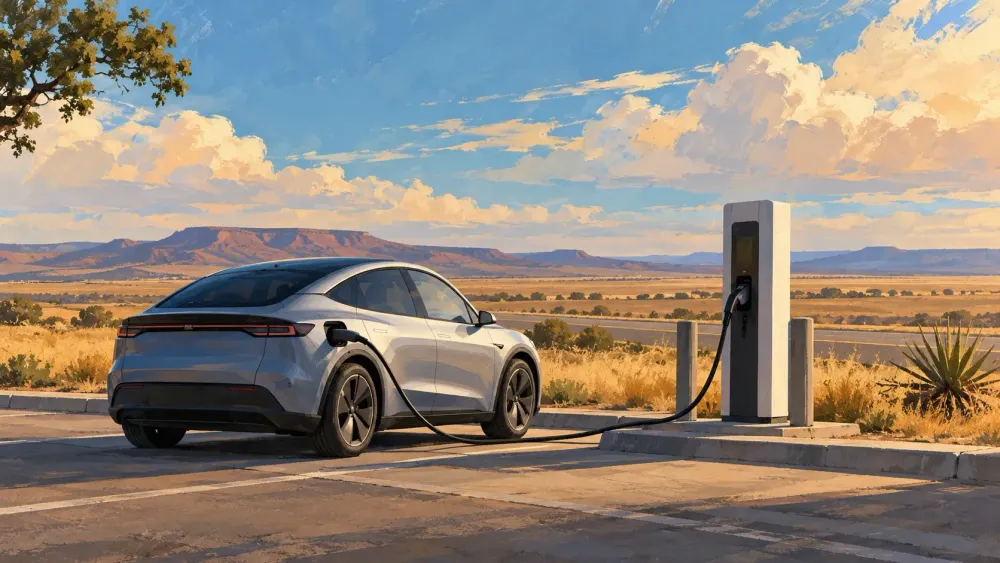
AI-generated illustration; not a photograph of a specific funded station.