
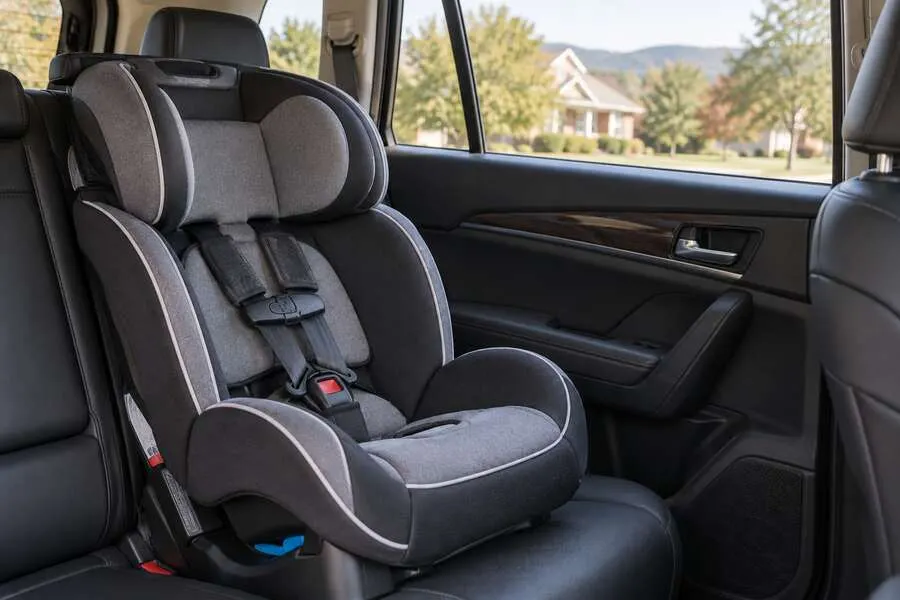
Tennessee officials are urging families to check child restraints after new state data identified 8,959 crashes involving an unrestrained occupant age 18 or younger from 2021 through Aug. 25, 2026.
The Tennessee Highway Safety Office released the figure Monday as it opened Child Passenger Safety Week, which runs through Saturday. The state’s crash summary shows that the burden is spread statewide but concentrated in several large counties: Shelby recorded 2,120 such crashes, followed by Rutherford with 788, Davidson with 537, Hamilton with 522 and Knox with 331.
The same release says Tennessee’s child-safety-seat misuse rate is 78 percent. Officials described the most common problems as using a seat that does not match a child’s age or size and installing the seat incorrectly. That distinction matters because a restraint can be present without providing its intended protection.
Tennessee law assigns the responsibility to the driver for properly restraining children younger than 16. The state’s legal guidance requires a rear-facing seat for children younger than 1 or weighing 20 pounds or less; a forward-facing child seat for most children ages 1 through 3; and a belt-positioning booster for children ages 4 through 8 who are shorter than 4 feet 9 inches. Violations can carry a $50 fine.
Those are legal minimums, not a substitute for the seat manufacturer’s height and weight limits. The National Highway Traffic Safety Administration’s federal guidance recommends keeping a child in each stage as long as the child remains within the manufacturer’s limits. NHTSA says children should remain in the back seat through age 12 and should not leave a booster until the lap belt rests on the upper thighs and the shoulder belt crosses the chest and shoulder rather than the neck or face.
The state’s numbers cover unrestrained occupants through age 18, while child-seat rules vary by age, size and seating position. They therefore should not be read as a count of car-seat failures alone. They do, however, identify a continuing statewide exposure involving children and teenagers who were not buckled or otherwise restrained when crashes occurred.
Families who are uncertain about a seat can get hands-on help rather than rely on trial and error. The Tennessee Traffic Safety Resource Service maintains a statewide fitting-station directory and explains the state’s age, weight and height rules. Certified technicians can inspect the seat, check harness placement and show caregivers how to install it in their own vehicle. The Highway Safety Office said inspections are being offered around the state ahead of National Seat Check Saturday on Sept. 26.
NHTSA also advises caregivers to register seats with the manufacturer so recall and safety notices arrive directly. For forward-facing seats, the agency recommends using the top tether whenever the vehicle and seat instructions permit it, whether the lower anchors or the vehicle belt secure the seat.
The immediate takeaway is practical: Tennessee’s latest figures point to both nonuse and widespread misuse. Checking the correct seat stage, following the vehicle and restraint manuals, and scheduling a free inspection give families concrete ways to reduce risk before the next trip.