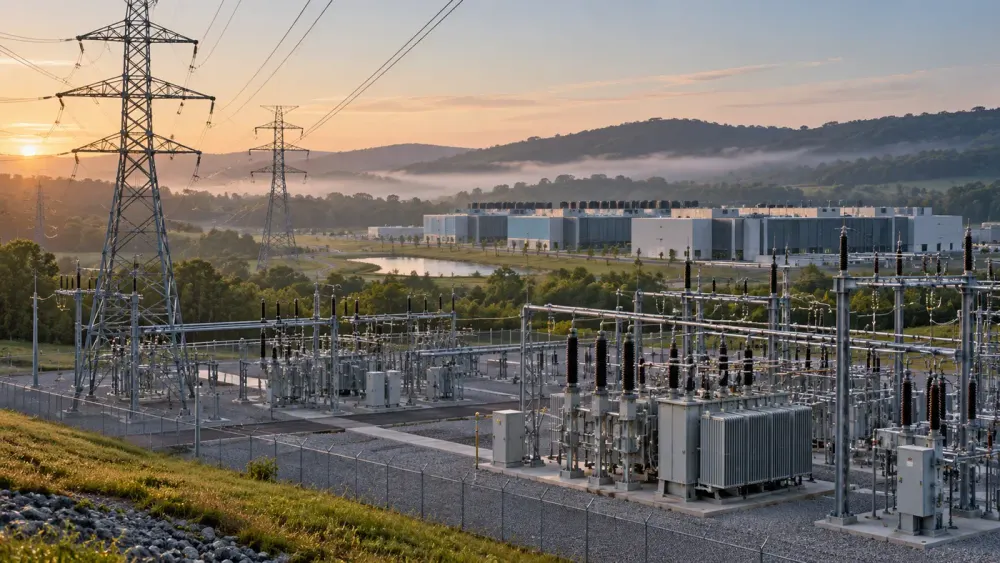
Pennsylvania utility regulators will open a new statewide proceeding on how data centers and other very large electricity users should pay for grid connections and system upgrades, focusing on whether ordinary customers could otherwise absorb costs created by fast-growing power demand.
The Public Utility Commission announced Tuesday that it will hold a technical conference on Nov. 17 in Harrisburg. The commission said large computational loads are adding strain while energy, capacity, distribution and transmission costs are already rising for retail customers.
The proceeding, docketed as M-2026-3065062, is not a final rate decision. Its purpose is to build a record on cost allocation: which customers should pay for new substations, transmission work and other facilities required to connect unusually large loads, and how regulators should protect the public if a proposed project is delayed, reduced or abandoned after infrastructure work begins.
The PUC’s conference page identifies interconnection expenses as an “imminent concern.” A Sept. 22 secretarial letter says the session will run from 9 a.m. to 4 p.m., will be recorded and will be available by livestream. Prospective panelists must apply by Oct. 14. Initial written comments are due Nov. 13, and post-conference comments are due Dec. 18.
The debate extends beyond the first cost of hooking a facility to the grid. Large customers can affect how utilities plan generation purchases, transmission capacity and local distribution equipment over many years. If a data center reserves power but uses less than forecast or cancels, regulators must decide whether the developer, the utility or the wider customer base bears the stranded expense. If demand arrives faster than new resources, reliability and market prices can also become concerns.
Pennsylvania has been examining those issues since at least April 2025. At an earlier en banc hearing on large-load tariffs, commissioners sought testimony on deposits, minimum contract terms, early-termination fees, phased demand schedules, firm versus interruptible service and whether customers should construct some upgrades themselves. That record included testimony from data-center companies, electric utilities and the state Office of Consumer Advocate.
The new conference also follows Gov. Josh Shapiro’s August executive order on data-center development. The governor’s announcement said projects must address environmental safeguards, transparency and community approval. The executive order sets a state review path for projects above 25 megawatts that agree to specified grid and environmental requirements, but it does not settle the PUC’s separate rate-allocation questions.
For households and small businesses, the practical issue is whether data-center expansion changes monthly electric bills or reliability. For developers, the stakes include the upfront financial guarantees and long-term service commitments required before a utility builds dedicated infrastructure. Utilities, meanwhile, need rules that let them plan for large new demand without shifting project-specific risks to customers who did not create them.
The November conference will not resolve every issue by itself. It will give the five-member commission sworn testimony and a public comment record that can support later tariff standards, utility filings or other regulatory action. Until the PUC takes those later steps, Pennsylvania has identified the cost-shifting risk but has not chosen a final formula for allocating it.