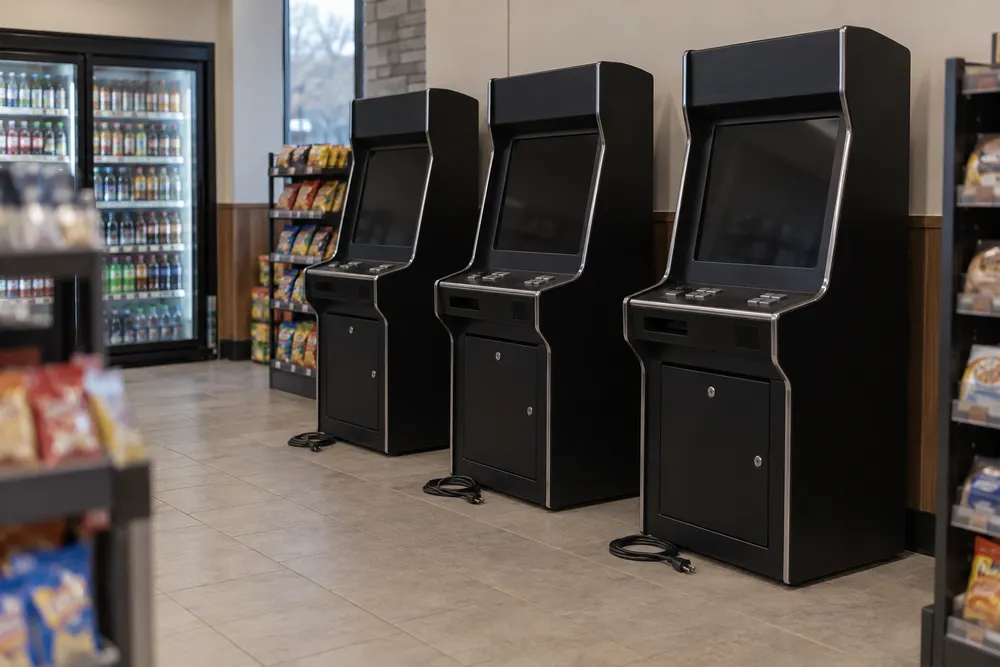
Pennsylvania businesses hosting cash-paying “skill game” machines have until October 13 to remove them or face possible seizure and criminal enforcement beginning October 14, unless lawmakers change state law before the deadline.
The statewide warning follows a June 15 decision by the Pennsylvania Supreme Court that brought the machines under the Gaming Act and Crimes Code. Pennsylvania State Police said devices outside licensed casinos and qualifying licensed truck stops will be unlawful after the court’s 120-day safe harbor ends. The agency’s guidance applies to taverns, restaurants, social clubs, convenience stores, gas stations, groceries, laundromats and other establishments where the machines have proliferated.
State Police stressed that turning off or unplugging a machine is not enough. Businesses should arrange removal with distributors or vendors, including removal of associated ticket-redemption equipment. After October 13, enforcement may include confiscation and forfeiture of machines, related equipment and money, as well as criminal charges where authorities consider them appropriate.
The legal change came from the court’s interpretation of statutes already on the books, not from a newly enacted ban. In a 66-page opinion, Justice David Wecht wrote that the devices are subject to both the Gaming Act and the Crimes Code, reversing lower-court rulings that had placed them in a legal gray area. The majority said a 2017 definition covering “skill slot machines” made the skill element legally insignificant for unlicensed operation.
The court acknowledged that owners and operators had relied in good faith on earlier rulings, which is why it delayed enforcement for 120 days. It also emphasized that legislators remain free to adopt a different policy. Attorney General Dave Sunday, whose office participated in the litigation, said the ruling clarified the machines’ status under current law.
That leaves the General Assembly with a narrowing window. Multiple proposals would regulate and tax the games, but Pennsylvania’s divided government has not reached a consensus. Axios reported an estimated 70,000 machines operate statewide—more than the number of regulated casino slots—and that municipal enforcement could begin if the legislature does not act.
The fiscal stakes are substantial. A June analysis by the state’s Independent Fiscal Office estimated that a regulated system could generate about $487 million in the next fiscal year and as much as $1.19 billion by fiscal 2030-31. The estimate depends on choices about the tax rate, licensing and the number of permitted machines; it is not revenue available under the current unlicensed market.
For small businesses, the practical rule is immediate: remove the equipment rather than merely disable it. For policymakers, the remaining question is whether to create a licensed category before October 14 or allow existing gambling law to take full effect. Any legislative deal would have to reconcile tax revenue and business income with enforcement, consumer protection and the competitive position of licensed casinos.