
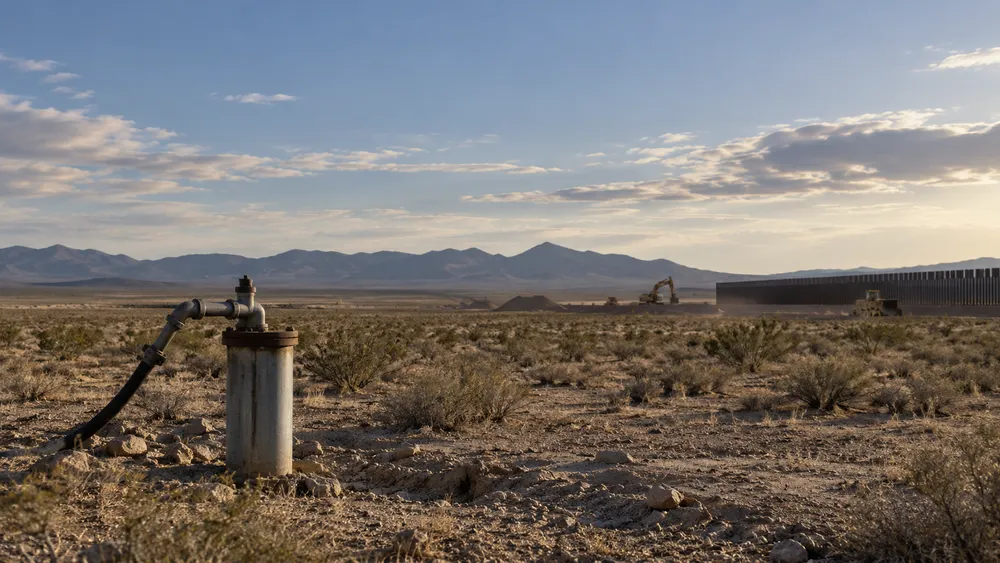
The Department of Homeland Security has waived New Mexico’s water code and two sets of state well regulations for a border-construction project, escalating a dispute over groundwater pumping in the drought-stressed southern part of the state. The federal determination took effect Oct. 2 and covers the drilling, operation, maintenance, repair and plugging of wells tied to new barriers and roads.
The Federal Register notice places the project within the Border Patrol’s El Paso Sector, running from Border Monument 71 east to Monument 53, north to Monument 40 and then east to Monument 1. Homeland Security Secretary Markwayne Mullin invoked Section 102 of the Illegal Immigration Reform and Immigrant Responsibility Act, which authorizes the secretary to waive legal requirements considered necessary for expedited border-barrier construction.
The waiver names the New Mexico Water Code and parts 1 and 4 of Chapter 27 in Title 19 of the New Mexico Administrative Code. It also covers related federal, state and other requirements for site access, staging, excavation, drainage, erosion control, cameras, lighting and supporting infrastructure. The action is limited to the identified project area and construction activities; it is not a general repeal of New Mexico water law.
The state government sharply disputes the federal action. In an Oct. 2 response, Gov. Michelle Lujan Grisham’s office said the notice attempts to nullify state permitting rules after the State Engineer threatened to revoke the licenses of two drilling companies. The administration said Customs and Border Protection paused new wells but continued using wells that had already been drilled.
The immediate conflict follows months of concern about groundwater use for concrete and dust control. The Associated Press reported in August that the Office of the State Engineer had identified at least eight wells drilled without state permission on federal land near the border. State inspectors found two wells pumping about 200 gallons per minute. At that time, federal contractors were ordered to stop drilling new wells, but officials did not give a clear timetable for the existing wells.
New Mexico’s position is that nontribal wells require State Engineer approval whether they sit on state, private or federal land. The Office of the State Engineer regulates well construction and abandonment and licenses well drillers. The federal notice now asserts that those requirements do not apply to the designated border project.
DHS justified the waiver by classifying the El Paso Sector as an area of high illegal entry. Its notice cites more than 1.248 million apprehensions between fiscal 2021 and Aug. 30, 2026, along with seizures of marijuana, cocaine, methamphetamine, heroin and fentanyl. Those figures explain the federal security rationale but do not resolve the state’s concern about aquifer depletion or the scope of federal waiver authority.
The next phase is likely to turn on enforcement and litigation. Federal contractors now have an asserted exemption from state water rules inside the project area, while New Mexico retains responsibility for managing an aquifer that supplies ranches, communities and other users. Whether the state can limit pumping or discipline licensed drillers will determine how far the waiver operates in practice.