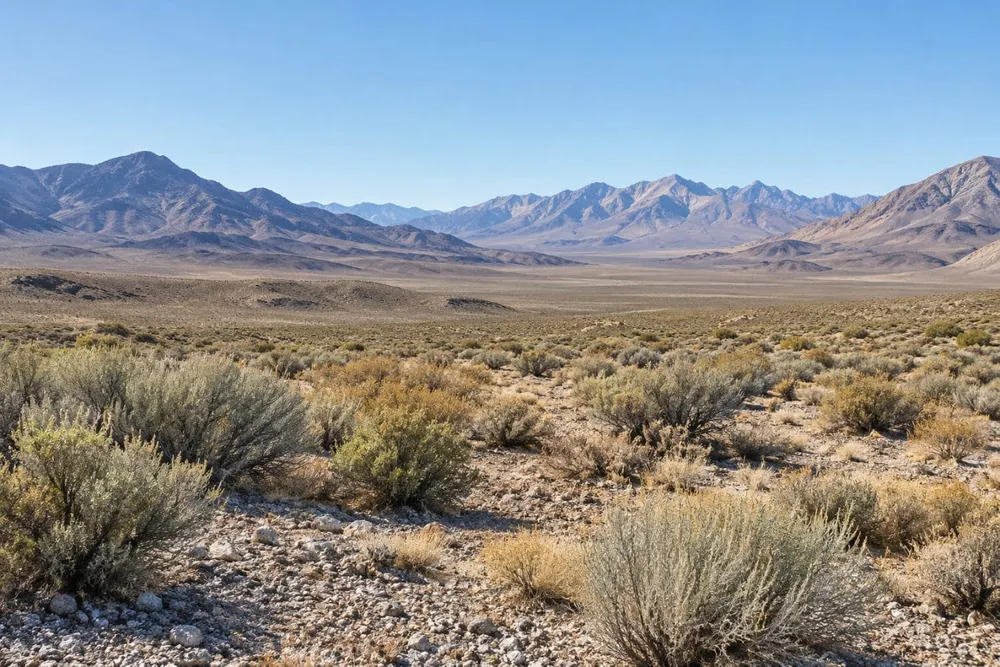
Nevada’s next federal geothermal lease auction is scheduled for October 20, offering exploration and development rights while leaving later construction subject to further review. The Bureau of Land Management’s current listing retains that date. Its August announcement advertised 83 parcels across 10 counties, but subsequent amendments changed acreage and legal descriptions that prospective bidders and affected communities need to examine.
The original announcement described approximately 265,691 acres. A September 15 signed amendment revised the listed total to 265,154.610 acres. The document changes multiple parcel entries, including land in Nye, Esmeralda, Humboldt, Lincoln and White Pine counties. That amended figure should not be confused with either the original advertisement or an eventual auction result.
Parcel details matter
An October 5 further amendment corrected descriptions for a White Pine County parcel and an Esmeralda County parcel. In the latter, it moved a mineral-survey exclusion between sections in the description. These are changes to the identified land, not announcements that a power plant has been approved. This account relies on the agency’s sale records for those parcel-specific details.
The sale notice specifies online bidding through Efficient Markets, with separate opening and closing periods for individual parcels. Members of the public can observe the auction, while submitting a bid requires advance registration. The notice also attaches stipulations, lease notices and special conditions, underscoring why the governing package and amendments matter more than a single statewide acreage headline.
State revenue, later permitting
Nevada has a direct fiscal stake. Under the agency’s announced terms, the state receives 50% of bids, rental receipts and subsequent royalties; the county containing the lease receives 25%, and the U.S. Treasury retains 25%. The amounts ultimately received depend on leasing and later activity, so the announced acreage is not a revenue forecast.
A lease also is not permission to begin surface disturbance immediately. The BLM’s review explanation says competitive leases initially run for 10 years and may be extended for production or diligent exploration. Before surface-disturbing work, the agency reviews exploration or development applications and can impose site-specific conditions in addition to existing lease stipulations.
The Energy Department explains that geothermal generation uses underground heat and can operate around the clock rather than depending on sunshine or wind. That makes the resource relevant to dependable electricity supply, but a lease award alone does not establish that a particular site will support an operating plant.
The opportunity builds on an established Nevada industry. The BLM’s program overview identifies 28 operating and authorized geothermal plants with a federal interest and more than 950 megawatts of authorized generating capability. Authorized capacity is not the same as actual electricity output. For communities tracking the sale, the immediate milestone is which parcels attract successful bids; project design, environmental conditions and construction decisions remain separate steps.