Michigan is awarding $1 million to 10 local and regional coalitions preparing for changes in the automotive, utility and manufacturing economy. Each participant in the state’s Community Growth Academy will receive $100,000 for a locally selected project, according to the Department of Labor and Economic Opportunity’s award notice.
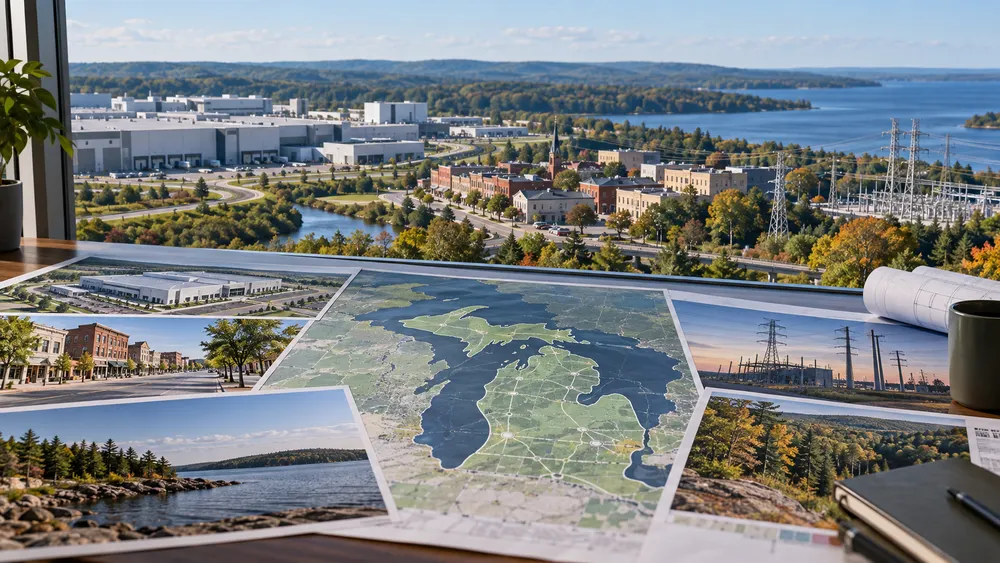
The grants reach communities across the Lower and Upper peninsulas. Detroit Future City plans climate-technology and STEM career pathways; Flint-based 100K Ideas will work on startup capital, financial literacy and workforce connections; Huron County will build a coordinated small-business support network; and coalitions in Lake, Jackson, Macomb, Marquette, Delta, Isabella, Clare, Osceola, Branch and St. Joseph counties will pursue tourism, site-readiness, corridor and infrastructure projects.
Planning money, not construction money
The awards are designed primarily to improve local capacity and prepare projects, not to finance major construction. The state describes the growth academy as an 18-month program combining technical assistance, peer learning, a full-time fellow and access to project funding. That structure lets coalitions develop strategies and predevelopment work that could later compete for larger public or private investments.
Some grants have a narrower operational focus. Downriver communities will develop a Jefferson Avenue corridor implementation plan. Macomb County will support downtown businesses in Romeo and study an industrial subarea. Middle Michigan Development Corporation will evaluate priority development sites, while Southwest Michigan First will fund technical work for industrial and residential infrastructure.
Independent local reporting confirmed the equal award structure for two recipients: WNEM reported that 100K Ideas and the Huron County Economic Development Corporation each received $100,000. The state’s grant system also lists the 2026 Economic Transition Fund at $1 million, matching the total announced Friday.
Other recipients include the Downriver Community Conference, Jackson County Chamber of Commerce, Macomb County Department of Planning and Economic Development, Lake County Economic Development Alliance, Lake Superior Community Partnership, Middle Michigan Development Corporation and Southwest Michigan First. Together, the portfolio spans dense urban neighborhoods, auto-dependent suburbs, rural counties and Upper Peninsula communities.
A test of the transition model
Michigan created the Community and Worker Economic Transition Office to help places exposed to major industrial shifts respond before a plant closure or technology change becomes a local crisis. Its annual report says the first academy cohort was selected through competition and receives coaching, grant access and fellows to execute community strategies.
The $100,000 grants are modest relative to large infrastructure or factory investments, so success should not be judged by headline job totals alone. More useful measures will include completed plans, businesses assisted, development sites advanced, outside dollars attracted and whether participating coalitions keep working after the 18-month program ends.
The office plans to open applications for a second academy cohort in early 2027. Before expanding, Michigan can strengthen accountability by publishing project schedules, deliverables and measurable outcomes for all 10 first-round awards.