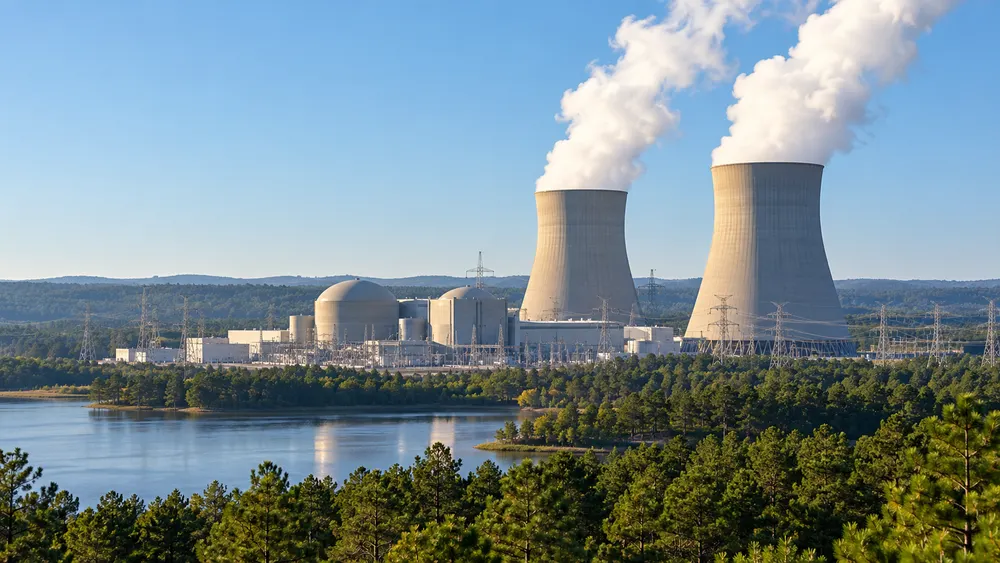
Georgia Power and Google have asked state regulators to approve a subscription-backed plan to increase output at the Vogtle and Hatch nuclear plants by about 96 megawatts, using upgrades to existing units rather than building new reactors.
The utility’s Sept. 21 announcement says Google would support the work on Georgia Power’s ownership share of Vogtle Units 1 and 2 and Hatch Units 1 and 2. The agreement is not final: it requires approval from the Georgia Public Service Commission, which regulates the company’s rates and major resource decisions.
Georgia Power filed a proposed Nuclear Uprate tariff in Docket 44280 and a separate Hatch uprate request in Docket 56002. The tariff would allow Google to subscribe to the added nuclear output and receive zero-emission credits representing its carbon-free attributes. Georgia Power says the structure is designed so customers who do not participate are not charged the incremental costs of the uprate work.
The company projects that Google’s subscription would produce about $900 million in benefits for customers over the remaining life of the units. That figure is a utility estimate, not a guaranteed refund or a commission finding. Regulators will have to assess the tariff, cost allocation, assumptions and proposed consumer protections before deciding whether the arrangement is reasonable.
More power from existing reactors
An extended power uprate increases a reactor’s licensed thermal output and converts that added heat into more electricity. Georgia Power says the work can involve turbines, pumps, motors and cooling systems while continuing to use the plants’ existing fuel designs and core infrastructure. The total 96-megawatt gain would be modest beside the plants’ combined output, but it would provide round-the-clock capacity without a new reactor project.
The commission already approved a 54-megawatt uprate for Vogtle Units 1 and 2 in Georgia Power’s 2025 long-range resource plan. That plan also authorized preliminary planning, licensing and engineering for potential uprates at Hatch. The new filing moves the Hatch proposal into a direct approval proceeding and pairs the nuclear work with a named large customer.
The broader context is rapid growth in electricity demand. Georgia Power’s approved resource plan projected about 8,500 megawatts of load growth over six years, including a 2,600-megawatt increase in peak demand by 2030 compared with its prior forecast. Data centers and other large users are a major part of that outlook, raising questions about who should pay for new generation and grid investments.
Reuters reported that the proposed agreement is part of a wider effort by technology companies to secure continuous carbon-free power as computing demand expands. For Georgia ratepayers, the immediate issue is narrower: whether the PSC concludes that the NU-1 tariff truly places upgrade costs on Google while delivering the claimed system benefits to everyone else. The commission has not yet approved the agreement or announced a final decision date.