
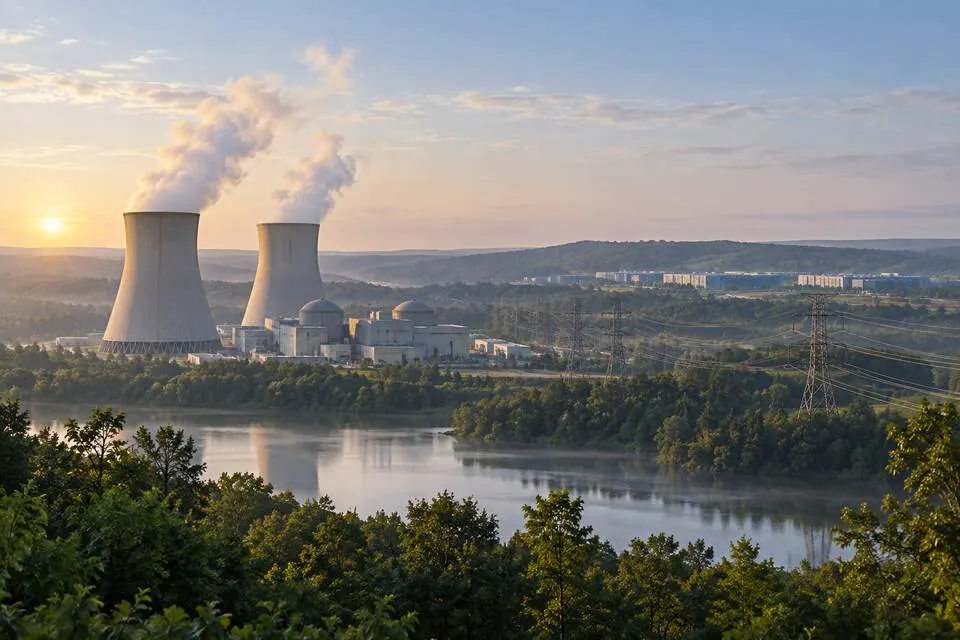
Georgia Power and Google have filed a proposed nuclear-energy agreement that would support equipment upgrades at Plant Vogtle and Plant Hatch, add about 96 megawatts of generating capacity and, according to the utility, produce roughly $900 million in projected customer benefits over the life of the units. The arrangement remains subject to Georgia Public Service Commission approval, a condition stated in both the utility release and independent Reuters coverage.
The proposal would use extended power uprates on Georgia Power’s ownership share of the two nuclear plants. Those projects increase electrical output by modifying equipment such as turbines, pumps, motors and cooling systems rather than building an entirely new reactor. Georgia Power describes the work in its project summary, while Reuters separately confirms the planned equipment changes and expected capacity increase.
Google would subscribe through a proposed Nuclear Uprate tariff and receive zero-emission credits tied to electricity produced by the added nuclear capacity. Georgia Power says the structure is designed to keep the incremental upgrade costs away from customers who do not participate. The tariff and agreement were submitted in separate PSC filings, and the company’s announcement describes the same allocation of costs and credits.
The regulatory work differs between the two sites. Georgia Power is asking the commission to approve an extended power uprate for Hatch Units 1 and 2. The commission previously approved an uprate for Vogtle Units 1 and 2 through the utility’s 2025 integrated-resource process. The new agreement and supporting tariff are now before the commission through Docket 56002 and related filing records, as also summarized by the utility.
For Georgia ratepayers, the central issue is not simply the 96 megawatts. It is whether the subscription and tariff actually deliver the projected benefits while protecting nonparticipating customers. The $900 million figure is a company projection, not a guaranteed refund or an immediate bill reduction. Georgia Power’s filing puts that estimate before state regulators, and independent reporting accurately characterizes it as a forecast over the operating lives of the units.
The proposal also connects Georgia’s expanding digital infrastructure to existing power plants. Google describes its data centers as long-term investments and says the agreement can pair new computing demand with additional carbon-free generation. Georgia Power says large customers with clean-energy goals can fund grid improvements that benefit the broader system. Those positions appear in the joint announcement; Reuters places the deal within growing electricity demand from data centers and other large users.
The PSC’s review will determine whether the tariff and Hatch uprate may proceed under the proposed terms. Until that decision, the added capacity and customer benefits remain prospective. The concrete development is the filing itself: a private technology company has agreed to support upgrades at two Georgia nuclear sites, and state regulators now control whether the arrangement becomes part of Georgia Power’s regulated system.