
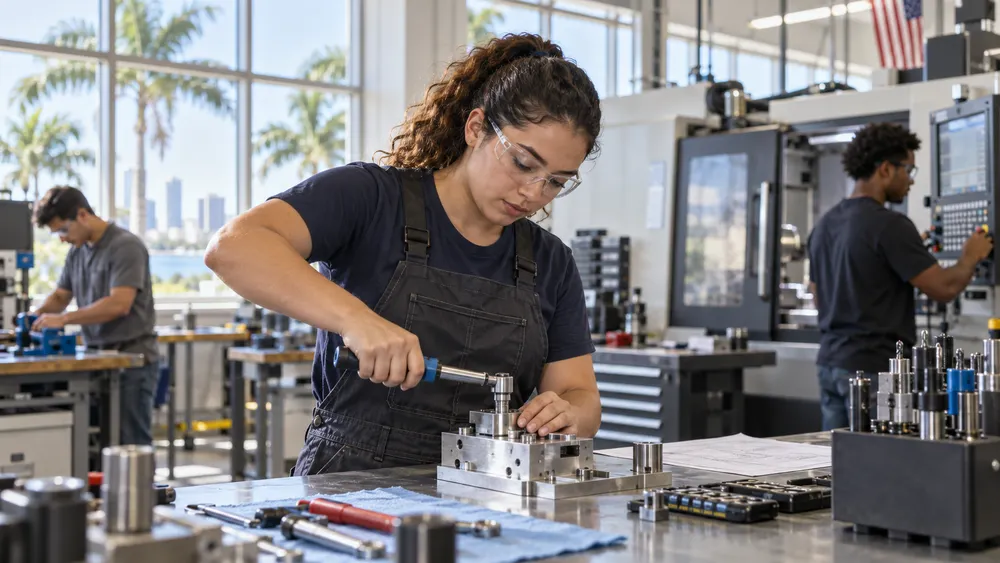
Florida has begun moving a first group of short-term career programs toward eligibility for federal Workforce Pell Grants, opening a new financial-aid pathway for students seeking job credentials without enrolling in a traditional degree program.
Gov. Ron DeSantis announced the initial state list on September 17, saying the selected programs are designed for high-skill, high-wage or in-demand occupations. The governor’s announcement assigns statewide implementation to Education Commissioner Henry Mack and says Florida is using the Targeted Occupations List and CareerSource Florida’s Master Credentials List to identify qualifying fields.
The practical change is significant for adults who need a faster route into the labor market. Florida’s implementation page says the federal program, effective July 1, extends Pell eligibility to short-term training that leads directly to employment. Traditional Pell aid remains need-based; the federal aid page says award amounts depend on factors including financial need, enrollment intensity and the length of attendance.
State approval, however, does not automatically make every course eligible. Under Florida’s September policy guide, participating institutions must already be approved for Title IV aid and hold recognized accreditation. Programs generally must run at least eight weeks but fewer than 15, have existed for at least 12 months and lead to credentials that can count toward further education.
Florida also requires evidence of results. The guide sets a 70% completion threshold within 150% of the normal program length and a 70% job-placement threshold measured 180 days after completion. The Department of Education plans to calculate those rates with state enrollment, completion and employment records. Programs must also fit specified ranges: 150 to 599 clock hours, four to fewer than 16 semester or trimester credits, or six to fewer than 24 quarter hours.
The rollout uses a two-stage approval structure. First, an institution applies to the Florida Department of Education for a program already on the state-approved inventory. The department validates program length, credential alignment, operating history and outcomes. Programs approved by the governor are then submitted to the U.S. Department of Education, after which the institution must add the program to its federal Title IV inventory before students can receive aid.
That sequence means the state’s announcement is a starting point, not a promise that aid is immediately available at every campus. Students will need to confirm that both their institution and specific program have completed federal approval before relying on a grant.
Florida plans annual reviews as labor demand and credential standards change. The state says it will initially focus on nondegree programs offered by Florida College System institutions and school-district postsecondary schools, along with registered apprenticeships tied to eligible institutions. Private and other noncredit programs are expected to enter later phases. For students, the central test will be whether the new grants translate into accessible training with verified employment value rather than simply expanding the catalog of nominally eligible programs.