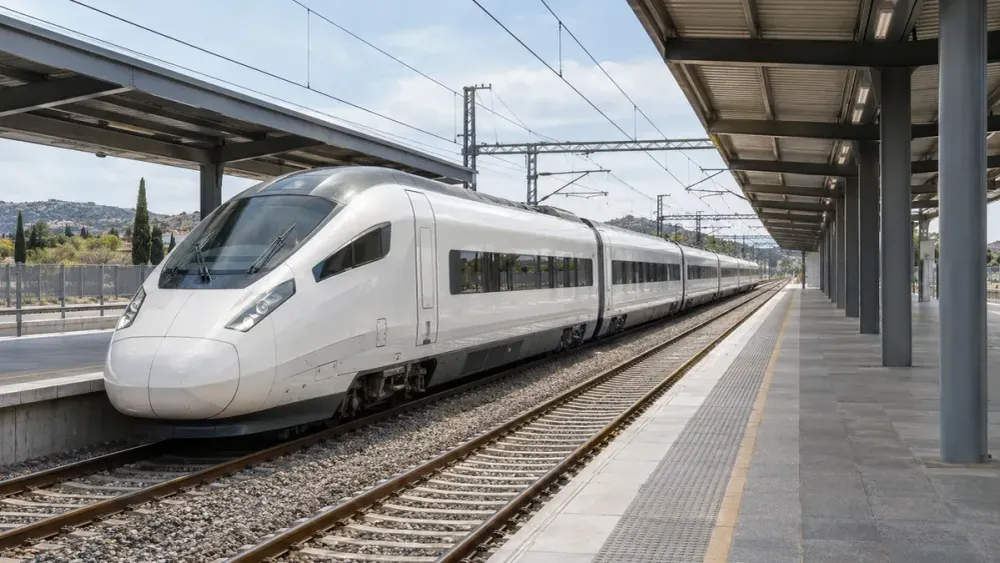
Spain’s national rail operator Renfe published a reduced service plan Monday, Nov. 9, for a nationwide strike on Wednesday. The plan requires 73 percent of usual high-speed and long-distance trains and an average of 65 percent of medium-distance trains to run. Commuter rail will have separate minimums for peak and off-peak hours. Air passengers face reduced service as well, with minimums that vary by airport and route and a change or refund offer for eligible Iberia bookings.
The Wednesday strike is scheduled to last 24 hours. The UGT union, which helped call it, says workers are pressing for better pay, improved working conditions and more affordable housing. A separate action by Renfe train drivers on Tuesday and Thursday means some passengers could face a reduced timetable even if they move their trip away from the general strike.
What Renfe’s Wednesday minimums cover
Spain’s Transport Ministry set the minimum rail service, Renfe said. On Cercanías commuter services, the minimum is 75 percent of the usual schedule during three periods in local time: 6 to 9 a.m., 1:30 to 3:30 p.m., and 6:30 to 8:30 p.m. At other times it is 50 percent. That means an early commuter connection and a trip to the same station later in the morning can face different levels of service.
The 73 percent requirement covers Renfe’s high-speed and long-distance trains, while the 65 percent figure is an average for medium-distance service. El País independently reported those figures on Monday. The percentages describe service levels, not the status of a specific departure. Renfe posted separate lists for commercial and public-service trains with its announcement. Travelers with a ticket can compare the departure on their booking with the applicable list rather than relying on the national percentage. The Renfe figure should not be applied to other operators’ trains.
Flight protections depend on the route
Spain’s minimum-service rules distinguish among flights linking the mainland to islands or other territories, international routes and flights between mainland cities. For mainland routes, authorities took into account whether another form of public transport would take five hours or more, El País reported. That distinction gives more protection to routes for which ground transport takes longer. The report put the minimum for flights serving the Balearic and Canary islands, Ceuta and Melilla at 56 to 85 percent, depending on the route.
The percentages also differ by airport. BTN Europe reported that Madrid’s Barajas and Barcelona’s El Prat have higher guaranteed service levels for island flights than for domestic flights generally. A minimum is a floor for a group of flights, so it does not mean that every other flight in that group will be canceled. It also does not identify which service will operate. Passengers connecting in Madrid or Barcelona can check the status of each flight on the booking, especially if the onward leg is in a different route category.
Local service can be reduced under different rules. The Basque government set a 30 percent minimum for its public buses, trains, trams and other public transport during the affected hours. It directed operators to prioritize routes without alternatives, routes serving health facilities and times when people are traveling to and from work. That regional decision is separate from the national minimums for Renfe and airlines.
Iberia’s options for Wednesday bookings
In its strike advisory, Iberia said passengers booked on Nov. 11 flights operated by Iberia, Iberia Express or Air Nostrum can move their travel to a date through Nov. 26 or request a refund as a voucher or to the original payment method. The airline said its offer includes flights that have been canceled. The terms apply to the carriers and date listed in the notice; other airlines may publish different instructions.
Passengers who booked directly through Iberia can look for a change or refund in the airline’s booking system. Those who bought through an agency are directed to that agency. Iberia also advised passengers to confirm their flight status before heading to a Spanish airport and to arrive earlier than usual, because travel to the airport, check-in, security and passport checks could take longer. A flight that remains on the schedule can still be harder to reach if local transport is reduced.
Moving a rail trip by a day may not avoid disruption
Renfe’s separate notice covers action by the train drivers’ union SEMAF on Nov. 10 and 12. On those days the minimum for high-speed and long-distance trains is 72 percent, and the medium-distance average remains 65 percent. The commuter minimums use the same peak and off-peak percentages as Wednesday’s plan. BTN Europe reported that Tuesday’s rail stoppage is set to last all day, while Thursday’s is scheduled in three blocks.
For a trip that combines a train and a flight, the three dates matter in different ways. Tuesday and Thursday have their own Renfe lists, and Iberia’s offer is tied to flights scheduled for Wednesday. A change to one part of an itinerary does not tell a traveler whether the other part is still viable. The useful checks are the train number, the operating airline and the time needed to reach the airport or station under the published service plan.