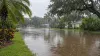
Flash flooding sent rescue crews into two towns on the Georgia–Tennessee border Thursday, Nov. 5, after overnight thunderstorms pushed the river between them to a record 18.05 feet at Copperhill. Water reached the roofs of some buildings. By afternoon, the river was back within its banks, but damaged homes and businesses, debris on roads and a disabled water treatment plant left residents facing a separate set of problems.
The Tennessee report counted 68 rescues coordinated by the state and carried out by the Tennessee Highway Patrol and Tennessee National Guard. Across the river, the Associated Press reported that Georgia’s Fannin County emergency management agency had counted at least 57 people rescued before the water began to recede. By late afternoon, Fannin County officials had raised their countywide count to more than 80 people rescued, Atlanta News First reported. The figures describe agency reports issued at different points during the response, rather than a final tally for the entire flood.
One river, two towns
The adjoining downtowns are McCaysville, Georgia, and Copperhill, Tennessee. The river is called the Toccoa on the Georgia side and the Ocoee in Tennessee. As it rose, water overtopped both bridges connecting the towns, cutting transportation between them during the emergency, ABC News reported. The same waterway that normally draws visitors to both communities became a barrier to moving between them.
Tennessee officials said some parts of the watershed received eight to 10 inches of rain overnight. That estimate applies to areas draining toward Polk County, rather than every location in the two downtowns. The 18.05-foot crest was measured at the river gauge; it does not mean the water was that deep on every street. McCaysville Police Chief Michael Earley told AP that water reached six to seven feet in parts of his downtown.
Warnings outlasted the rain
At 8:57 a.m., the Weather Service extended a flash flood emergency for McCaysville and nearby parts of Fannin County until 11 a.m. Forecasters said they did not expect additional rain but warned that significant flooding would continue. The bulletin urged people in danger to get to higher ground and warned against driving through flooded roads.
Crews used boats and motorized rafts to reach people as floodwater moved through downtown streets. Responders also went door to door and used a helicopter and drones to look for people who needed to evacuate, AP reported. Power and cell service outages complicated the response, according to Earley. Fannin County’s emergency agency said 13 teams using nine boats had been deployed, according to Atlanta News First. The county cautioned that some roads could still be unsafe after water began to fall. With bridges covered and some local equipment inaccessible, crews had to work around damage to the same services and routes they would normally use to respond.
Water service becomes a recovery priority
Floodwater shut down McCaysville’s water treatment plant, prompting a boil water advisory. The Atlanta Journal-Constitution reported that city officials planned to distribute water Friday morning at City Hall. The paper also reported that flooding had damaged the plant in August. The police department and post office, also hit in August, had reopened earlier this week, according to the police chief.
On the Tennessee side, the state reported that the American Red Cross was supporting an evacuation center at Copper Basin Fire and Rescue. Polk County declared an emergency, and Tennessee’s state emergency operations center remained at an elevated level to help coordinate the response. On the Georgia side, Gov. Brian Kemp signed an emergency order Thursday. The Journal-Constitution reported that it covered Fannin, Gilmer, Murray and Union counties. Fannin County Schools said classes would remain canceled Friday.
In Blue Ridge, the Red Cross also helped people displaced by the flood at the Fannin County Recreation Department, according to Atlanta News First. That gave evacuees an option outside the riverfront downtowns. The school closures and the interruption to water service extended the effects of the flood beyond properties that took on water.
Receding water reveals the damage
By Thursday afternoon, crews were clearing mud and branches from streets, AP reported. Shop owners were taking stock of damage after water had moved shelving, merchandise and equipment. The Journal-Constitution reported that one McCaysville shop owner had only recently reopened after replacing flooring and merchandise lost in the August flood. The second flood meant starting that assessment again.
The Blue Ridge Scenic Railway canceled departures through Sunday, Nov. 8, according to Atlanta News First. The line normally stops in both towns, where visitors can walk to restaurants and stores. The cancellation was one immediate consequence for a downtown economy that was already dealing with damaged inventory and buildings.
The river’s retreat made it possible to begin clearing streets, but did not establish which buildings, roads or utility equipment could safely return to service. The state’s river report and the city’s drinking water advisory answer different questions: one tracks how far the flood has fallen, while the other concerns what residents can safely use. For people displaced on either side of the border, updates about access, shelter and drinking water will matter more in the days ahead than the height of the river alone.