Anthropic is seeking to raise as much as $100 billion in an initial public offering that could value the artificial-intelligence company at roughly $2 trillion, while Nvidia is considering an investment of up to $10 billion as an anchor buyer, according to a Reuters report published Friday. The discussions are confidential, the terms could change, and neither company confirmed them. Even so, the proposal is a consequential test of whether public investors will finance the enormous computing requirements of frontier AI companies.
The potential offering would be unprecedented in scale. A $100 billion raise would exceed the proceeds from any previous IPO, while a $2 trillion valuation would put a five-year-old private company in the same broad tier as some of the world’s largest public corporations. Reuters said the listing is expected before the U.S. midterm elections in November, although timing, price and size remain subject to market conditions. Nvidia’s possible participation is an expression of interest, not a completed investment or an endorsement of a final price.
The numbers also mark a rapid step up from Anthropic’s most recent private financing. In May, the maker of the Claude models raised $65 billion at a $965 billion post-money valuation, according to AP reporting. Anthropic then said annualized revenue had reached $47 billion; Reuters reported that the run rate exceeded $65 billion by the end of July, up from about $9 billion at the end of 2025. Annualized revenue is a snapshot extrapolated from a recent period, not the same as audited full-year sales or profit.
What an anchor investor would do
An anchor investor typically agrees to buy a defined portion of an IPO before broader marketing begins. That commitment can help underwriters demonstrate early demand, especially when an offering is too large to depend on ordinary allocations alone. Nvidia, one of the world’s most valuable companies and the dominant supplier of accelerators used to train advanced AI models, would bring both financial capacity and industrial significance.
But an anchor commitment is not an independent valuation. Nvidia has a commercial interest in Anthropic’s expansion because the AI developer is already a major customer for its chips, directly and through cloud providers. If Anthropic spends new capital on Nvidia-powered infrastructure, part could return to Nvidia as revenue. Investors should therefore distinguish strategic support from demand supplied by buyers with no commercial relationship to the issuer.
The relationship is not new. In November 2025, Nvidia said it would invest up to $10 billion in Anthropic and Microsoft up to $5 billion, while Anthropic committed to buy $30 billion of Azure capacity powered by Nvidia systems. The earlier agreement also contemplated as much as one gigawatt of computing capacity using Nvidia hardware. At the time, analysts described the arrangement as part of a broader effort by Microsoft and Nvidia to diversify their exposure beyond OpenAI.
The financing loop behind AI infrastructure
Anthropic’s network of investors and suppliers extends well beyond Nvidia. Amazon and Google are both financial backers and major computing providers. In April, Amazon agreed to invest an immediate $5 billion and as much as $20 billion more if milestones are met, while Anthropic committed more than $100 billion over a decade to AWS technology. The Amazon deal is designed to provide up to five gigawatts of capacity built around Amazon’s Trainium chips.
Anthropic has also pursued a multichip strategy. Its Google expansion called for access to additional tensor-processing capacity, while the company continues to use Nvidia graphics processors and Amazon’s custom silicon. In August, Anthropic said it was forming an internal chip-design team to make Claude faster and more efficient at customer scale. That chip effort could eventually give the company more control over costs, but designing advanced silicon is expensive and does not eliminate the need for fabrication, networking, power and data-center capacity.
This web of cross-investment is becoming a defining feature of the AI economy. Model developers need capital to reserve chips and cloud capacity years ahead, while suppliers need credible customers to justify factories, data centers and power contracts. The agreements can accelerate construction and spread technical risk. They can also make revenue quality harder to assess when vendors are simultaneously investors that benefit from spending funded by their capital.
For Anthropic, those ties are both a resource and a concentration risk. Diversifying among Nvidia, Amazon, Google and other suppliers reduces dependence on a single chip architecture or cloud operator. Yet it creates long-term commitments whose economics are difficult for outsiders to compare. A prospectus would need to explain the duration, minimum purchases, pricing protections and termination provisions that determine whether those agreements become advantages or fixed costs.
Why Anthropic is seeking so much capital
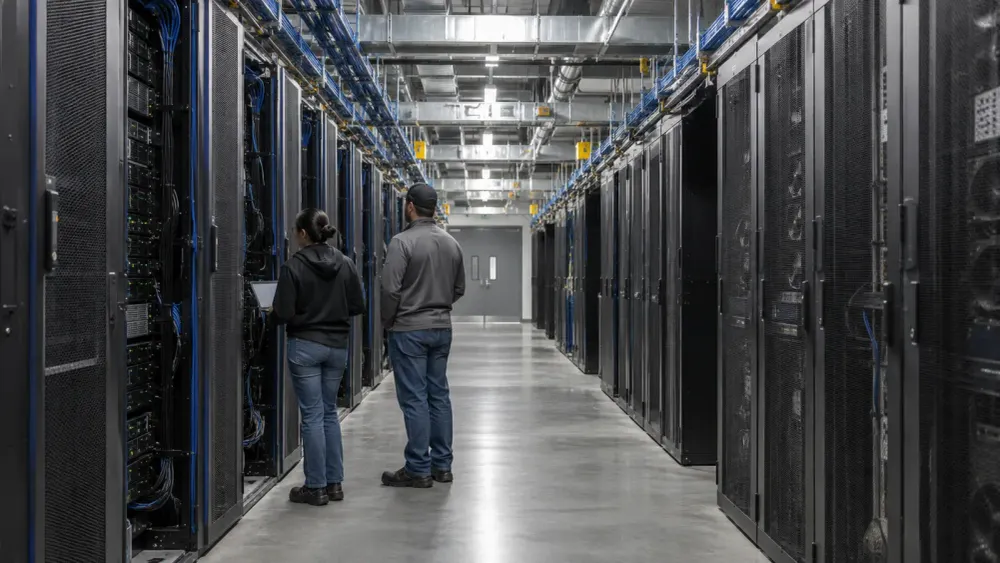
Training frontier models, serving queries and building redundant capacity require spending on chips, networking, power, cooling and software. Demand can grow faster than installed capacity, forcing developers to reserve infrastructure before revenue arrives. Anthropic’s reported rise from roughly $9 billion in annualized revenue at the end of 2025 to more than $65 billion by late July helps explain the urgency, but growth alone does not show how efficiently sales convert into cash.
The proposed valuation relies partly on forecasts that extend well beyond the current year. Reuters reported in August that company projections put 2028 revenue at roughly $190 billion to $200 billion, a range central to the IPO case. That revenue forecast would require Anthropic to sustain extraordinary growth while managing falling model prices, strong competition, enormous infrastructure commitments and the possibility that customers increasingly use several AI providers.
A $2 trillion valuation would be a little more than twice the post-money valuation assigned in May. The proposed increase comes after only a few months of reported growth, leaving investors to decide how much of future revenue has already been reflected in the price. Comparisons with mature software companies are imperfect because frontier labs carry unusually heavy computing costs, while comparisons with semiconductor companies miss the different economics of model development, subscription products and usage-based services.
The company’s profitability, cash burn and contractual liabilities will matter as much as its revenue run rate. AP reported in May that Anthropic, OpenAI and SpaceX were all still losing money as they approached possible public listings. An audited filing could reveal customer concentration, product margins and committed spending, allowing investors to test whether scale is improving the economics or merely increasing both sales and costs.
A record IPO market faces its largest test
Anthropic would arrive in a market already shaped by unusually large offerings. U.S. IPOs excluding special-purpose acquisition companies raised a record $137 billion through August, according to Dealogic data cited by Reuters. An EY analysis of the first half described a market in which a small number of mega-IPOs drew disproportionate investor attention and influenced when other issuers chose to launch. A $100 billion Anthropic deal could intensify that crowding effect.
The timetable is itself fluid. Reuters reported earlier that the launch had shifted toward mid-October, illustrating how quickly an issuer can adjust to market conditions and regulatory preparation. Even after a formal registration statement becomes public, the number of shares and price range can change. Volatility in technology stocks, interest-rate expectations or an adverse operational development could reduce the offering or push it back.
For public investors, the registration documents will be more important than the headline valuation. The Securities and Exchange Commission’s IPO bulletin directs investors to examine the prospectus sections covering risk factors, use of proceeds, management’s discussion of financial results and dilution. In Anthropic’s case, attention is likely to center on computing commitments, supplier relationships, revenue concentration, intellectual-property disputes, safety obligations and the governance rights retained by founders and early backers.
What to watch next
The immediate question is whether Nvidia makes a binding commitment and, if so, on what terms. Investors will want to know whether its allocation is priced like everyone else’s, whether it is tied to new purchases of Nvidia-powered capacity, and whether lockup provisions limit an early sale. They will also watch which banks lead the offering, how much primary capital goes to Anthropic rather than existing shareholders, and what portion of the proceeds is earmarked for compute.
A Nvidia anchor would give Anthropic a formidable early buyer and reinforce the partnership behind much of its infrastructure. It would also sharpen the central question surrounding the AI investment boom: how to value companies whose suppliers, customers and financiers are increasingly the same institutions. Until Anthropic files detailed documents and underwriters set final terms, the reported $100 billion raise, $2 trillion valuation and $10 billion Nvidia investment remain ambitious proposals rather than completed facts.